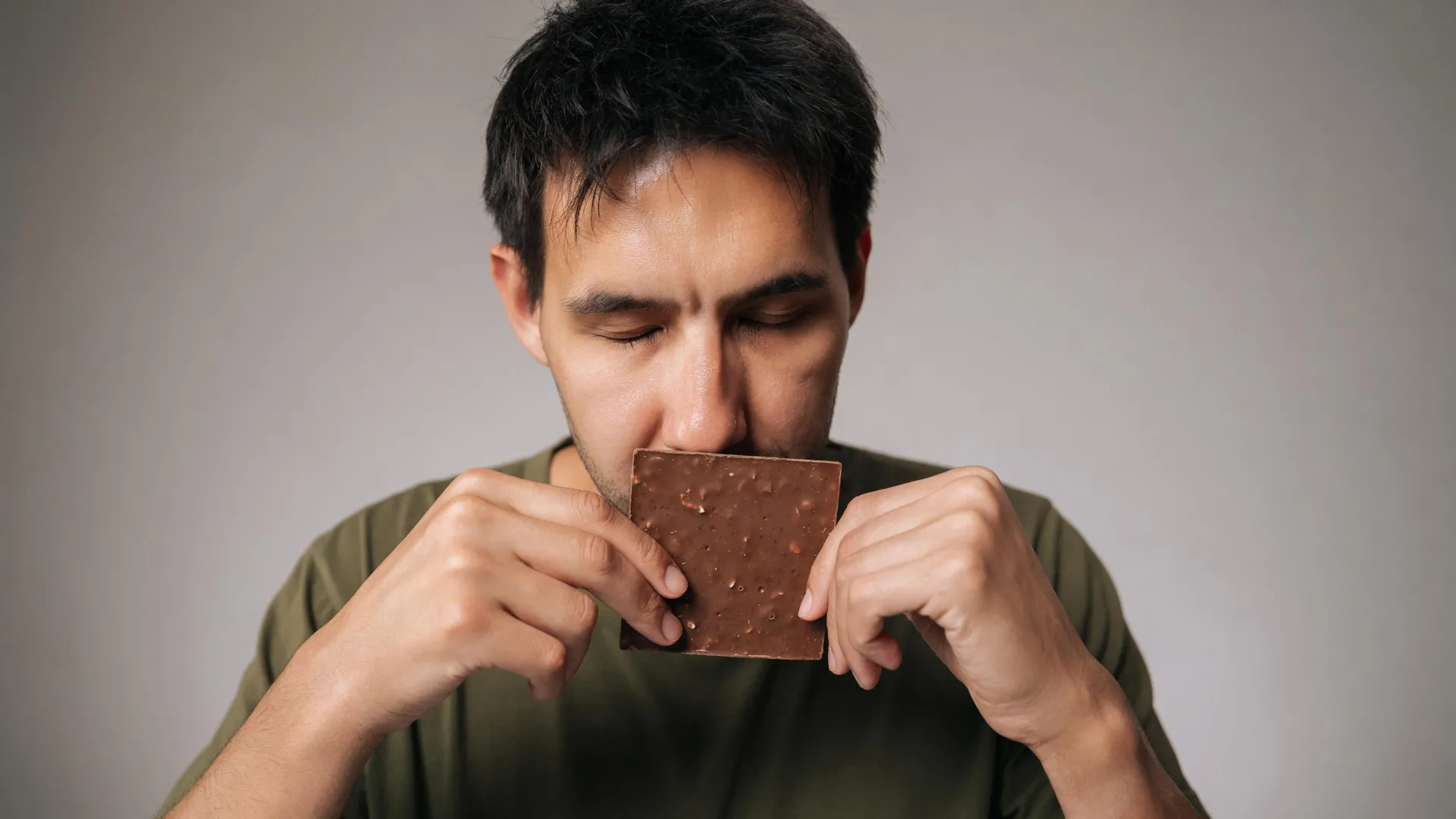
A tough leg day at the gym may have an unexpectedly simple boost: the scent of chocolate. Emerging research suggests that our olfactory system—the sense of smell—plays a far more significant role in physical endurance and metabolic signaling than previously understood. According to a new study published in Frontiers in Physiology, exposure to specific chocolate aromas before and during resistance exercise helped participants complete more repetitions without increasing their perceived level of exertion. This finding opens a novel window into the psychobiology of exercise, suggesting that the brain can be "primed" for peak performance through sensory input alone.
The Mechanism of Olfaction in Sport
The study, conducted by researchers at the University of Malaya, investigated 23 healthy, moderately trained men in their early to mid-20s. The core of the research focused on the intersection of three factors: olfaction, appetite, and physical capacity. Senior author Dr. Mohamed Nashrudin bin Naharudin, an assistant professor at the Faculty of Sports and Exercise Science, posits that the brain’s deep integration of smell into appetite and emotional networks provides a unique, albeit under-researched, lever for athletes to improve their training volume.
"Exposing moderately trained men to chocolate odors right before and between sets of resistance exercise significantly increased their overall training volume without increasing their perceived exertion," Dr. Nashrudin bin Naharudin stated. "Seeing a substantial increase in repetitions without the athletes feeling like they were exerting themselves any harder is a fascinating psychobiological outcome."
Chronology and Methodology of the Study
The experimental process was rigorous, requiring participants to undergo a 10-hour fasting period before arriving at the laboratory. This control was essential to isolate the effects of the aroma from the influence of recent caloric intake. Once in the lab, participants were assigned to one of three groups: those exposed to 90% cocoa dark chocolate, 60% cocoa milk chocolate, or a water control sample.
The exercise protocol focused on leg extensions, a standard movement for isolating the quadriceps. Researchers recorded performance data both before and during the training session. Crucially, they also mapped the participants’ hunger, fullness, and desire to eat. By measuring these psychological states after each 30-second exposure to the scent, the team was able to capture the immediate shifts in the participants’ internal states as they transitioned between sets.
Data Discrepancies: Dark versus Milk Chocolate
The data revealed a clear divergence in how different chocolate profiles influenced the subjects. The 90% dark chocolate aroma demonstrated a profound impact on appetite suppression. Compared to both the milk chocolate and the water control, participants exposed to the dark chocolate scent reported significantly lower hunger levels and a higher sense of fullness. This indicates that the scent of high-cocoa dark chocolate may act as a potent physiological "signal" to the brain, effectively mimicking the satiety one might experience after consuming a dense, rich meal.
In contrast, milk chocolate operated through a different psychological pathway. While participants consistently rated the scent of milk chocolate as more pleasant—a "hedonic reward"—it did not produce the same appetite-suppressing effects as the dark chocolate. Instead, the milk chocolate appeared to facilitate performance through mood enhancement and sensory enjoyment, creating a more positive environment for the athlete to push through repetitions.
The performance gains were statistically significant. Those who sniffed the 90% dark chocolate added an average of 18 more repetitions to their leg extension sets, while the milk chocolate group added nine, both when compared to the odorless water control.
The Science of Learned Associations
The research team suggests that these results are rooted in classical conditioning. From early childhood, humans are exposed to specific food odors that act as precursors to caloric intake. Over time, the brain develops a predictive model: a particular smell is paired with the satiation of hunger. Consequently, when an individual is exposed to these "learned cues" in a fasted state, the brain may trigger anticipatory responses.
In the case of dark chocolate, the brain perceives the scent as a signal for a nutrient-dense, bitter food source, which initiates a pre-emptive state of fullness. For milk chocolate, the scent acts as a reward, which may lower the psychological barrier to effort by providing a pleasant sensory experience during the monotony of physical strain. This "anticipatory satiety" effectively allows an athlete to bypass the distracting signals of hunger and fatigue, channeling that energy instead into the physical task at hand.
Implications for Athletic Training and Public Health
The potential applications of this study extend beyond the gym. If specific food odors can manipulate perceived exertion and endurance, there may be implications for metabolic health, appetite control, and long-term athletic programming. By leveraging sensory cues, coaches and athletes might find new ways to optimize training sessions without the need for additional dietary supplements or stimulants.
However, the scientific community remains cautious. Dr. Nashrudin bin Naharudin and his colleagues emphasized that the biological pathways remain speculative. "We did not measure blood hormones or neural activity, so the study cannot show exactly which biological pathways were responsible for the changes in appetite and exercise performance," the authors noted in their report. Future research will need to incorporate blood serum analysis to determine if these olfactory triggers lead to measurable changes in ghrelin, leptin, or dopamine levels.
Limitations and Future Directions
Despite the promising results, the study acknowledges several limitations that warrant further investigation. The sample size—23 men in their 20s—is relatively small and narrow in demographic scope. To determine if these effects are universal, researchers must expand future trials to include women, older athletes, and individuals with different baseline fitness levels.
Furthermore, the intensity of the scents was not perfectly controlled, and the nature of the "water control" meant that participants were likely aware of which condition they were in. The "placebo effect" or the novelty of the scents could have influenced performance independently of the chemical properties of the aromas.
The researchers also addressed the question of whether chocolate possesses unique properties that trigger these effects. While chocolate is a universally recognized reward stimulus, it is likely not the only food capable of producing such results. Any food with a strong, familiar, and generally pleasant olfactory profile—such as coffee, cinnamon, or citrus—could potentially elicit similar responses, provided the athlete has a positive learned association with that smell.
Concluding Analysis: The Future of Sensory Performance
As sports science continues to evolve, the integration of non-invasive, psychological, and sensory interventions is becoming increasingly relevant. While the notion of "sniffing one’s way to a personal best" might sound unconventional, the study provides a compelling, data-driven look at how the brain’s architecture can be used to override physical limitations.
If larger, randomized, double-blind trials confirm these findings, the athletic world may see a shift in how gym environments are designed. From scent-diffusing equipment to personalized olfactory priming protocols, the "aroma of success" could become a standard part of the elite athlete’s toolkit. For now, however, the study serves as a fascinating reminder that the path to better performance often begins long before the first rep is lifted, rooted deep within the complex, interconnected neural pathways of the human brain. The ability to manipulate one’s internal state through the environment remains one of the most exciting frontiers in exercise physiology.
Related posts: