As Heating Oil Prices Reach Record Highs Millions of American Households Face a Winter Energy Crisis

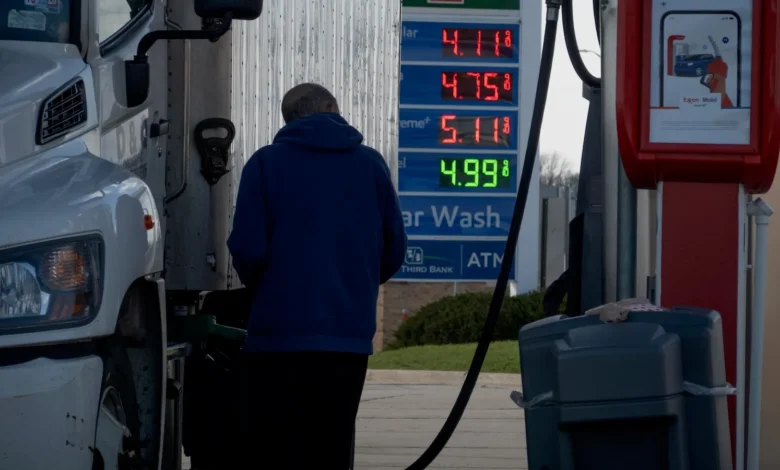
The arrival of autumn typically signals a transition toward seasonal comforts, but for millions of Americans, the cooling temperatures carry an ominous financial weight this year. With heating oil prices surging to unprecedented levels—hovering around $6 per gallon across the Northeast—the impending winter has transformed from a seasonal inconvenience into a significant economic emergency. The crisis is particularly acute for the approximately 4 million households that rely on heating oil, a fuel source that has seen its market value nearly double since February, when prices sat comfortably in the mid-$3 range.
The Geopolitical Drivers of Fuel Volatility
The current energy spike is the direct result of a volatile geopolitical landscape. The ongoing conflict involving Iran has significantly disrupted global energy markets, specifically impacting the trade of diesel, which is chemically near-identical to heating oil. The Strait of Hormuz, a critical maritime chokepoint, has seen restricted traffic, effectively choking off a major artery through which roughly 10 percent of the world’s water-borne diesel supply historically flowed.
This supply-side constriction has been compounded by sustained military operations in Ukraine, where strikes on Russian oil refineries—another major global supplier—have further tightened the available inventory. These combined factors have created a "perfect storm" of energy scarcity. According to Mark Wolfe, executive director of the National Energy Assistance Directors Association (NEADA), the volatility is unprecedented. "The volatility of this product right before winter is scary," Wolfe noted. "This is part of the cost of the war."
The regional impact is uneven but devastating for the Northeast, a territory that accounts for roughly 82 percent of all U.S. homes reliant on heating oil. While the national average increase in heating costs is projected at 50 percent, states like Vermont and Maine are bracing for hikes as high as 76 percent. This equates to an estimated $878 additional cost per household, totaling approximately $3.8 billion in excess expenditure across the region.
A Chronology of the Escalating Crisis
The path to this winter’s breaking point was paved over several months of shifting global and domestic conditions:
- February 2026: Heating oil prices remain relatively stable in the mid-$3 range, allowing households to budget for standard winter usage.
- Summer 2026: Geopolitical tensions in the Middle East begin to escalate, affecting tanker movement and global supply chains.
- Late August 2026: Reports from the National Energy Assistance Directors Association begin to sound the alarm on potential price surges, though early projections remain lower than the current reality.
- Mid-September 2026: A bipartisan group of 31 U.S. senators writes to Secretary of Health and Human Services Robert F. Kennedy Jr., urging an expedited release of Low Income Home Energy Assistance Program (LIHEAP) funds.
- Late September 2026: Prices hit the $6-per-gallon threshold in parts of the Northeast, prompting immediate panic among consumers.
- October 2026: Massachusetts Governor Maura Healey declares a state of emergency, highlighting the severity of the situation and the necessity for immediate state-level intervention.
The Strain on Federal Safety Nets
The Low Income Home Energy Assistance Program (LIHEAP) serves as the primary federal bulwark against energy poverty. However, its efficacy is currently being tested by the rapid escalation in fuel costs. LIHEAP was designed to help low-income families offset energy burdens, but with prices rising faster than federal allocations, the program’s purchasing power is rapidly eroding.
The political climate surrounding LIHEAP adds another layer of complexity. President Donald Trump has historically viewed the program as a candidate for elimination, leading to significant anxiety among both state-level administrators and federal lawmakers. Although the administration has indicated it will meet the statutory deadline of November 1 to release 90 percent of the $4 billion allocated to the program, critics argue that the standard bureaucratic timeline is insufficient for the current emergency.

"A quick release of funding will ensure no gaps in assistance," the bipartisan coalition of senators stated in their correspondence to Secretary Kennedy. The urgency of their plea reflects a fear that, without proactive intervention, the most vulnerable populations will be forced to choose between essential life functions, such as purchasing food or medication, and keeping their homes adequately heated.
Official Responses and State-Level Interventions
In the absence of a comprehensive federal strategy, states are beginning to take matters into their own hands. Massachusetts’ declaration of a state of emergency on Monday serves as the most prominent example of local governments attempting to fill the void. By boosting assistance to 156,000 low-income households and extending coverage to 50,000 middle-class families, Governor Healey’s administration is attempting to prevent a widespread humanitarian crisis. Furthermore, the executive order includes strict prohibitions on price gouging, aimed at preventing fuel suppliers from exploiting the panic-driven market.
The Department of Health and Human Services (HHS), when pressed for comment, maintained that it is prepared to handle the distribution. "HHS has staff and capacity to distribute these funds in a timely manner," a spokesperson for the agency told reporters. Despite these assurances, the reality on the ground remains dire. With no legislative action likely to occur before the upcoming midterm elections, the prospect of an additional $1 billion injection into LIHEAP—as proposed in a recent House bill—remains stalled, leaving states to rely on existing, stretched resources.
The Broader Economic Implications
The energy crisis carries long-term implications for household economic stability and energy policy. For many homeowners, the current spike has rendered traditional furnace-based heating unsustainable. Yet, the alternatives are fraught with their own difficulties. Transitioning to high-efficiency electric heat pumps or natural gas furnaces requires substantial upfront capital, which is unavailable to many, particularly those already struggling to meet current monthly expenses.
Energy efficiency experts suggest that weatherization—such as upgrading insulation, sealing gaps, and installing energy-efficient windows—is the most sustainable long-term solution. While programs like the Weatherization Assistance Program exist to facilitate these upgrades, they are often backlogged and require a time investment that does not address the immediate, acute need for heating this winter.
Consumer Sentiment and the Human Element
The emotional toll of the crisis is perhaps best captured in the discourse of those living through it. On social media platforms and in public hearings, the sentiment is one of desperation. Many individuals who have serviced their boilers are now finding that the cost of filling their tanks exceeds their monthly mortgage payments.
"I have no plan and I’m all out of ideas," one resident remarked, reflecting the paralysis felt by many middle-class families who find themselves caught in the gap between being ineligible for federal assistance and being unable to afford current market rates. The practice of "pre-buying" oil—once a common method to lock in lower prices—has largely evaporated, as fuel dealers themselves are hesitant to commit to future prices amidst such extreme market instability.
As the region looks toward the winter months, there is a singular, fragile hope: the weather. Forecasts suggesting an El Niño pattern, which could bring warmer-than-average temperatures to the Northeast, offer a potential reprieve. However, experts warn against relying on weather anomalies to solve systemic energy failures. Until global supply chains stabilize and federal funding mechanisms are bolstered to reflect current economic realities, the "game of chicken" between families and the thermostat will likely continue, posing a persistent public health risk throughout the winter season.