BBC Director General’s Honeymoon Period Tested Amidst Employee Discontent Over Pay and Job Cuts

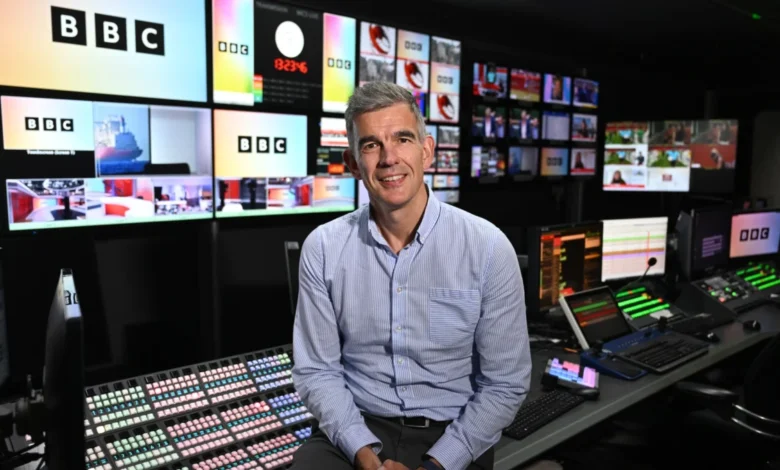
The tenure of BBC Director General Tim Davie, who took the helm of the UK’s national broadcaster in September 2020, is facing significant internal challenges, as evidenced by a recent internal town hall meeting. The gathering, intended for communication and transparency, instead revealed deep-seated employee dissatisfaction surrounding proposed pay freezes, substantial job cuts, and the perceived value of recent marketing campaigns. The mood among staff, as described by insiders, suggests that the initial optimism surrounding Davie’s leadership may be giving way to a more critical assessment of the broadcaster’s financial and operational strategies.
The core of the employee unrest stems from a proposed 1% pay rise for staff, a figure widely criticized as insufficient in the current economic climate. This proposal comes at a time when the BBC is also grappling with the daunting prospect of eliminating 2,000 jobs as part of a broader cost-saving initiative. The dual pressures of stagnant wages and job insecurity have led to a palpable decline in morale, with employees feeling undervalued and uncertain about their future within the corporation.
H2: A Barrage of Employee Concerns
During the town hall meeting, members of the BBC’s senior leadership team, including Director General Tim Davie, were reportedly met with a series of pointed questions and critical feedback from employees. The agenda, presumably designed to address ongoing strategic shifts, instead became a forum for airing grievances.
One of the most potent criticisms came in the form of a written question that encapsulated the prevailing sentiment: an employee described themselves as being treated like a "second-rate citizen," labeling the 1% pay proposal as "an insult." This sentiment was echoed by another insider who described the combination of the meager pay offer and impending job cuts as "unfair and demoralizing." The human cost of such austerity measures was starkly illustrated by a third employee’s poignant question: "A 1% pay rise will eat into my family’s finances so severely, I will have to cut back on something. What do you suggest I cut back on?"
The frustration also manifested in dark humor, with one employee wryly noting the BBC’s acquisition of the quiz show "The 1% Club" from ITV, quipping, "Oh sorry, that’s just the pay proposal." This juxtaposition highlights the perceived disconnect between the BBC’s programming and the financial realities faced by its workforce.
H2: Financial Pressures and Strategic Responses
Béatrice Michel, the BBC’s Chief Financial Officer, attempted to contextualize the proposed pay increase, acknowledging that "1% is not much." She explained that the broadcaster’s financial constraints prevented a more generous offer, stating, "We wanted to do more, but we can’t afford it." Michel highlighted that the 1% figure was implemented as a minimum to protect those on the lowest pay scales and that the executive team would forgo a pay increase this year.
The BBC is currently undertaking a significant cost-reduction program, aiming to slash £500 million ($670 million) over the next three years, building upon an existing £1.5 billion target. This aggressive cost-cutting is attributed to a widening gap between the BBC’s reach and its funding model. While 94% of the UK population engages with the BBC monthly, fewer than 80% contribute to the £180 annual license fee. The broadcaster can no longer rely on drawing down its cash reserves to cover operational shortfalls, necessitating these stringent measures.
Director General Tim Davie attempted to frame these challenges within a broader societal context, informing staff that the BBC faces similar financial pressures to government departments, private sector companies, and charities. "We’re all having to be prudent, and that doesn’t make it easier for people, but we are all in a similar boat here," he remarked.
H2: The Shadow of Industrial Action and Executive Pay
The proposed 1% pay rise is currently under discussion with trade unions, and there is growing speculation that these negotiations could lead to industrial action. A significant point of contention for employees is the perceived disparity between the meager wage offer and the substantial earnings of some on-screen and on-air talent. Reports indicate that presenter earnings increased by nearly £3 million to a six-year high of £143 million in the BBC’s last financial year.
One insider pointed to the former "Scott Mills Show" presenter’s salary, estimated at around £750,000, as an example of disproportionate remuneration. "£750k could go so far and reduce the amount of staff leaving the BBC," the employee wrote, suggesting that such funds could be better allocated to retain talent and avoid further layoffs. A journalist proposed a more radical solution: a 10% salary cut for staff earning over £100,000 to "avoid the current below-inflation 1% pay offer (in effect a pay cut) for the majority."
While acknowledging the necessity of competitive pay to attract talent, Director General Davie indicated a willingness to scrutinize the number of senior management roles within the corporation. "We’ve said we’re definitely going to be looking at at least 10% savings on senior management roles," he stated. Davie also addressed concerns about organizational structure, noting, "What I hear from some people, and I haven’t got deep enough yet, is that sometimes it feels like there are very many layers of oversight and not enough empowerment… that’s part of what we need to look at." This suggests a potential review of bureaucratic layers and a move towards greater operational efficiency at the senior level.
H2: Scrutiny of the "What Has the BBC Ever Done For Me?" Campaign
Adding to the employee discontent is the substantial investment in the BBC’s latest advertising campaign, featuring comedian Romesh Ranganathan. The campaign, a modern reimagining of a 40-year-old promotional video starring John Cleese, aims to highlight the value the BBC provides to the nation. However, employees questioned the cost of this initiative at a time of significant financial austerity.
"How much did the new ‘What has the BBC ever done for me’ campaign cost? Totally excessive!" remarked one insider. Another employee questioned the timing and expense: "How much did the Romesh advert cost the BBC at a time we’re being told to both accept a 1% pay rise and be on constant alert that our job might be closed in the coming months?"
Beyond the cost, the campaign’s content also drew criticism. Some employees lamented its perceived failure to adequately showcase crucial BBC services, including local news provisions, the World Service, and the broadcaster’s extensive online offerings.
Kerris Bright, the BBC’s Chief Customer Officer, defended the marketing investment, acknowledging the validity of the concerns. "It’s a really fair challenge, and we’re all facing those challenges. Marketing is facing the same challenges," she stated. Bright emphasized the need to invest in communicating the BBC’s value to audiences, asserting, "I think yes, it is the right time to do that [advert] and to be careful with our investments. We’ve tried to be really smart in how we’ve done it."
H2: Broader Implications for the BBC’s Future
The internal dissent at the BBC underscores the significant challenges facing the public service broadcaster as it navigates a complex financial landscape and evolving media consumption habits. The proposed pay freeze and job cuts, coupled with the perceived disconnect in executive versus staff remuneration and the expenditure on high-profile marketing campaigns, have created a climate of uncertainty and dissatisfaction among its workforce.
The BBC’s reliance on the license fee, which has faced political scrutiny and declining public acceptance, necessitates a recalibration of its funding and operational models. The broadcaster’s strategy to address this involves both significant cost savings and efforts to demonstrate its continued relevance and value to the British public. However, the current internal climate suggests that achieving these strategic goals will be a formidable undertaking, requiring a delicate balance between fiscal responsibility and maintaining employee morale.
The coming months will be critical as negotiations with unions progress and the full impact of the proposed job cuts begins to unfold. The BBC’s ability to manage these internal pressures effectively will be a key determinant of its capacity to meet future challenges and sustain its role as a vital public service broadcaster in an increasingly competitive media environment. The initial "honeymoon period" for the current leadership appears to be over, replaced by the urgent necessity of addressing deep-seated employee concerns and demonstrating a clear path forward through these turbulent times. The internal dialogue at the recent town hall meeting signals a pivotal moment, where the broadcaster’s leadership must not only articulate a vision for the future but also demonstrably address the immediate anxieties and discontents of its most valuable asset: its staff.