Trump Higher Education Anti Dei

The Trump Administration’s Impact on Diversity, Equity, and Inclusion in Higher Education
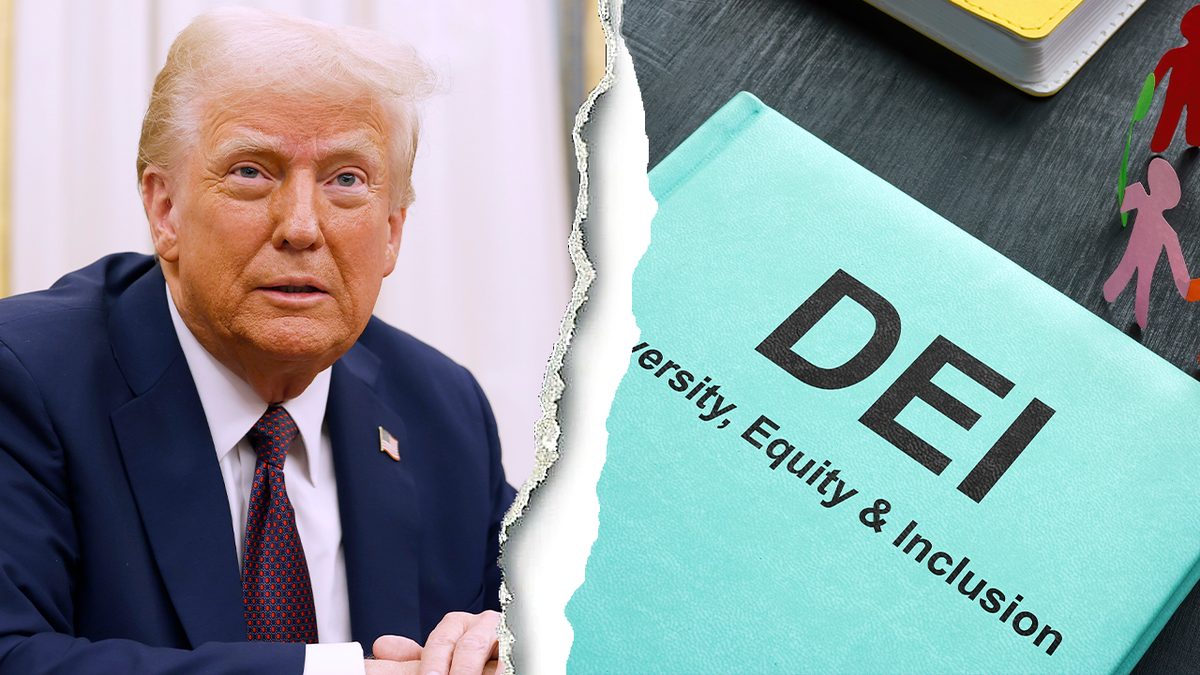
The presidency of Donald Trump initiated a significant shift in the federal government’s approach to Diversity, Equity, and Inclusion (DEI) initiatives within American higher education. This era was characterized by a series of policy changes, executive orders, and public pronouncements that, taken collectively, actively sought to dismantle or deprioritize many DEI programs and concepts that had become embedded in university operations. The core of this anti-DEI stance revolved around a critique of what proponents of these policies viewed as identity politics, preferential treatment, and ideological indoctrination within academic institutions. This article will delve into the multifaceted ways in which the Trump administration challenged and attempted to curtail DEI in higher education, exploring the rationale behind these actions, the specific policies enacted, and the resulting implications for universities, students, and faculty.
Central to the Trump administration’s critique of DEI was the argument that such programs fostered division rather than unity. Official statements and policy directives often framed DEI as a system that created artificial distinctions among individuals based on race, gender, or other protected characteristics, thereby undermining the meritocratic ideals of higher education. The administration contended that a focus on group identity over individual achievement was inherently unfair and counterproductive to creating a truly equitable environment. This perspective was frequently articulated by Trump and his surrogates, who argued that DEI initiatives were a form of "political correctness" that stifled free speech and critical thinking on campuses. They suggested that universities, under the guise of promoting diversity, were actually engaging in ideological litmus tests and promoting a specific, liberal viewpoint, often at the expense of conservative or dissenting opinions. This narrative fueled a broader cultural debate about the role of identity in public life and, specifically, within the academy.
One of the most impactful actions taken by the Trump administration was Executive Order 13950, signed in September 2020, titled "Combating Race and Sex Stereotyping." This executive order prohibited federal agencies, including those that fund higher education institutions through grants and contracts, from conducting diversity and inclusion training that purported to teach concepts such as white privilege, critical race theory, or systemic racism. The order explicitly stated that such training violated federal anti-discrimination laws by promoting divisive concepts and that federal funds could not be used to promote these ideas. For universities receiving federal funding, which encompasses a vast majority of institutions, this order had a chilling effect. It forced many to review their DEI training materials, suspend ongoing programs, and question the legality of their DEI frameworks. The rationale provided was that these training programs were indoctrinating employees and students into believing that the United States was inherently racist or sexist, and that individuals were inherently oppressors or oppressed based on their race or sex. This was seen by the administration as a dangerous departure from principles of equality and individual responsibility.
The implications of Executive Order 13950 were far-reaching. It directly targeted initiatives designed to address historical injustices and ongoing systemic inequalities. Many DEI professionals and scholars argued that the concepts it sought to ban, such as white privilege and systemic racism, were crucial analytical tools for understanding and dismantling discriminatory structures. By labeling these concepts as "stereotyping" and "divisive," the order effectively sought to delegitimize decades of research and activism in the field of DEI. Universities were placed in a difficult position, balancing their commitment to DEI with the threat of losing federal funding. This led to a wave of cancellations of DEI workshops, mandatory training sessions, and even the reevaluation of course content in fields that engaged with critical race theory or intersectionality. The fear of non-compliance and the potential financial penalties incentivized a retreat from explicit DEI programming in many institutions.
Beyond formal executive orders, the Trump administration also used its rhetorical platform and appointments to influence the landscape of higher education DEI. Department of Justice lawsuits, for example, were initiated against universities accused of engaging in discriminatory admissions practices, often framing affirmative action policies as illegal quotas or preferences. While the legal challenges to affirmative action predated the Trump administration, the Justice Department under his tenure became more active in pursuing such cases, signaling a more aggressive stance against policies aimed at increasing racial or ethnic diversity in student bodies. The administration’s appointees to key federal positions, including the Department of Education, often shared a skepticism towards traditional DEI frameworks, further reinforcing the anti-DEI narrative within federal oversight mechanisms.
The critique extended to the very language and principles associated with DEI. Terms like "equity," "intersectionality," and "social justice" were often reframed as politically charged buzzwords designed to promote a progressive agenda rather than genuine inclusivity. The administration frequently championed the concept of "equality" and "meritocracy" as the sole principles that should govern higher education, arguing that any deviation from these, such as through affirmative action or targeted DEI programs, was inherently discriminatory. This created a dichotomy where DEI was presented as the antithesis of fairness and equal opportunity, while the administration’s preferred approach was positioned as the true path to a just and equitable system. This framing resonated with segments of the public and within academia who felt that DEI initiatives had gone too far or had become overly politicized.
The impact of this anti-DEI stance was not limited to federal policy; it also created a climate that emboldened critics of DEI within universities themselves. Faculty members and student groups who were skeptical of DEI initiatives or felt that these programs were creating a hostile environment for certain viewpoints often found support or at least a less resistant environment during this period. Debates on campus about free speech, academic freedom, and the role of identity became more contentious, with the federal administration’s rhetoric often serving as a rallying point for those who opposed DEI. This contributed to a more polarized academic environment, where discussions about diversity and inclusion were often framed in adversarial terms.
Furthermore, the administration’s focus on "individualism" and "merit" as the sole drivers of success in higher education often overlooked the systemic barriers that certain groups faced. While advocating for a colorblind approach, critics argued that this approach ignored the historical and ongoing disadvantages that continued to affect marginalized communities. The dismantling of DEI initiatives, in this view, was not an act of promoting fairness but rather an act of preserving existing power structures and inequalities. The emphasis on individual merit, without addressing the uneven playing field, was seen as perpetuating rather than resolving systemic issues.
The legal landscape surrounding DEI also saw shifts. While the Supreme Court’s decision in Students for Fair Admissions v. Harvard effectively ended affirmative action in college admissions in June 2023, the groundwork for this ruling and the increased scrutiny of admissions practices were certainly amplified during the Trump administration’s tenure. The DOJ’s active pursuit of cases against universities over admissions policies signaled a clear intent to challenge and dismantle affirmative action, setting a precedent for future legal challenges and influencing the broader conversation about diversity in higher education admissions.
In conclusion, the Trump administration’s approach to DEI in higher education was characterized by a fundamental critique of identity-based initiatives, a reassertion of individualism and meritocracy, and the implementation of policies aimed at curtailing DEI programs and concepts deemed divisive or politically motivated. Executive Order 13950 stands as a significant landmark in this effort, directly impacting how federal funding could be used for diversity training. While the administration’s policies and rhetoric aimed to reshape the discourse around diversity, equity, and inclusion, they also ignited robust debate and resistance from advocates who saw these actions as a regression in the pursuit of a more just and equitable society. The long-term consequences of this period continue to unfold, influencing institutional practices, legal challenges, and the very understanding of diversity within American higher education.