Brock Purdy 49ers Podcast Joe Montana Steve Young
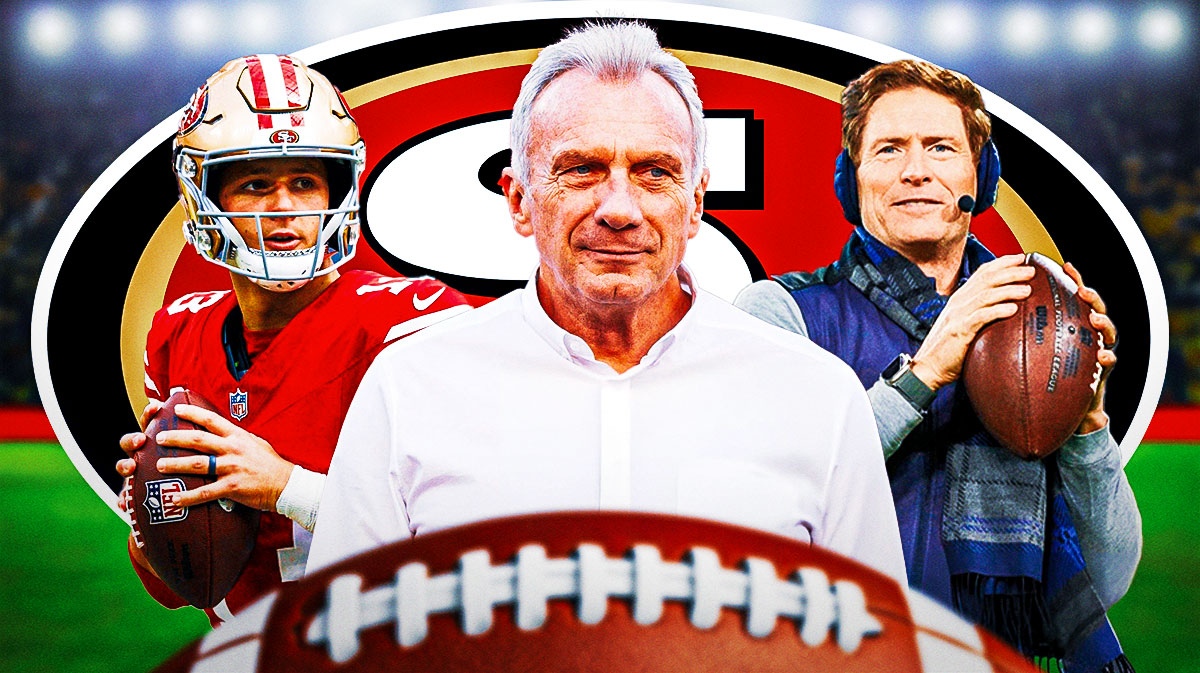
Brock Purdy, 49ers Podcasts, and the Ghosts of Montana & Young
The San Francisco 49ers, a franchise etched in NFL lore, have a quarterback lineage that inspires awe and sets an impossibly high bar for any successor. For decades, the names Joe Montana and Steve Young have been synonymous with success, Super Bowl victories, and a brand of quarterback play that defined an era. Today, Brock Purdy, the 49ers’ current signal-caller, finds himself navigating this storied history, often drawing comparisons to these legends, particularly through the lens of various 49ers podcasts that dissect every snap, every throw, and every facet of the team’s performance. These podcasts, from the analytical deep dives of "The Gold Standard" to the passionate fan ramblings of "Niner Nation," have become essential listening for anyone wanting to understand the modern 49ers narrative, a narrative inextricably linked to the golden age of Montana and Young.
The emergence of Brock Purdy as the starting quarterback was, to put it mildly, an anomaly. Drafted as the 262nd overall pick in the 2022 NFL Draft, the "Mr. Irrelevant" moniker carried with it the weight of low expectations. Yet, through a combination of resilience, sharp decision-making, and a surprisingly potent connection with the 49ers’ talented roster, Purdy quickly ascended the depth chart. This unexpected rise, juxtaposed against the almost mythical status of Montana and Young, has fueled a significant portion of the discourse on 49ers podcasts. Analysts and fans alike scrutinize Purdy’s every move, measuring it against the impossibly high standards set by his Hall of Fame predecessors. The podcasts provide a platform for this ongoing debate, dissecting Purdy’s pocket presence, his ability to read defenses, and his leadership, all while implicitly or explicitly referencing the hallmarks of Montana’s unflappable composure and Young’s dynamic playmaking.
Joe Montana, "Joe Cool," is the benchmark against which all 49ers quarterbacks are measured. His four Super Bowl titles, three Super Bowl MVP awards, and two league MVP awards paint a picture of unparalleled success. Montana’s ability to remain calm under pressure, his pinpoint accuracy, and his clutch performances in critical moments are legendary. Episodes of 49ers podcasts dedicated to "The Catch" or the Super Bowl XXIII game-winning drive are not mere historical recaps; they are often used as analytical touchstones when evaluating Purdy. When Purdy orchestrates a game-winning drive of his own, the inevitable comparisons to Montana flood the podcast airwaves. The question isn’t just "Did Purdy play well?" but "Did Purdy play like Montana?" This framing, while understandable given the history, can also create an unfair burden. Podcasts often delve into the nuances of these comparisons, exploring how the game has evolved, the different skill sets required in different eras, and whether a direct apples-to-apples comparison is even truly valid.
Steve Young, Montana’s successor, brought a different, yet equally electrifying, brand of quarterback play. Young’s athleticism, his powerful arm, and his remarkable ability to extend plays with his legs offered a unique dimension to the 49ers’ offense. His MVP seasons and Super Bowl XXIX performance, where he threw for a then-record six touchdowns, solidified his place among the NFL’s elite. When discussing Purdy’s mobility or his ability to escape pressure and make a play downfield, the ghost of Steve Young inevitably emerges. Podcasts will analyze Purdy’s decision-making in these scrambles – does he protect the ball, or is he taking unnecessary risks? The contrast between Young’s inherent athleticism and Purdy’s more calculated approach under pressure is a frequent topic of discussion. Furthermore, the evolution of offensive schemes means that Purdy’s game isn’t just about replicating Young’s physical gifts but about adapting to a modern offense where precise timing and reads are paramount, a distinction often explored on the more sophisticated analytical podcasts.
The role of 49ers podcasts in shaping the public perception of Brock Purdy cannot be overstated. These platforms, ranging from professional productions with former players and seasoned journalists to fan-driven discussions, provide a constant stream of analysis and opinion. For listeners, they offer an accessible way to stay informed about the team, to engage with fellow fans, and to feel connected to the 49ers’ ongoing journey. When Purdy struggles, the podcasts are quick to dissect the errors, often drawing parallels to the rare missteps of Montana or Young. When he excels, the praise is often tempered with reminders of the legacy he is trying to uphold. The sheer volume of content dedicated to Purdy, often referencing Montana and Young, highlights the unique pressure and scrutiny he faces. These podcasts are not just about game analysis; they are about narrative construction, and Purdy’s narrative is one of overcoming immense historical expectations.
The strategic implications discussed on these podcasts also shed light on how Purdy fits into the 49ers’ offensive philosophy. Kyle Shanahan’s offensive system is renowned for its intricate play-calling, its emphasis on the run game, and its reliance on quarterbacks to make quick, accurate reads. Podcasts often break down Shanahan’s schemes, illustrating how Purdy’s strengths – his accuracy, his understanding of the system, and his ability to deliver the ball on time – align with this approach. This is where the discussion often moves beyond simple comparisons to Montana and Young and into a more nuanced understanding of modern quarterback play. While Montana and Young operated in different offensive environments, Purdy is tasked with executing a highly sophisticated, present-day offense. Podcasts that focus on offensive line play, defensive schemes, and route combinations offer deeper insights into how Purdy’s contributions are magnified or limited by the surrounding talent and the strategic execution of the offense.
Furthermore, the impact of injuries, a recurring theme in Purdy’s young career, is another area extensively covered by 49ers podcasts. Both Montana and Young experienced significant injuries, and the discussions on these podcasts often revolve around how Purdy’s ability to recover and perform at a high level post-injury stacks up against the resilience of his predecessors. The mental fortitude required to return from a serious injury, particularly a quarterback’s throwing arm, is a critical element of leadership that podcasts often explore. The conversations about Purdy’s rehabilitation, his return to the field, and his performance thereafter are often framed by the historical context of how other legendary 49ers quarterbacks navigated similar challenges.
The concept of "clutch" is a perennial topic on any football podcast, but for the 49ers, it’s practically a religion. The legend of Joe Montana’s unwavering calm in critical situations has been passed down through generations of fans. Podcasts dissect Purdy’s fourth-quarter performances with meticulous detail, looking for signs of that same "Joe Cool" demeanor. Did he make the right throw under pressure? Did he avoid a costly mistake? Did he lead his team down the field for a game-winning score? These are the questions that fuel the analysis, and the answers are often measured against the indelible memories of Montana’s heroics. Similarly, when Purdy escapes pressure and makes a spectacular play, the comparisons to Steve Young’s dynamic escapability are immediate and fervent. The podcasts offer a forum for fans to debate whether Purdy’s improvisation is a sign of brilliance or a risky deviation from the intended play, a debate that often echoes discussions from Young’s era.
The evolution of the NFL media landscape, with podcasts becoming a dominant force, has amplified the scrutiny on Purdy. Unlike previous eras where analysis was primarily confined to newspapers and television broadcasts, podcasts offer a constant, accessible, and often highly opinionated stream of content. This means that every throw, every decision, and every outcome is immediately dissected, debated, and analyzed by a multitude of voices. For Purdy, this creates an unprecedented level of public examination, where his performance is constantly being contextualized within the rich history of 49ers quarterbacking, a history dominated by Montana and Young. The podcasts provide the soundtrack to this ongoing saga, shaping narratives and fueling the passion of the Faithful. The ability of these podcasts to reach a vast audience means that the legacy of Montana and Young is not just remembered, but actively discussed and used as a yardstick for the current generation, making Purdy’s journey an inherently compelling narrative for any 49ers enthusiast. The continuous interplay between past glories and present realities, facilitated by the ubiquity of 49ers podcasts, ensures that the ghosts of Montana and Young will continue to loom large over the 49ers’ quarterback position for the foreseeable future.