Weather Santa Cruz Wharf High Surf

Santa Cruz Wharf High Surf: Understanding and Navigating Dangerous Coastal Conditions
The Santa Cruz Wharf, a historic landmark extending 2,740 feet into Monterey Bay, is a popular destination for tourists and locals alike, offering stunning ocean views, dining establishments, and fishing opportunities. However, its exposed position makes it particularly susceptible to the dramatic and often dangerous impacts of high surf. Understanding the dynamics of high surf events along the Santa Cruz coast, particularly in the vicinity of the wharf, is crucial for safety, enjoyment, and preparedness. This article delves into the meteorological and oceanographic factors that contribute to high surf, the specific risks associated with these events at the Santa Cruz Wharf, historical occurrences, safety guidelines, and the broader implications for the local ecosystem and community.
High surf, characterized by exceptionally large and powerful ocean waves, is primarily driven by offshore weather systems. The most significant contributors are strong, sustained winds blowing over vast expanses of open ocean. These winds transfer energy to the water’s surface, generating waves. The longer the wind blows in a consistent direction over a large area (known as fetch), and the stronger the wind speed, the larger and more energetic the waves become. Storms, particularly extra-tropical cyclones and tropical systems, are the primary engines of large swells. These systems generate powerful winds that can propagate swells for thousands of miles across the ocean. When these swells encounter shallower waters near the coast, their energy is compressed, leading to a dramatic increase in wave height and a steepening of the wave face. Bathymetry, the underwater topography, plays a significant role in how these swells interact with the coastline. Areas with a gradual offshore slope tend to dissipate wave energy more effectively, resulting in smaller waves. Conversely, a steeper offshore slope can lead to more pronounced wave shoaling and a greater likelihood of larger, more powerful surf.
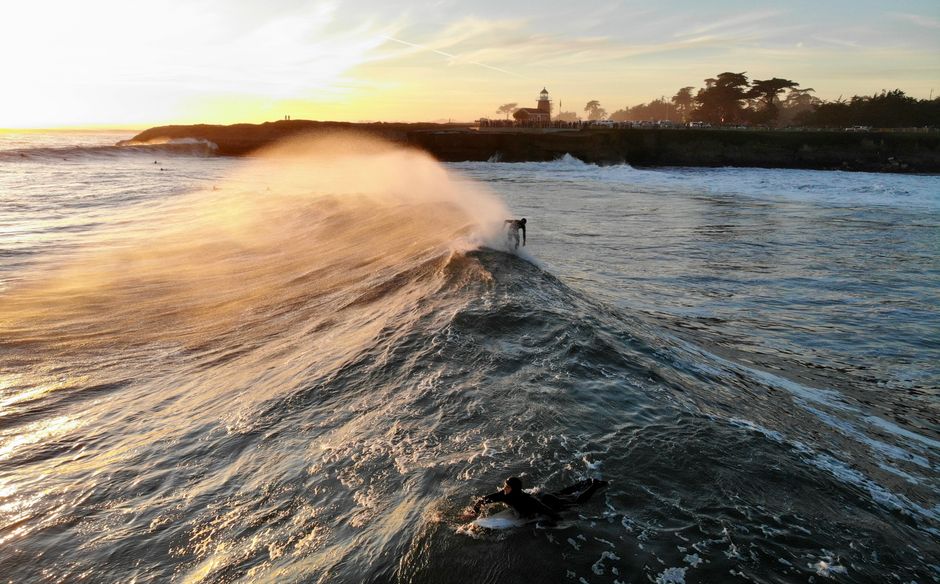
The Santa Cruz coastline, facing generally west and southwest, is exposed to swells originating from the North Pacific. Storms developing in this region, particularly during the winter months, can generate powerful north and northwest swells that directly impact the shore. The Santa Cruz Wharf, due to its pier structure, acts as a focal point for wave energy. As large swells approach the wharf, they encounter the pilings, which can disrupt wave patterns, leading to localized amplification of wave height and increased turbulence. Furthermore, the wharf’s submerged portions and the seabed around its base can also influence wave behavior, creating unpredictable and potentially hazardous conditions. During extreme high surf events, waves can overtop the wharf, sending torrents of water across its surface, posing a severe risk to anyone on or near the structure. The force of these waves can also lead to significant erosion and damage to the wharf’s infrastructure.
Historically, the Santa Cruz Wharf has experienced numerous high surf events. While specific detailed records of every minor overtopping are not always publicly documented, significant storms and large swells have repeatedly tested the wharf’s resilience. For instance, major El Niño events, known for bringing enhanced storm activity to the California coast, have often coincided with periods of exceptionally large surf impacting Santa Cruz. These events can lead to widespread coastal flooding, strong currents, and dangerous wave conditions that necessitate the closure of the wharf for public safety. Observing past patterns can offer valuable insights into the frequency and intensity of such events, allowing for better preparedness. Predicting these high surf events involves a combination of meteorological forecasting and oceanographic modeling. Meteorologists track the development and movement of storm systems that generate swells. Oceanographers then use sophisticated models to predict how these swells will propagate across the ocean and how they will interact with the specific bathymetry and coastline of Santa Cruz. Key parameters include swell period (the time between successive wave crests), swell height, swell direction, and wave period. A longer swell period often indicates a more powerful and energetic swell capable of reaching further inland.
The dangers associated with high surf at the Santa Cruz Wharf are multifaceted. The most immediate and obvious risk is drowning. Powerful waves can easily sweep individuals off the wharf or into the turbulent surf zone. Rip currents, often exacerbated by high surf, are treacherous underwater channels that can pull swimmers away from shore with surprising speed and force. These currents can be particularly dangerous around structures like the wharf, where water flow can be unpredictable. Property damage is another significant concern. Waves can break over the wharf with considerable force, damaging railings, decking, and even the structural integrity of the pilings. Businesses operating on the wharf, such as restaurants and shops, are vulnerable to water intrusion and damage. For recreational activities like fishing from the wharf, high surf renders these pursuits extremely hazardous, increasing the risk of being swept into the water or having fishing gear damaged.
Navigating high surf conditions at the Santa Cruz Wharf requires strict adherence to safety protocols. The most important rule is to heed all posted warnings and closures. Local authorities and wharf management will close the wharf to the public when surf conditions are deemed too dangerous. Never venture onto a closed wharf, regardless of perceived personal ability. If the wharf is open but high surf is present, exercise extreme caution. Stay away from the edge of the wharf and be aware of your surroundings. If you see large waves breaking near or over the wharf, consider it a sign to retreat to a safer location. For those participating in water sports like surfing or kayaking in the vicinity, it is essential to have a high level of skill and experience. Check surf reports and forecasts meticulously before heading out. Understand the local conditions and be prepared to cancel or postpone your activity if conditions are beyond your capabilities. Never swim or surf alone during high surf. Always inform someone of your plans and expected return time.
The impact of high surf extends beyond immediate human safety and infrastructure. The dynamic coastal environment of Santa Cruz is significantly influenced by wave action. High surf can lead to increased erosion of beaches and coastal bluffs, altering the local landscape over time. This erosion can impact coastal habitats, affecting nesting sites for seabirds and vital dune ecosystems. For marine life, powerful waves can disrupt feeding grounds and create challenging conditions for species that inhabit the intertidal zone. However, high surf also plays a natural role in shaping the coastline and can transport nutrients and sediment, contributing to the overall health of the marine ecosystem in the long term. The local economy is also tied to the coastal environment. While high surf can deter tourism and disrupt some businesses on the wharf, it also draws a different kind of visitor – surfers and storm watchers. Managing the impacts of high surf involves a balance between protecting human interests and respecting the natural forces that shape the coast.
Long-term strategies for mitigating the impacts of high surf on the Santa Cruz Wharf and surrounding areas involve a combination of structural engineering, coastal management, and community education. For the wharf itself, regular inspections and maintenance are crucial to ensure its structural integrity in the face of powerful wave action. In some instances, coastal defense structures like seawalls or groins might be considered to reduce wave energy reaching vulnerable areas, although these can have their own environmental consequences and are often controversial. Community preparedness is paramount. Educational campaigns about rip currents, wave safety, and the dangers of high surf can equip residents and visitors with the knowledge to make safe decisions. Encouraging responsible tourism that respects the power of the ocean is also vital. Collaboration between local government, research institutions, and community organizations is essential for developing comprehensive strategies that address the challenges posed by high surf events in Santa Cruz. Understanding the interconnectedness of the ocean, the coast, and human activity is key to fostering a resilient and safe coastal community.