Brightline Files for Chapter 11 Bankruptcy Protection as Financial Strain Meets High-Speed Rail Ambitions

The primary message from Brightline following its recent filing for Chapter 11 bankruptcy protection is one of continuity: the trains will remain on schedule, and the passenger experience remains unaffected. The company, which has positioned itself as the flagship of American private-sector high-speed rail, initiated this legal maneuver following months of intense negotiations with bondholders. This restructuring effort is designed to provide the company with the fiscal runway necessary to secure an additional $490 million in financing, a vital step toward managing the $4.4 billion in debt accrued through the exhaustive process of building, expanding, and operating its Florida rail corridors.
A Strategic Financial Restructuring
The bankruptcy filing specifically targets the holding company level and does not include Brightline Trains Florida, the operational entity responsible for the high-speed service between Miami, Fort Lauderdale, West Palm Beach, and Orlando. Similarly, the project known as Brightline West—a highly anticipated rail line designed to connect Las Vegas with the Los Angeles metropolitan area—remains outside the scope of the current filing.
For the millions of passengers who rely on the service, the message from the company is clear: it is "business as usual." The filing is a surgical financial intervention intended to restructure existing obligations rather than a liquidation or a suspension of services. By seeking protection under Chapter 11, Brightline aims to optimize its balance sheet, aligning its debt service requirements with the actual pace of its revenue growth.
Chronology and Operational Growth
Brightline’s journey began in 2018 with the launch of its initial segment between Miami and West Palm Beach. The company quickly captured the public imagination as a rare example of a private enterprise successfully navigating the complex American regulatory and land-use landscape to launch passenger rail.
- 2018: Launch of service between Miami and West Palm Beach.
- 2023: Extension of service to Orlando, establishing a major link between Florida’s tourism hubs.
- 2024: Marked by significant ridership growth (up 14 percent year-over-year) and revenue growth (up 17 percent), yet hindered by the persistent weight of the debt used to fund construction.
- Late 2024/Early 2025: Intense negotiations with bondholders culminate in the Chapter 11 filing to restructure debt and secure $490 million in fresh capital.
Despite the financial hurdles, the operational side of the business is performing well. The expansion toward Tampa and the inclusion of a new station in Cocoa remain on the company’s roadmap, signaling that the core business model of high-speed transit remains a priority for the organization.
The Disparity Between Projections and Reality
Financial analysts have pointed to a significant gap between the company’s initial projections and its current financial standing. Tim Hynes, head of Global Credit Research at Debtwire, noted that the company is currently seeing roughly half the projected ridership and only one-third of the anticipated income for 2024.
While the service remains popular, the sheer cost of infrastructure—a common barrier to rail development in the United States—has created a "crushing" debt load. Critics and analysts argue that while the private sector has shown it can deliver a high-quality, efficient service, the initial capital expenditures required for such projects often exceed what private financing alone can sustain without public-sector support or significant patience from creditors.
Safety and Public Perception
Alongside financial challenges, Brightline has faced scrutiny regarding its safety record. As of January, the company’s tracks have been the site of 182 fatalities since 2018, primarily involving collisions at crossings or individuals on the tracks. Brightline maintains that these incidents are not the result of operational failures but rather reflect the inherent challenges of operating high-speed trains through densely populated urban corridors. The company has invested hundreds of millions of dollars into safety upgrades, including advanced signaling and physical barriers, to mitigate these risks.

Despite these challenges, the consumer experience remains largely positive. Frequent riders, such as commuters traveling between West Palm Beach and Fort Lauderdale, often describe the service as a "luxury experience" that mirrors the efficiency of air travel. For these passengers, the service is a vital, albeit premium-priced, alternative to the congestion of Florida’s highways.
Broader Implications for American Rail
The situation at Brightline serves as a microcosm for the broader debate regarding the future of rail in the United States. As Amtrak reports record-breaking ridership numbers, it is clear that demand for train travel is at a historic high. However, the question of who should bear the cost of the underlying infrastructure—the tracks, the signaling, and the land acquisition—remains a point of contention among policy experts.
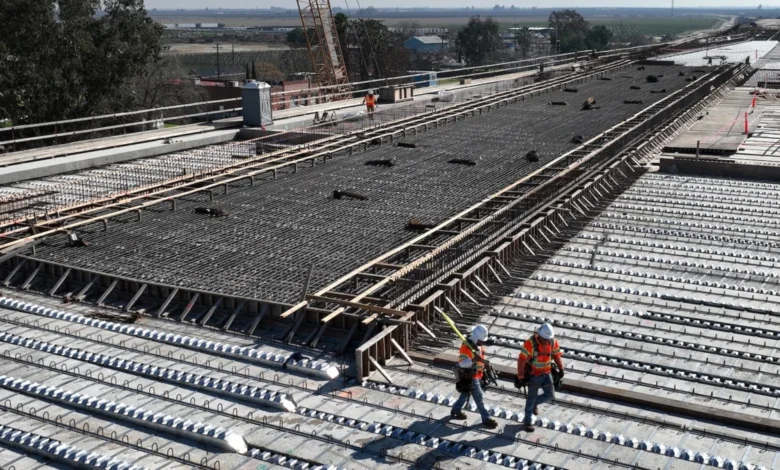
Brightline West, the company’s ambitious $21 billion project in the West, illustrates this tension. The project has already secured a $3 billion federal grant and is actively seeking an additional $6 billion federal loan. This highlights the reality that even the most "private" rail projects in America eventually require a significant public-sector footprint to bridge the gap between capital intensive construction and long-term financial sustainability.
The Role of Government and Public-Private Partnerships
Industry experts suggest that the current model may need to evolve. Jim Mathews, head of the Rail Passengers Association, argues that while the Chapter 11 filing is a pragmatic step to grant Brightline "breathing room," it also serves as a reminder that the government must play a more robust role in infrastructure financing. "Building a railroad is very hard and very expensive," Mathews noted. "This is a good example of why governments always have a legitimate role to play."
This perspective is echoed by researchers such as Alon Levy, who argue that the success of projects like Brightline West will depend on deeper integration with existing public transit systems, such as Metrolink in California. According to Levy, true success requires top-down federal action to coordinate disparate regional networks into a cohesive national system.
Furthermore, Rick Harnish of the High-Speed Rail Alliance posits that the current approach to funding rail is fundamentally skewed. He argues that because airlines and trucking companies benefit from massive public subsidies in the form of airports and interstate highways, rail should receive similar, if not greater, public investment. "Private capital will not invest in the kind of infrastructure you need to fund public transit," Harnish stated.
Conclusion: The Path Forward
The immediate outlook for Brightline is one of financial reorganization. By shedding the weight of its current debt structure, the company hopes to prove that its high-speed model is not just a luxury service, but a viable, long-term component of the American transportation network.
However, the larger takeaway from this episode is not about the failure of private rail, but about the difficulty of establishing high-speed infrastructure in a country that has historically favored automobiles and aviation. As Brightline works to stabilize its finances, the conversation in Washington and state capitals will likely shift toward how to better align public investment with the clear, rising public demand for efficient, sustainable, and high-speed rail travel. Whether the future is built through public-private partnerships or direct government intervention, the case of Brightline serves as a definitive case study in the risks and rewards of modernizing American mobility.