Indigenous Governance and Ancestral Knowledge Are the World’s Most Effective Climate Resilience Strategies



From the frozen tundras of Canada to the dense rainforests of the Ecuadorian Amazon and the high-altitude terrains of Nepal, Indigenous communities are standing on the front lines of an accelerating climate emergency. While the global community often characterizes these regions as victims of environmental degradation, a groundbreaking new report from the advocacy group Land Is Life argues that Indigenous peoples are, in fact, the architects of the most effective, scalable, and sophisticated climate adaptation strategies currently in operation.
The report, released to coincide with New York Climate Week, asserts that the global failure to curb climate change is not a failure of available solutions, but a failure of recognition. By prioritizing Western, top-down bureaucratic interventions over established Indigenous governance systems, international powers are systematically undermining the very strategies that have kept these ecosystems balanced for millennia.
The Anatomy of Overlapping Crises
The contemporary climate landscape is no longer defined by isolated, singular disasters. According to the Land Is Life report, which analyzed survey data from 46 countries and six distinct ecosystems—forests, mountains, drylands, freshwater systems, grasslands, and coastal areas—the reality is far more volatile. Over 80 percent of the more than 200 Indigenous leaders surveyed reported that they are currently navigating two or more climate-related disasters simultaneously.
This phenomenon of "compounding crises" has become the new normal. For instance, an area might face a prolonged, multi-year drought that kills off essential food crops, followed immediately by unseasonal, torrential rains that trigger catastrophic flooding and landslides. Over 90 percent of respondents indicated that the frequency of these extreme weather events has increased significantly over the past decade, creating a state of perpetual emergency that erodes the resilience of traditional land management systems.
A Chronology of Indigenous-Led Response
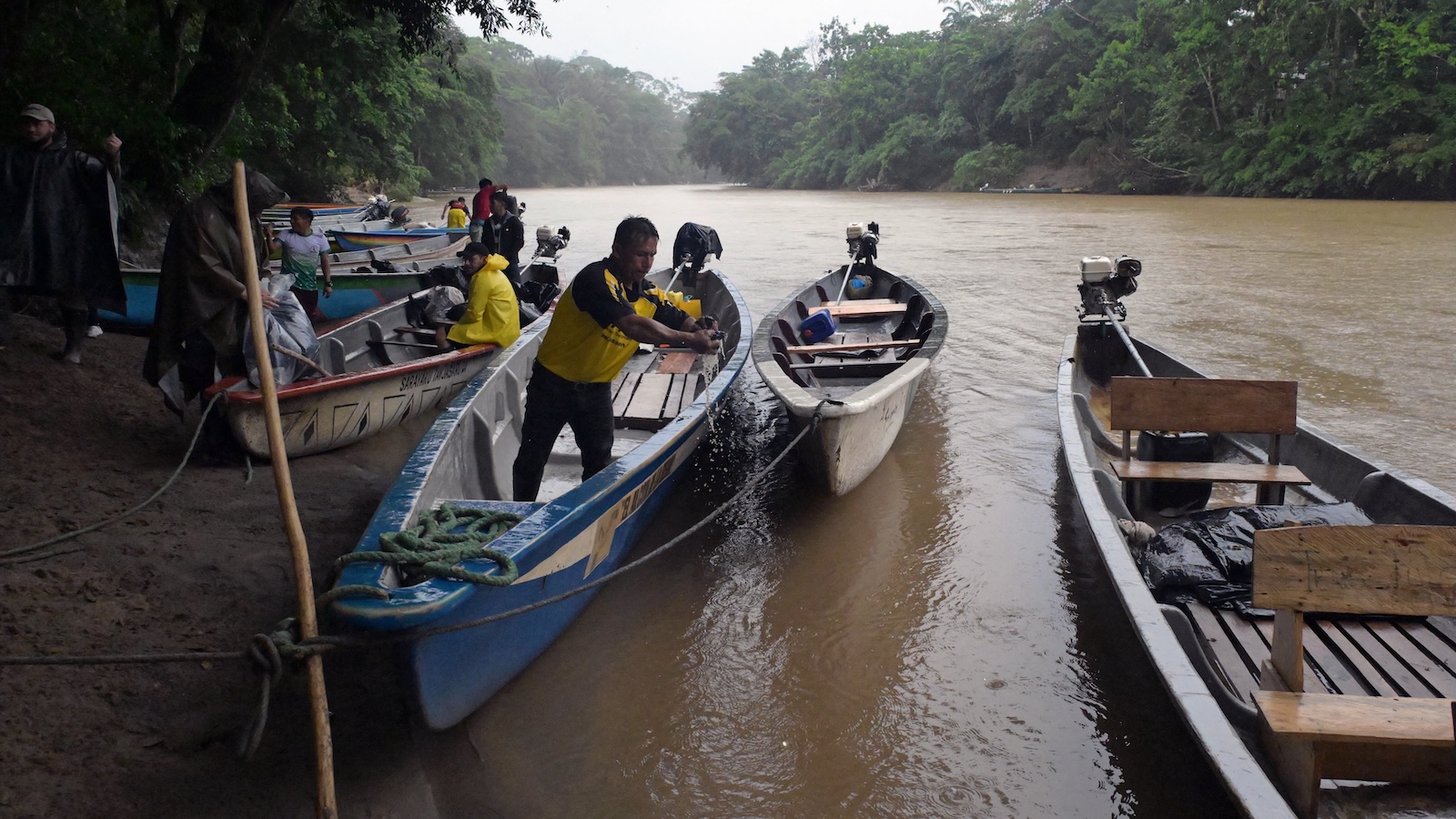
The effectiveness of Indigenous resilience is rooted in deep, intergenerational knowledge combined with robust local governance. A poignant example of this can be traced to the Kichwa People of Sarayaku in the Ecuadorian Amazon.
In 2019, the community of approximately 1,600 people, occupying over 500 square miles of territory, faced a severe flooding event on the Bobonaza River. While the surge was powerful enough to destroy homes and vital agricultural plots, the community did not succumb to chaos. Because the Kichwa maintain a sophisticated system of internal governance—guided by the principle of minga, or collective solidarity—they had already established protocols for rapid communication and resource distribution.
Elders in the community had noted subtle changes in lightning patterns and precipitation at the river’s headwaters days before the flooding reached its peak. Because of their established decision-making structures, they were able to issue early warnings, coordinate the relocation of families, and designate representatives to manage interactions with external authorities. This proactive stance, rooted in traditional knowledge, allowed the community to mitigate the loss of life and property far more effectively than if they had been reliant on distant, unresponsive governmental agencies.
Similar patterns of success have been documented globally. In Kenya, Indigenous Endorois and Tugen women have successfully pioneered the cultivation of drought-resistant sorghum and millet varieties. These crops have served as the only reliable food source for their regions during periods of record-breaking heat, demonstrating a level of food security resilience that conventional industrial agriculture has failed to match.
The Governance Gap: Why Recognition Matters
Despite the clear empirical success of these strategies, there remains a persistent "governance gap." Scientists and policymakers have increasingly begun to acknowledge the value of Indigenous ecological knowledge—the "what" of their success—but they have largely failed to respect the "how": the sovereign governance structures that allow this knowledge to be deployed.
The Land Is Life report highlights that for these strategies to work at scale, legal recognition is non-negotiable. Many nations still lack the legal frameworks to grant Indigenous peoples tenure over their ancestral lands, and in some regions, the situation is even more precarious, with governments actively criminalizing the cultural practices and languages that are central to climate adaptation.
"We show that it’s not that they are only the most impacted, but they are already implementing effective solutions," said Luisa Castañeda Quintana, executive director of Land Is Life. "When it comes to adaptation, we don’t really need to create new structures or systems. We just need to see what is working."
Economic Disparities and the Funding Paradox
A critical finding of the report is the profound disconnect between global climate finance pledges and actual implementation on the ground. While billions of dollars are pledged annually at international summits, only a fraction of that funding ever reaches Indigenous-led organizations.
Anisha Buda, a program officer at the National Indigenous Women Forum in Nepal, notes that the lack of access to direct funding is the primary obstacle to expanding proven resilience models. "It’s always the lack of resources and the lack of access to funding that makes it so difficult for us to work, especially when climate change makes us the most vulnerable," Buda stated.
The report highlights a frustrating trend where funding intended for Indigenous communities is instead funneled through large, non-Indigenous NGOs or international intermediaries. This adds layers of bureaucratic friction, often resulting in projects that are culturally misaligned or focused on short-term, superficial fixes rather than long-term, structural support for Indigenous sovereignty.
Implications for Global Climate Strategy
As geopolitical tensions in Europe and the Middle East continue to strain global resources, there is a growing fear among climate advocates that support for marginalized communities will be further deprioritized. However, the report’s author, Gisela Hurtado, argues that the current scarcity of funds should actually lead to a pivot toward proven models.
"We are in a moment where resources are scarce," Hurtado said. "Where can we put the little money that we have? Where can we put it to make it much more effective? And for me, the idea is: put it into what is already working."
The broader implication is that climate resilience is not a technological problem to be solved by external innovation, but a political and social one that requires the redistribution of power. Supporting Indigenous self-determination, strengthening land rights, and providing direct, flexible financing are not just ethical imperatives—they are the most efficient strategies for global disaster risk reduction.
Moving Forward: Lessons from the Territory
The report concludes with a stark warning: the extreme climate conditions currently experienced by Indigenous communities are a preview of what the rest of the world will face in the coming decades. Because these communities are more deeply connected to their local environments, their observations and responses provide a blueprint for human survival in an era of volatility.
By ignoring the expertise of Indigenous peoples, global powers are essentially discarding a survival manual that has been stress-tested over centuries. To pivot toward a more resilient future, policymakers must move past the symbolic celebration of Indigenous knowledge and begin to provide the tangible, structural support required for Indigenous governance to flourish. As the climate crisis intensifies, the cost of continued inaction—or the cost of repeating the mistakes of top-down, exclusionary development—will be measured in lives, ecosystems, and the irreversible loss of cultural heritage.