The Digital Lifeboat: Global Scientists Scramble to Preserve Climate Data Amid Political Volatility

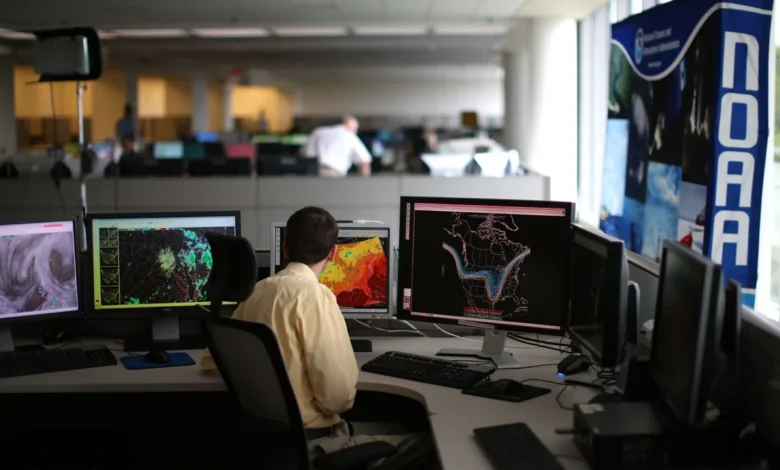
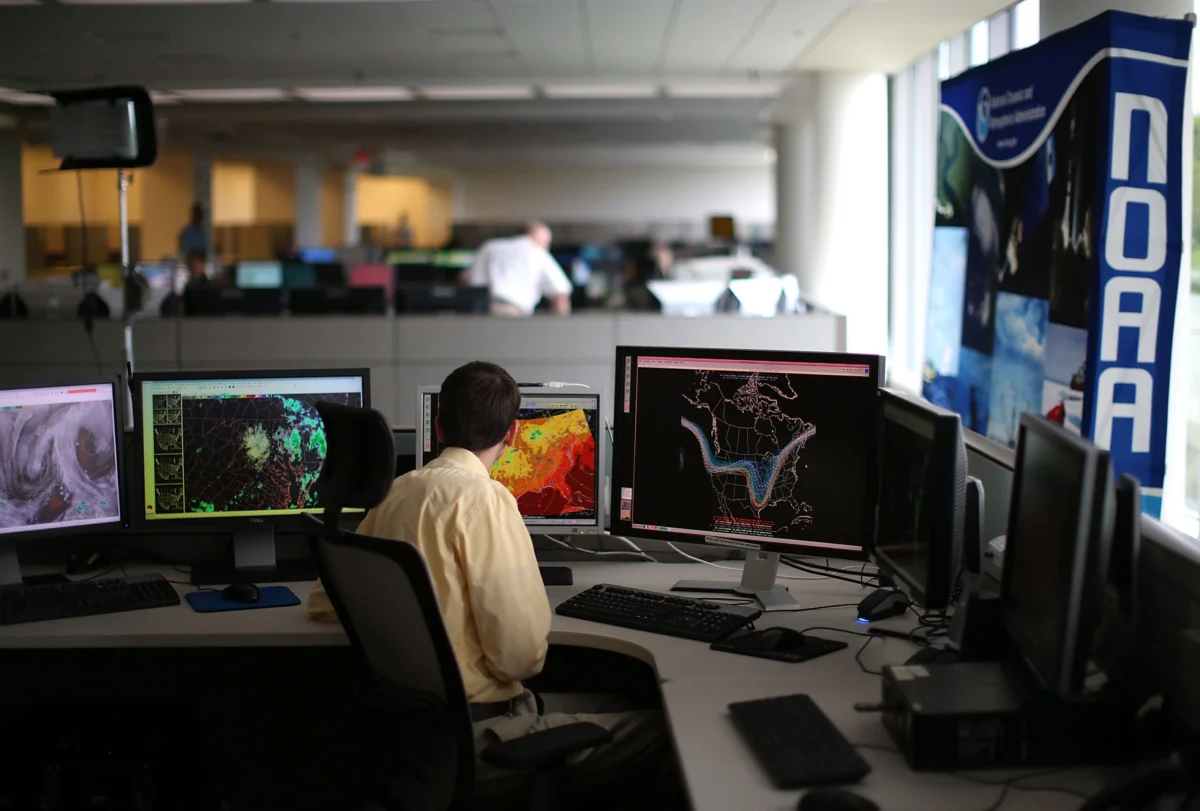
Deep within a nondescript, five-story facility in the heart of Hamburg, Germany, technicians are methodically installing rows of gray, industrial-grade server racks. This is the German Climate Computing Center (DKRZ), a powerhouse of global climate modeling. The addition of five petabytes of storage capacity is not merely a routine hardware upgrade; it is a strategic defensive maneuver. As these new units hum to life, they are being filled with backup copies of U.S. climate simulations—a "digital lifeboat" designed to ensure that the foundational data for the next United Nations climate assessment in 2029 survives the current era of political hostility in Washington.
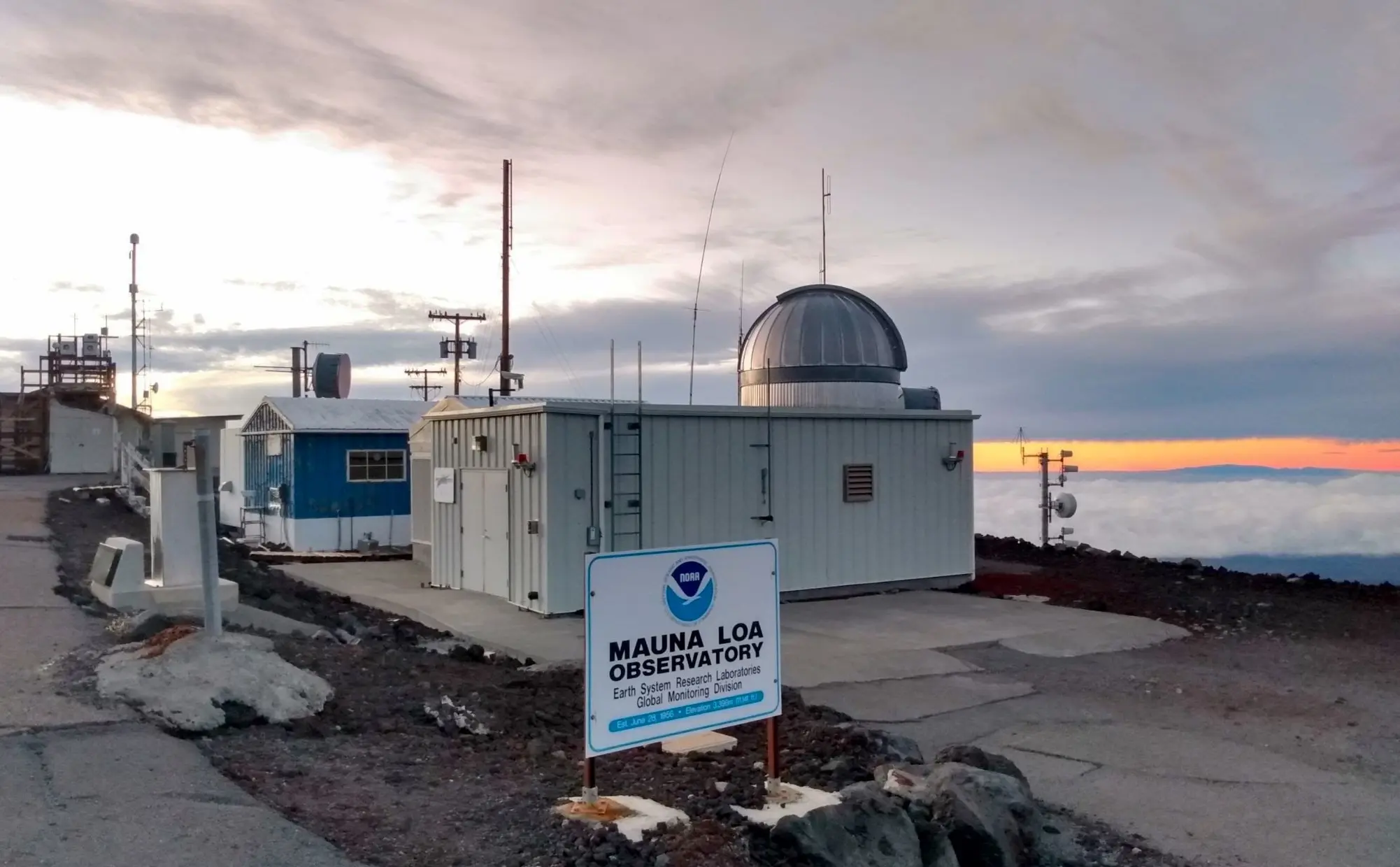
The mission is urgent. As the administration of President Donald Trump has systematically moved to restrict climate research—slashing budgets, purging references to human-caused warming from federal websites, and actively attempting to shutter critical monitoring infrastructure like the Mauna Loa Observatory—the global scientific community has shifted into a defensive posture. What was once considered an unthinkable scenario—the loss of taxpayer-funded, public-domain scientific data—has become a tangible, immediate threat.
A Chronology of Scientific Erosion
The current crisis did not emerge overnight; it is the culmination of a multi-year trend toward the politicization of environmental science. Following the U.S. withdrawal from the U.N. Framework Convention on Climate Change and the Intergovernmental Panel on Climate Change (IPCC) in early 2025, the institutional guardrails that previously protected scientific transparency began to collapse.
In April 2025, the situation reached a breaking point when the Department of Government Efficiency, led by figures aligned with the administration’s anti-regulatory agenda, purged the Socioeconomic Data and Applications Center (SEDAC) at NASA. The removal of 300 federally funded, decades-old datasets prompted a frantic, last-minute salvage operation. Scientists and data archivists across the country scrambled to scrape information from active servers before they were permanently wiped, eventually transferring the records to the Harvard Dataverse Repository.

This event served as a catalyst for international cooperation. By late 2025, the German Research Foundation (DFG) launched a $35 million initiative specifically designed to safeguard U.S. climate datasets. The effort, encompassing projects such as CMIP7-ark, SHIELD, and SEND (Secure Endangered Earth Data), marks a departure from traditional, localized data storage methods.
The Mechanics of Data Resilience
Historically, scientific data has been stored on local hard drives or magnetic tapes at the specific university or agency where it was generated. This model relied on a baseline assumption of institutional stability and a respect for the scientific process. However, the rise of "data vulnerability" has forced a shift toward decentralized, cross-border redundancy.
The logistics of this shift are immense. A single petabyte of data equates to approximately 200 million high-resolution images. Transmitting this volume of data over the public internet is often impractical, as it can take months and incur prohibitive bandwidth costs. Consequently, researchers have returned to the "sneakernet"—the physical transport of hard drives and tapes via aircraft or secure courier—to move data between continents.
Beyond the physical storage, there is the challenge of format obsolescence. As Frank Oliver Glöckner, a professor of Earth systems data science at the University of Bremen, points out, securing the data is only half the battle. "We are developing protocols to ensure that not only the raw data is saved, but the specialized software and metadata required to read and interpret that information are preserved," Glöckner explained. Without the accompanying code, decades of climate history could become "digital dark matter"—technically existing, but functionally inaccessible.
Institutional Responses and Ethical Obligations
The American Geophysical Union (AGU), representing more than 60,000 Earth and space scientists, has become the de facto clearinghouse for these resilience efforts. In March 2026, the AGU convened a summit in Berlin to formalize these "data rescue" protocols. The meeting, attended by experts from the U.S. and Europe, focused on the necessity of an international, non-partisan repository for critical environmental records.
The consensus from the Berlin summit was clear: data must be treated as a global public good. "We have engaged in triage efforts to ensure data remains usable and accessible," said AGU president-elect Ben Zaitchik. "But we have arrived at a moment where we must fundamentally reimagine data organization and maintenance for long-term viability."
Official responses from German research institutions highlight a growing lack of trust in U.S. science policy. Kathrin Winkler, program manager at the DFG, noted that the potential for data manipulation—not just deletion—poses a significant threat to global policy. "There is a risk that data could be manipulated to skew findings in a desired direction," Winkler warned. By maintaining independent, redundant copies in Germany, the DFG aims to provide an objective "gold standard" that can be verified against potential revisions coming from U.S. federal sources.
Broader Implications: Beyond Climate Change
The move to protect climate data is also providing a blueprint for other fields. The Senckenberg Natural History Museum in Frankfurt is currently leading an initiative to secure biodiversity data from conflict zones, including Ukraine and Yemen. In these instances, the threat is not political censorship but the physical destruction of research infrastructure due to warfare.
The parallels between political interference and physical conflict are not lost on researchers. Anastasiia Lutsenko, a Ukrainian researcher at the Max Planck Institute, has documented how systematic attacks on universities are designed to erase national scientific memory. "They know how much lasting harm they can inflict by attacking science," she observed. The transfer of 19th-century meteorological records from Ukraine to the University of Giessen prior to the Russian invasion stands as a successful case study in the power of proactive, international data preservation.
Fact-Based Analysis: The Risks of Centralization
The current reliance on international "lifeboats" highlights a critical flaw in global research infrastructure: the failure to account for political volatility in the world’s leading scientific power. A fact-based assessment of the situation reveals three primary risks to global data integrity:
- The "Single Point of Failure" Bias: By concentrating scientific data within national government agencies, the global community made itself vulnerable to domestic policy shifts. The current crisis suggests that scientific data must be distributed across multiple jurisdictions to be truly secure.
- The Erosion of Public Trust: When governments attempt to bury or alter scientific findings, they do not merely hinder current research; they damage the long-term credibility of the scientific process, requiring years of effort to restore.
- The Financial and Technical Burden: Decentralization is expensive. The cost of maintaining redundant, high-availability, cross-continental server farms is a tax on scientific progress. These funds, if not diverted to data security, could have otherwise supported new research and technological innovation.
Looking Toward a Distributed Future
As Christopher Kadow of the DKRZ notes, the long-term goal is a global network of "digital pipelines." In an ideal scenario, climate data would be synced automatically across international nodes, making it impossible for any single actor—whether a government or a malicious hacker—to compromise the integrity of the record.
However, even European scientists remain wary of complacency. The recent electoral success of far-right, climate-skeptic parties in Germany has served as a sobering reminder that political volatility is not exclusively an American phenomenon. "We don’t know what political shifts may occur in Germany," Kadow admitted. "We aren’t completely protected from risks or developments like those in the U.S."
The "digital lifeboat" in Hamburg is, for now, a necessary reaction to a fractured political landscape. But for the scientists involved, the ultimate goal remains a world where such measures are unnecessary—a world where the objective reality of the climate record is shielded from the whims of political office. Until that time, the servers in Hamburg will continue to spin, guarding the data that will define the planet’s future, one petabyte at a time.