Congressional Gridlock and the Future of American Agriculture: A Farm Bill in Peril



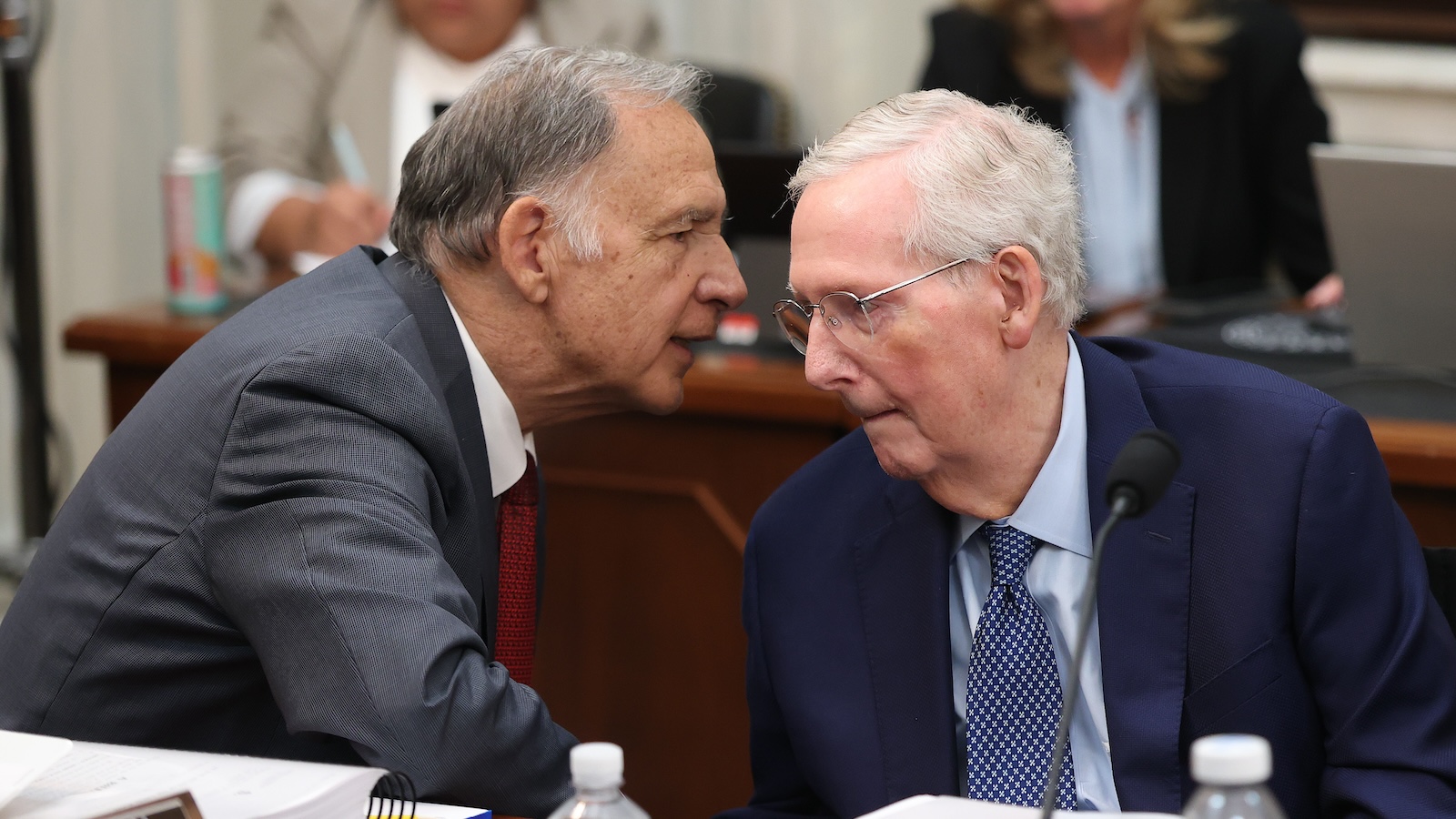
Last Tuesday, Senator Mitch McConnell made a high-profile return to the Senate floor following a three-month hiatus, providing the decisive vote needed to advance a Republican-led agriculture package out of committee. While the move signaled a potential thaw in the legislative freeze, the path toward a finalized farm bill remains precarious. With midterm elections looming in November and a deep-seated ideological divide over nutrition funding, Congress appears poised to miss its window for renewal, marking the fourth consecutive year that the nation’s foundational agricultural policy has languished in legislative limbo.
The Anatomy of the Standoff
The current impasse centers on a fundamental disagreement regarding the Supplemental Nutrition Assistance Program (SNAP). Historically, the farm bill—a massive, multi-year legislative vehicle—has served as the primary mechanism for setting both agricultural subsidies and domestic food assistance policy. However, the political landscape shifted dramatically last year when the "One Big Beautiful Bill Act," signed by President Donald Trump, mandated $186 billion in cuts to SNAP.
Senate Democrats, led by committee leadership, have maintained a firm stance: they will not support a farm bill that codifies these cuts or fails to address the shifting administrative burdens placed on states. The current Republican draft lacks these provisions, effectively stalling any momentum toward a floor vote. In a chamber where Republicans hold 53 seats, the math for passage is unforgiving. To reach the 60-vote threshold required to overcome procedural hurdles, the GOP would need to secure a significant number of Democratic defections—a scenario that appears increasingly unlikely given the approaching election cycle.
A Chronology of Legislative Failure
The struggle to pass a comprehensive farm bill is not a recent phenomenon. Since the expiration of the 2018 legislation, Congress has relied on a series of stopgap measures to keep federal agricultural programs afloat.
- 2023: Initial discussions for a new five-year framework began with bipartisan optimism, but quickly dissolved as debates over SNAP eligibility and conservation funding intensified.
- August 2026: Democrats on the Senate Agriculture Committee effectively blocked the proposed version of the bill, citing the absence of restored SNAP funding and the lack of protections against increased state administrative costs.
- September 2026: Senator McConnell’s return provided the necessary support to move the bill out of committee, yet the floor strategy remains nonexistent.
- November 2026: The looming midterm elections serve as the de facto deadline for substantive legislative action. Analysts predict that if a deal is not reached by early October, the bill will be shelved until at least 2027.
Economic Implications for Rural America
The debate over SNAP is not merely a social policy dispute; it is an economic issue that strikes at the heart of rural America. Contrary to the common perception that food assistance is an urban-centric program, rural communities actually exhibit higher rates of SNAP participation than their metropolitan counterparts.
"The farmers in our network live in rural areas," explains Jody Osmund, a founding member of the FACE Ag Network. "Rural areas have a higher uptake of SNAP participation than urban areas. So, it is hurting our community." For the small- and medium-sized livestock producers Osmund represents, the local customer base is directly tied to the purchasing power of their neighbors. When SNAP benefits are reduced, local spending power contracts, creating a ripple effect that damages small-scale agricultural viability.
Furthermore, the lack of a clear cost-sharing structure for SNAP at the state level is forcing local governments to make impossible choices. Mike Lavender, policy director of the National Sustainable Agriculture Coalition, notes that states are currently evaluating their budgetary priorities. "States are going to have to rethink their budgets," Lavender said. "That could mean that states are looking at, ‘Hey, do we fund education at this level or do we fund SNAP? Or do we fund transportation or SNAP?’"
The Conservation Conflict
Beyond the nutrition debate, the bill is failing to satisfy those interested in the environmental aspects of agriculture. Many advocacy groups are disappointed by the proposed cuts to established programs such as the Environmental Quality Incentives Program (EQIP) and the Conservation Stewardship Program (CSP).
Critics argue that the current bill fails to prioritize climate-resilient farming practices. Instead of directing funds toward sustainable soil management or carbon sequestration, critics suggest that current funding is disproportionately allocated toward managing waste on large-scale, industrial livestock operations. This has led to a paradoxical situation where environmental advocates find themselves in the camp of those hoping the bill fails to pass, fearing that a finalized law could cement unsustainable practices for years to come.
The "Save Our Bacon" Provision: A Rare Bipartisan Victory
Amidst the partisan wreckage, there is a notable exception: the exclusion of the "Save Our Bacon Act." This controversial provision would have preempted state-level animal welfare laws, effectively allowing for the use of intensive confinement practices that have been outlawed in several jurisdictions.
The successful exclusion of this measure is viewed as a significant win for sustainable agriculture coalitions. Osmund and his peers, who lobbied heavily against the act, view its absence as a rare moment of clarity in a otherwise muddled legislative document. The fact that this provision was stripped from the committee draft suggests that even in a polarized Congress, there remains a baseline consensus regarding the necessity of avoiding the most extreme deregulation of animal welfare.
The Calculus of 2027
As the prospect of a 2026 farm bill fades, stakeholders are beginning to pivot toward the reality of a 2027 start. For many, the prospect of a "no deal" scenario is actually preferable to the passage of what they characterize as a "bad deal."
"A continuation of the 2018 farm bill may be better," Osmund argued. "It’s not good. It is not ideal, but no deal on the current versions of the farm bill, in our opinion, is much better than a very, very bad deal."
This sentiment is echoed across various agricultural sectors. With farmers facing record-high input costs—driven by fluctuating diesel prices and unstable global trade markets—the current legislative uncertainty adds a layer of anxiety to an already volatile industry. However, the consensus among many policy experts is that a flawed, rushed bill could do more long-term damage than a temporary continuation of existing, albeit aging, policy.
Analytical Perspective: The Broader Economic Toll
The failure to enact a robust farm bill has tangible consequences for the federal government’s ability to manage agricultural risk. The current reliance on stopgap measures creates a "patchwork" environment that complicates long-term planning for farmers. When federal agencies cannot guarantee the continuation of specific subsidies or conservation incentives, capital investment in sustainable infrastructure tends to stagnate.
The $186 billion cut to SNAP, mandated by the previous administration’s legislation, acts as the primary anchor dragging down the bill. The fiscal reality is that any attempt to restore that funding would require either a significant increase in the total cost of the farm bill—a non-starter for fiscal hawks in the GOP—or a redistribution of funds from commodity subsidies, which would trigger intense resistance from the powerful agribusiness lobby.
Ultimately, the Senate’s agriculture impasse is a microcosm of a broader legislative paralysis. While the bill contains technical adjustments that both sides agree are necessary, the underlying ideological friction over the social safety net and the definition of "sustainable" agriculture remains unaddressed. As Congress turns its attention to the upcoming elections, the nation’s food policy remains frozen, leaving farmers, families, and state governments to navigate an increasingly uncertain landscape without the support or direction of a modernized federal framework.