A Rare Diplomatic Consensus: Global Leaders Unite on Sea Level Rise Despite U.S. Climate Skepticism

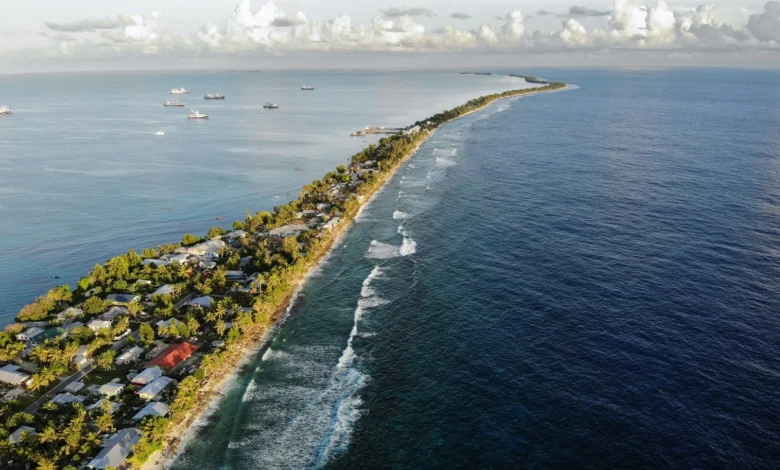
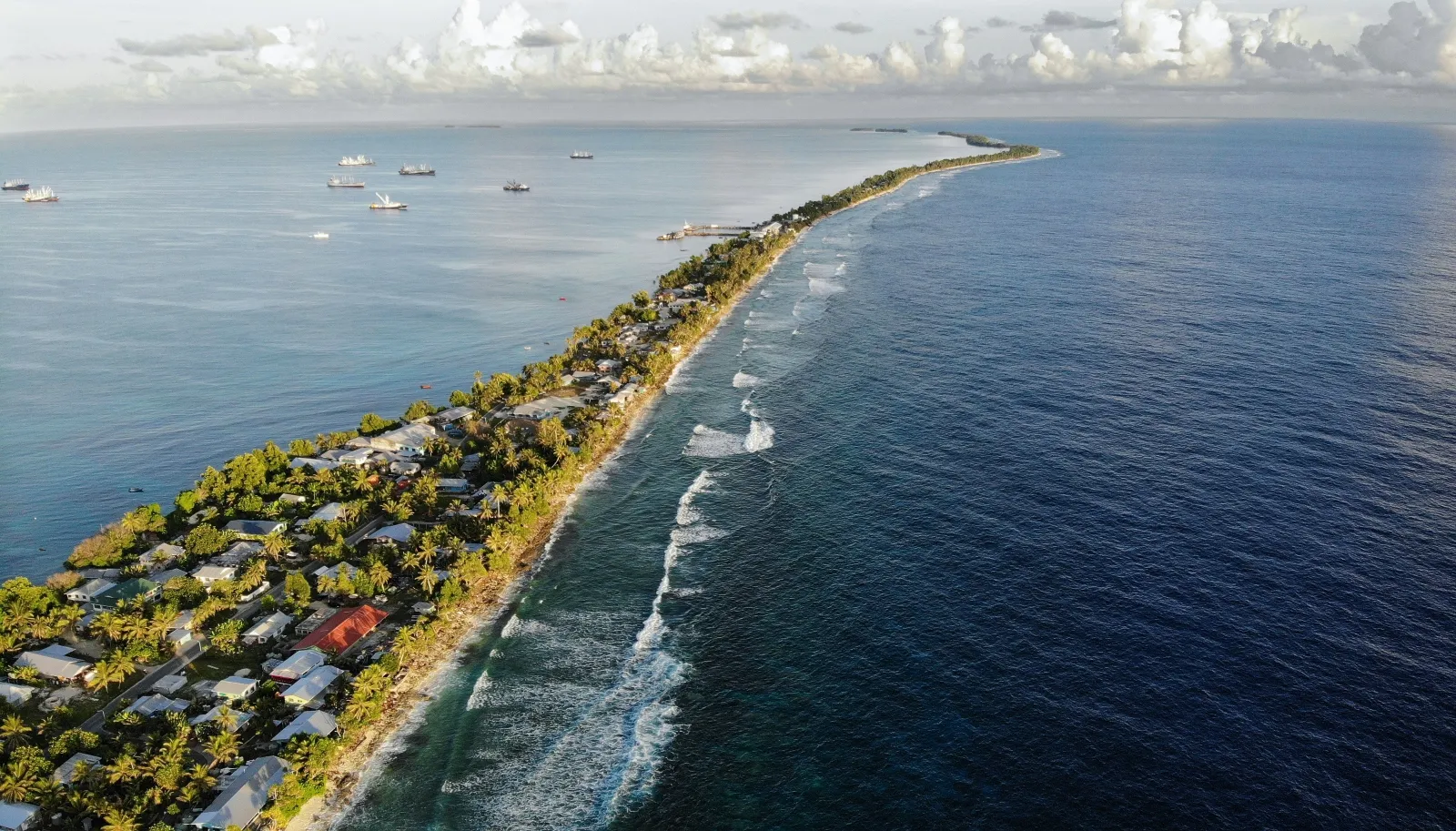
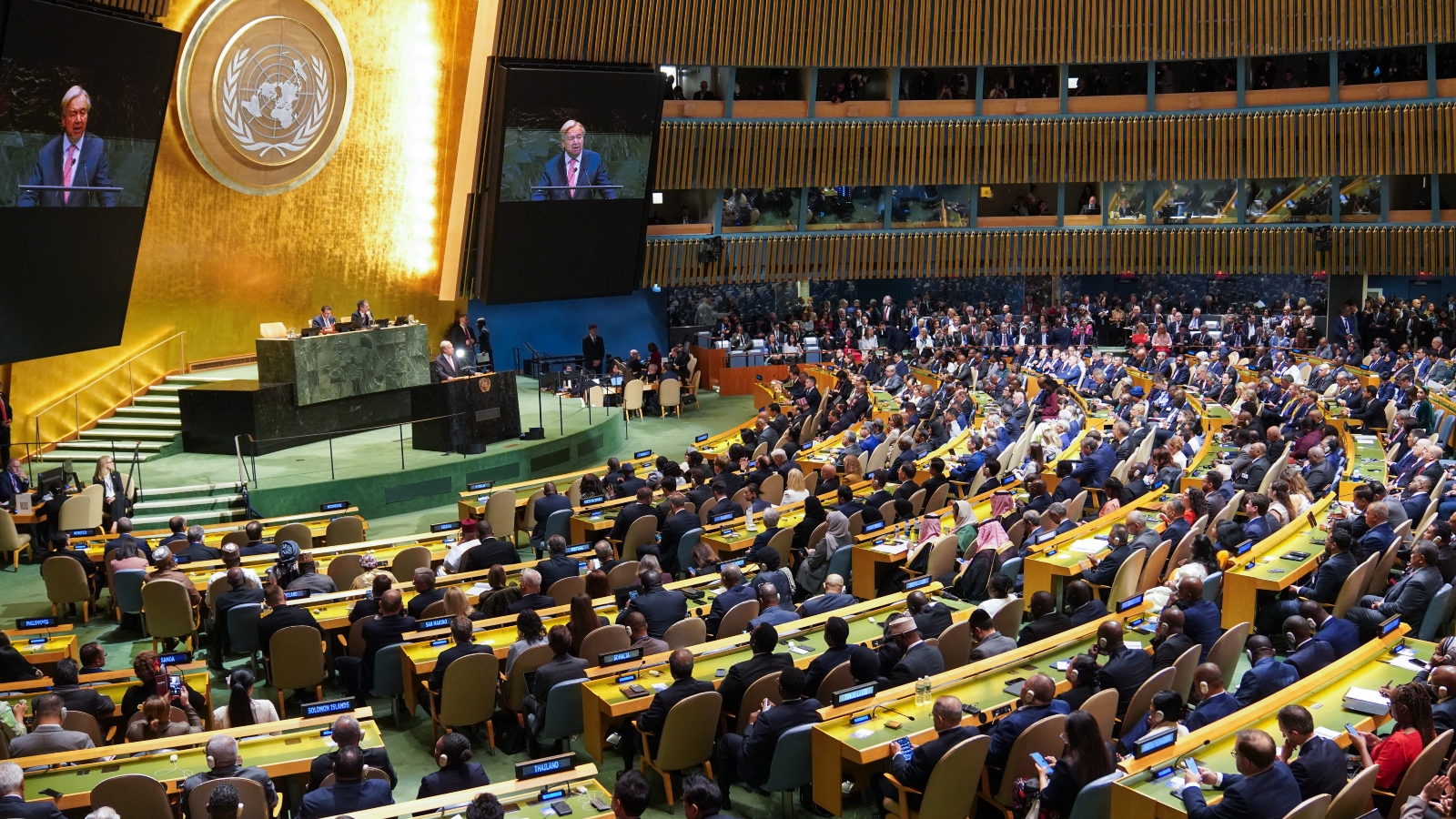
The United Nations General Assembly reached a historic, unanimous agreement this week regarding the legal status of nations threatened by rising sea levels. The accord, which establishes that sovereign states will retain their political standing and maritime borders even if their physical landmasses are submerged, marks a surprising deviation from the current U.S. administration’s broader pattern of climate policy obstructionism. While President Donald Trump’s second term has been defined by a systematic withdrawal from international climate frameworks—including the Paris Agreement and proposed levies on maritime emissions—the U.S. delegation’s decision to allow the sea level resolution to proceed signals a pragmatic, if narrow, shift in diplomatic priorities.
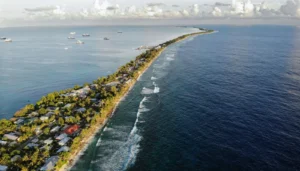
This resolution, championed by the Alliance of Small Island States (AOSIS), provides a critical legal lifeline to nations such as Tuvalu, the Marshall Islands, and the Bahamas. As global temperatures continue to climb, driving the accelerated melting of polar ice sheets and mountain glaciers, the physical existence of these island nations faces an existential threat. For the first time, the international community has codified a “presumption in favor of continued statehood,” ensuring that the disappearance of territory does not equate to the dissolution of a nation’s sovereignty or its control over lucrative exclusive economic zones (EEZs).
A Chronology of Climate Multilateralism Under Strain
The current geopolitical climate has been marked by a retreat from collective action. Since early 2025, the U.S. approach to global environmental policy has been characterized by aggressive unilateralism. The administration has not only exited the Paris Agreement but has actively campaigned against international carbon pricing, particularly within the International Maritime Organization. Furthermore, the White House has utilized the threat of trade tariffs to discourage other nations from prioritizing climate rhetoric in international forums.
Against this backdrop, the UN resolution appears as an outlier. The path to this agreement began years ago, accelerated by a series of legal precedents. In 2024, the International Court of Justice issued a landmark ruling affirming that statehood is not strictly tied to the physical integrity of land. Following this, the Alliance of Small Island States spent months lobbying for a formal UN declaration to endorse these legal principles. By late 2025, the draft resolution had gained enough momentum that the U.S., recognizing the potential for its own national interests to be impacted by shifting maritime borders, chose not to exercise its veto power.
The Geography of Existential Risk
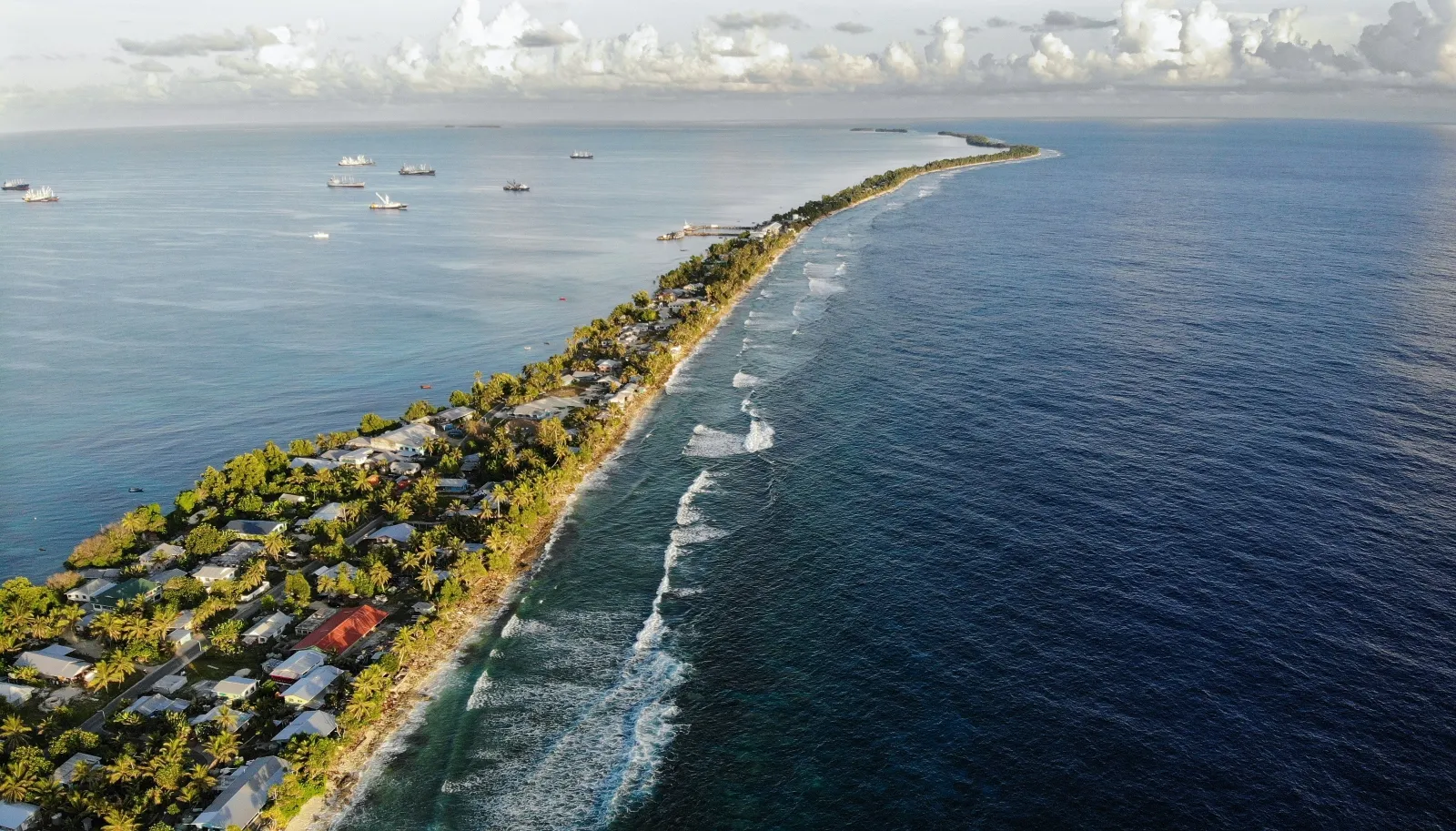
The stakes for low-lying nations are severe. According to recent climate modeling, significant portions of the Pacific and Caribbean island chains are projected to be uninhabitable within the century. The Bahamas, for instance, has an average elevation of less than three meters above sea level. Prime Minister Philip Davis has been a vocal advocate for the resolution, noting that for his nation, the declaration is a matter of both survival and economic security.
Beyond the loss of homes and infrastructure, island nations risk losing their maritime zones. Under international law, a country’s EEZ—which extends 200 nautical miles from its coastline—provides rights to fishing, mineral extraction, and renewable energy development. If a nation technically ceases to exist, these zones could become "high seas" subject to international exploitation, effectively stripping vulnerable nations of their most valuable remaining assets.
The new agreement explicitly prevents this, enshrining the principle that maritime boundaries remain fixed regardless of coastal erosion or inundation. This protects against the potential for a "free-for-all" in the Pacific, where deep-sea mining companies have already begun eyeing mineral-rich seabeds.
Data and Financial Realities
While the legal protections offer a sense of security, they do not address the immediate, tangible needs for climate adaptation finance. The gap between current funding levels and the requirements of vulnerable nations remains a point of intense friction. As of 2026, developed nations provide approximately $130 billion annually in climate-related grants and loans. While this figure is a significant increase from previous decades, it falls well short of the trillions of dollars experts suggest are necessary for the construction of seawalls, desalination plants, and the relocation of entire populations.
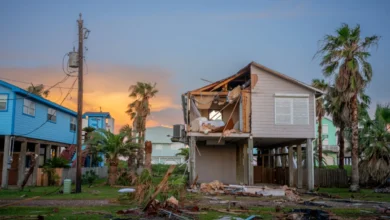
The 2024 agreement to reach $300 billion in annual aid by 2035 remains the official benchmark, yet the U.S. administration’s skepticism toward foreign aid has complicated these efforts. The dismantling of the U.S. Agency for International Development (USAID) and the retraction of several bilateral aid treaties have left a vacuum in global funding. For states like the Bahamas, which remain burdened by debt from climate-linked disasters—most notably the recovery from 2019’s Hurricane Dorian—the reliance on loans rather than grants is increasingly unsustainable.
Strategic Motivations for U.S. Acquiescence
The decision by the United States to support the UN declaration is not necessarily an endorsement of global climate activism, but rather a calculation based on self-interest. Bryce Rudyk, a legal advisor to the Alliance of Small Island States and a professor at New York University, explains that the U.S. has its own vulnerabilities.
“Everyone will lose land,” Rudyk noted. “The U.S. has massive, low-lying coastlines along the Gulf of Mexico and the Atlantic seaboard. If we allow the precedent that shifting tides dissolve sovereignty, we are effectively inviting chaos into our own maritime borders.”
For Washington, the legal framework established by the UN provides a buffer against the loss of sovereign control over oil, gas, and mineral rights in the Gulf of Mexico. By supporting the "presumption of statehood," the U.S. secures its own legal standing against any future potential for border disputes caused by sea level rise. This pragmatic alignment suggests that while the current administration may reject climate change as a political priority, it remains deeply invested in the legal stability of international maritime law.
Implications and Future Outlook
The UN declaration serves as a crucial milestone in international law, transitioning from a theoretical legal presumption to a settled consensus. However, legal status alone will not mitigate the physical reality of a warming planet. The declaration creates a framework for "political existence," but it does not mandate the physical restoration of lost land.
The focus of the international community is now expected to shift toward the implementation of the "urgent" obligation for climate aid. While the U.S. has not committed to providing new funding, the acknowledgment of this obligation in a unanimous UN document provides a diplomatic lever for developing nations. Future climate summits will likely see increased pressure on developed economies to bridge the gap between their legal promises and their financial commitments.
For now, the agreement represents a rare moment of unity. Kamal Amakrane, climate envoy for Trinidad and Tobago, summarized the sentiment following the vote: “The world has agreed to preserve the integrity of small islands by consensus, in a year when consensus has been hard to come by. It is a testament to the fact that when the threat is existential, the common interest eventually prevails.”
As the global community looks toward the next cycle of climate negotiations, the challenge will be to translate this legal triumph into concrete action. Whether the U.S. will move beyond mere acquiescence and toward meaningful participation in climate finance remains to be seen. However, the precedent has been set: in a changing world, the map of the globe may be subject to the tides, but the sovereignty of nations will be guarded by the rule of law.