The Urban Mother Road Analyzing the Cultural and Economic Evolution of Route 66 in Albuquerque

Albuquerque, New Mexico, holds a unique distinction in the cartography of American folklore as the city containing the longest continuous urban stretch of Route 66. Spanning 18 miles along what is now Central Avenue, this segment of the historic highway serves as a living laboratory for the evolution of American transit, commerce, and culture. As the United States prepares to celebrate the centennial of Route 66 in 2026, the city of Albuquerque is increasingly becoming a focal point for researchers, tourists, and urban planners seeking to understand how a road designed for the mid-20th-century automobile adapts to the pedestrian and socioeconomic demands of the 21st century. While the "Mother Road" is traditionally associated with high-speed travel and expansive desert vistas, the experience of navigating Albuquerque’s 18-mile corridor on foot offers a granular perspective on the preservation of kitsch, the resilience of Native American artistry, and the complexities of urban revitalization.

Historical Context and the 1937 Realignment
To understand the current layout of Route 66 in Albuquerque, one must look back to the 1937 realignment. Originally, the highway followed a north-south trajectory through New Mexico, passing through Santa Fe and entering Albuquerque along 4th Street. However, in 1937, the route was straightened to follow an east-west path, significantly shortening the travel time across the state. This change created a unique geographical anomaly at the intersection of Central Avenue and 4th Street, which remains the only place in the United States where Route 66 crosses itself.
New Mexico contains more miles of Route 66 than any other state, totaling 535 miles. The transition from the original "Great Bend" route to the 1937 alignment transformed Central Avenue into a neon-lit corridor of motels, diners, and gas stations designed to capture the attention of motorists traveling between Chicago and Los Angeles. Today, this stretch remains the heart of Albuquerque’s identity, blending historic preservation with the realities of modern metropolitan life.

A Pedestrian Survey of the Route 66 Corridor
While the vast majority of visitors experience Route 66 through the windshield of a car, a pedestrian survey reveals details often missed at 35 miles per hour. The journey typically begins on the western edge of the city, near the historic Old Town. This area is characterized by a high concentration of mid-century motels that are currently undergoing varying stages of renovation and repurposing.
The Preservation of Neon and Architecture
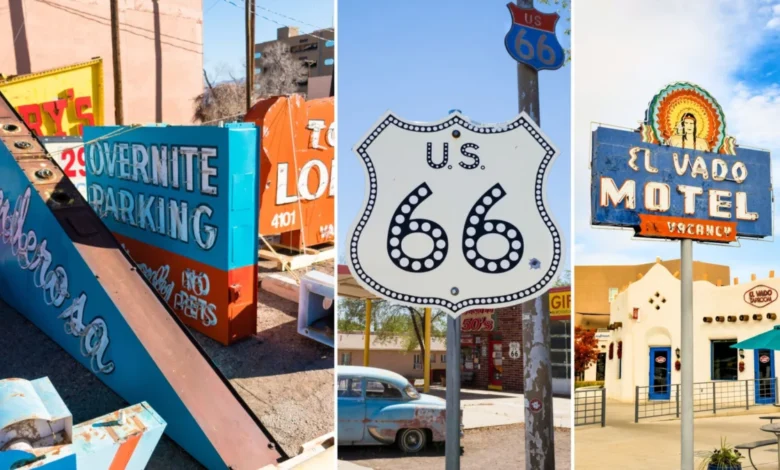
Motels such as the El Don, the El Vado, and the Monterey serve as architectural anchors for the district. The El Don is currently undergoing significant renovations, signaling a renewed investment in the "vintage stay" economy. The El Vado, which has already been successfully reimagined as a mixed-use space featuring a boutique hotel and local food pods, retains its iconic sign featuring a Native American headdress. This trend of "adaptive reuse" is a critical component of Albuquerque’s strategy to maintain its Route 66 heritage without leaving historic structures to decay.

The aesthetic of these sites is defined by "roadside kitsch"—neon signs shaped like cowboys, "World’s Largest" claims, and puns designed to entice weary travelers. However, beyond the neon, these buildings represent the transition of American hospitality from the formal hotels of the rail era to the accessible, car-centric lodging of the post-war boom.
The Economic Scale of Native American Artistry
One of the most significant commercial entities on the Albuquerque stretch is the Rio Grande Trading Post. Far from being a mere souvenir shop, the establishment is one of the largest purveyors of Native American art in the country, supplying approximately 800 stores across the United States. The presence of such a high-volume wholesaler on Route 66 underscores the highway’s historical role as a conduit for the exchange of Indigenous crafts.

Industry experts, including long-term employees like Greg and Martha at the Trading Post, note that the market for Navajo sand paintings, Zuni silversmithing, and wampum beads remains robust. The shop integrates modern technology into traditional commerce, hosting live sales on social media to reach a global audience. This highlights a broader trend along the route: the integration of digital-age business models into century-old physical storefronts.
The Intersection of Pop Culture and Urban Reality
Albuquerque’s identity on Route 66 is inextricably linked to modern media, specifically the "Breaking Bad" and "Better Call Saul" television franchises. Sites like the Dog House, a drive-in hot dog stand known for its griddled chili cheese dogs and snapping sausages, have become pilgrimage sites for fans. The Dog House serves as a bridge between the city’s culinary history and its modern status as a filming hub.

However, the reality of life on Central Avenue is more complex than a television set. Local business owners, such as Stue, who operates a vintage and thrift shop on 2nd Street, observe that the corridor faces significant social challenges. The intersection of historic tourism and urban poverty is visible in the presence of unhoused populations and a heavy law enforcement presence. Stue notes that while the city has gained fame through "Breaking Bad," the show’s gritty portrayal of Albuquerque reflects real socioeconomic issues that the community continues to navigate.
The Cultural Landscape of Downtown and Nob Hill
Moving eastward into the Downtown district, the architecture shifts toward the "Pueblo Deco" style, most notably seen in the 1927-built KiMo Theatre. This area serves as the city’s "party central," according to local residents, housing a dense collection of nightclubs, flamenco schools, and bars. The KiMo Theatre remains a cultural cornerstone, hosting film screenings and live performances that keep the downtown area active after business hours.

As the route progresses toward the University of New Mexico (UNM) and the Nob Hill neighborhood, the demographic shifts toward students and young professionals. This segment of Route 66 is characterized by a higher density of pedestrian traffic and a shift in commerce toward kava bars, pilates studios, and boutique vintage shops like Heck Yeah.
Public Art and Community Initiatives
The city has utilized public art to enhance the pedestrian experience along Central Avenue. Recent installations, such as the "Alebrijes & Nahuals" collection—a touring exhibit of Mexican sculptures—provide a contemporary layer to the historic road. These towering, colorful sculptures, such as the xoloitzcuintli (Mexican hairless dog) by artist Adrián Xuana, serve as modern landmarks that encourage visitors to slow down and engage with the urban environment.

Furthermore, the "Stop Bagging, Start Bragging Albuquerque" campaign has emerged as a grassroots effort to shift the narrative of the city. The initiative encourages residents to focus on the city’s unique status as the "most interesting mid-size city in America." This campaign is a direct response to the "seedy" reputation some sections of Route 66 have acquired over decades of urban flight and economic shifts.
Chronology of the Route 66 Centennial Preparations
As 2026 approaches, the timeline for Route 66 preparations has accelerated:

- 2023-2024: Initiation of major motel renovations (e.g., El Don) and the expansion of the Route 66 Tourist Office capabilities at the 4th and Central intersection.
- Early 2025: Expected completion of several infrastructure projects aimed at improving pedestrian safety and lighting along the 18-mile stretch.
- Late 2025: Launch of statewide marketing campaigns by the New Mexico Tourism Department focusing on the "535 Miles of Wonder."
- November 2026: The official centennial of the highway’s designation, expected to draw millions of international travelers to the corridor.
Analysis of Implications for Urban Development
The ongoing evolution of Route 66 in Albuquerque presents a case study in the tension between nostalgia and progress. For the city to successfully capitalize on the 2026 centennial, it must balance the preservation of its "kitsch" identity with the need for modern urban safety and social services.
The transition of the road from a high-speed artery to a "slow-speed" cultural destination is evidenced by the reduction of speed limits to 25 miles per hour in key districts. This shift favors the "walkable city" model, which has been shown to increase local business revenue and community engagement. However, the "Mother Road" remains a functioning urban thoroughfare, and the city must ensure that the 18-mile stretch serves its residents as effectively as it serves its tourists.

Conclusion: The Living Legacy of the Mother Road
Route 66 in Albuquerque is no longer just a squiggle on a map; it is a complex ecosystem of history, art, and human resilience. From the Navajo artisans at the Rio Grande Trading Post to the vintage enthusiasts in Nob Hill, the people of the corridor are the true stewards of the road’s legacy. As the city moves toward the 2026 milestone, the 18 miles of Central Avenue will continue to stand as a testament to the enduring power of the American road trip—not just as a means of getting from point A to point B, but as a way of discovering the soul of a city. For those who choose to walk the route, the rewards are found in the stories told by shop owners, the shadows of neon signs, and the persistent, unhurried rhythm of life on the Mother Road.