Australia Grapples with Economic Headwinds, Geopolitical Tensions, and Social Crises as Labor Conference Kicks Off

Australia is navigating a complex web of economic, social, and geopolitical challenges, a reality sharply underscored by Treasurer Jim Chalmers’ comprehensive assessment of the obstacles facing the Labor party and the nation. These domestic discussions unfold as the governing Australian Labor Party (ALP) commences its 50th national conference in Adelaide, setting the policy agenda amidst pressing issues ranging from cost-of-living pressures and a struggling housing market to education sector turmoil and rising regional tensions.
Labor’s Multi-Faceted Challenges Take Centre Stage at National Conference
The ALP’s national conference, a pivotal gathering for setting the party’s long-term policy platform, opened in Adelaide with a focus on delivering "practical" solutions to an anxious electorate. Treasurer Jim Chalmers, a key figure in the Albanese government, appeared on ABC’s Radio National to outline what he described as seven significant challenges confronting the Labor party and the broader Australian economy. Far from limiting himself to a single issue, Chalmers painted a broad picture of interconnected difficulties: "Serious challenges in our economy… Intensifying global pressures, against the backdrop of some very substantial generational challenges… The AI revolution. The energy transformation, the changes to our industrial base, the ageing of our population, the fragmenting of geopolitics." He concluded that "All of this presents parties of the sensible centre and the centre-left parties like the Australian Labor party with a series of very serious economic challenges."

These seven points represent a daunting agenda for any government. The economic challenges refer to ongoing inflationary pressures, interest rate hikes, and the struggle to maintain living standards. Intensifying global pressures encompass everything from supply chain disruptions to commodity price volatility exacerbated by international conflicts. The AI revolution poses fundamental questions about future employment, productivity, and ethical governance. The energy transformation demands massive investment in renewables while ensuring energy security and affordability during the transition away from fossil fuels. Changes to Australia’s industrial base imply a need to diversify and innovate in manufacturing and technology to remain competitive. The ageing of our population places increasing strain on healthcare, social services, and workforce participation. Finally, the fragmenting of geopolitics speaks to a more multipolar and unstable world order, requiring careful diplomatic and strategic navigation.
Amidst these discussions, the Prime Minister, Anthony Albanese, delivered a key address, while incoming Labor president Kate Ellis and South Australian Premier Peter Malinauskas also spoke. Economic debates, led by Chalmers, and climate and environment discussions, headed by Energy Minister Chris Bowen, are expected to dominate the conference floor.
The Contentious Gas Tax Debate: Fuel Security vs. Fair Share
One of the more contentious economic debates emerging from the conference pertains to the taxation of gas exports. A high-level commitment within the ALP’s official party platform, calling for Australians to receive "a fair share" from natural resources, has been interpreted by some within the party as a mandate for a new tax on gas exports and a rollback of fuel tax credits. However, Prime Minister Anthony Albanese seemingly shut down prospects of such a new tax in the immediate term.
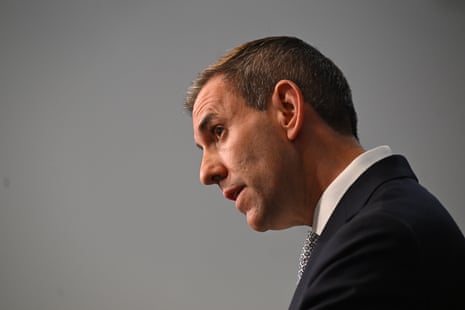
When pressed on ABC radio, Albanese explicitly stated he did not interpret the platform document as a call for a new gas tax. His rationale centered on national fuel security, particularly against the backdrop of global instability. "What my party understands is a priority of Australians is making sure that we have fuel security at this point in time," Albanese said, referencing daily news of events in the Middle East impacting global energy markets. He reiterated that the government’s current gas policies were its priority, focusing on immediate stability rather than new revenue-raising measures from the sector.
This stance is at odds with a faction within Labor, led by figures like former industry minister Ed Husic, The Australia Institute, and Maritime Union of Australia assistant secretary Thomas Mayo. Husic, a vocal proponent for increased gas taxation, declared, "it’s time for our fair share… Our party needs to seize the moment and do the right thing by everyday Australians and our manufacturers." The argument from these quarters is that Australia, as a major global gas exporter, is not adequately taxing the super profits generated by these resources, especially given soaring international prices. The existing Petroleum Resource Rent Tax (PRRT) has often been criticized for not generating sufficient revenue for the public, while fuel tax credits are seen by some as subsidies to the industry.
Treasurer Jim Chalmers, while not directly endorsing a new tax, acknowledged the strong and varied public and internal party views on the matter. He highlighted changes the government has already made to the PRRT, asserting that Labor has "put a lot of time and effort into making sure that we are getting a fairer return." He also pointed to the government’s gas reservation policy, aimed at securing more gas for domestic use, as another key policy lever. The debate underscores the delicate balance the government seeks to strike between revenue generation, industry investment, and ensuring national energy security in an unpredictable global environment.
Beyond the gas tax, the Labor conference also saw the Prime Minister announce a significant expansion of the paid practical placements program for students. This initiative, described by Chalmers as a "really important and successful policy" in its existing form, aims to provide financial assistance to students undertaking mandatory work experience, particularly in critical sectors like nursing, teaching, and social work. The extension is intended to alleviate financial burdens on students, improve workforce readiness, and address skill shortages in key industries across the country.

A Nation Under Strain: Cost of Living, Housing, and Education
The economic anxieties articulated by Chalmers resonate deeply across Australian households, particularly concerning the rising cost of living and its tangible impact on daily lives. A recent survey conducted by the charity Good360 Australia revealed a deeply concerning picture: one in five Australians (20%) have skipped buying personal hygiene or cleaning products in the past 12 months to afford other essentials like food, housing, and petrol. This phenomenon, termed "hygiene poverty," has affected one in three Australians at some point, with one in ten experiencing it for the first time this year, extending its reach well into middle-income households, including full-time workers.
Alison Covington, founder and managing director of Good360, highlighted the serious and often hidden toll of this crisis. "The findings of this research are deeply concerning. Hygiene poverty is no longer a problem at the margins, it cuts across our communities, impacting millions of Australians who are being forced to skip basic hygiene products to afford food, rent, housing and petrol." The impacts are profound, leading to social avoidance (one in three), embarrassment, shame, or mental health impacts (one in three), and delayed doctor or dental appointments (nearly one in four). These statistics paint a grim picture of dignity erosion and a widening social safety net under severe pressure, challenging the notion of a fair society where basic necessities are accessible to all.
Adding to household financial stress, Australia’s housing market continues to show signs of downturn. Domain data indicates that home values are falling across most capital cities, with unit prices experiencing the most consistent decrease. This trend reflects a growing cautiousness among investors and first-home buyers, who typically target lower-priced unit markets. Domain chief of research, Nicola Powell, attributed this shift to "borrowing costs rise and expectations of future price growth moderate." The federal budget’s announced changes to capital gains tax and negative gearing policies have also made property investment less attractive, further dampening demand. Adelaide and Canberra saw the sharpest quarterly downturns in the unit sector, at 2.8% and 2.5% respectively, followed by Sydney (1.5%) and Perth (1.3%). Darwin stood out as the sole exception, with unit prices growing by 5% to a median of $443,300, signalling its continued strength as an investment hub.

The education sector, another pillar of social well-being, is also facing significant strain, particularly in Victoria. A second statewide teacher strike is underway, disrupting public schools and forcing thousands of families to make alternative childcare arrangements. Over 35,000 teachers, principals, and education support staff are expected to gather in Melbourne’s CBD, having rejected a pay deal proposed by the state government. The Australian Education Union (AEU) Victorian branch president, Justin Mullaly, stated that teachers were driven to strike because Victorian schools are "not funded properly," receiving the lowest state and territory funding in Australia. Mullaly claimed that teachers, education support staff, and school leaders are working approximately 12 unpaid hours every week, effectively "filling the funding gap left by the Allan government."
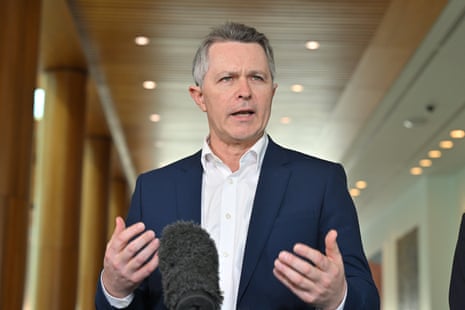
The government’s updated offer of a 28.3% pay rise over four years was deemed insufficient by AEU members, who are demanding a better deal to address persistent resourcing and staffing pressures. Mullaly warned that the union would "consider escalating our campaign" if negotiations fail. The dispute highlights a national teacher shortage, with graduate teachers in Victoria earning $13,000 less than their counterparts in the Northern Territory, who are the best paid in the country. Federal Education Minister Jason Clare expressed hope for a swift resolution, acknowledging the importance of fair teacher pay: "I want to see them being paid as good as they possibly can be. We know that when you pay people more, more people want to do the job." He lauded Victoria’s "big offer" but reiterated his stance against intervening in state-level negotiations, emphasizing the need for teachers to be paid "what they deserve" to combat the shortage.
Confronting Domestic Violence: Data, Discourse, and Deep-Seated Issues
The critical issue of domestic and family violence continues to plague Australian society, prompting renewed calls for action and revealing complex trends in recent data. New figures from the NSW Bureau of Crime Statistics and Research (BOCSAR) indicate a paradox: while self-reported domestic violence incidents have declined, the number of women and children murdered or hospitalized due to such violence has remained stubbornly unchanged over the past eight years to June 2025.

BOCSAR’s report, which analyzed five indicators, found that self-reported violent victimisation dropped from 4.1% in 2017-18 to 3% in 2024-25, and self-reported domestic and family violence victimisation decreased from 0.91% (July 2016-June 2019) to 0.65% (July 2022-June 2025). However, measures like domestic and family violence-related murders and hospitalisations, along with police-recorded incidents of grievous bodily harm, showed no significant change. BOCSAR executive director Jackie Fitzgerald noted, "The decline in self-reported violence is significant because it reflects underlying levels of violence in the community, not just what is reported to police. It suggests that, despite rising reports of domestic violence to police, domestic violence in the community is not increasing and may be trending down." She further explained that increased police-recorded incidents "appears to be driven by more proactive policing and increased reporting, rather than clear evidence of underlying violence."
The data comes against a backdrop of national outrage following a recent spate of alleged domestic violence murders, including Lavanya Chappa and 13-year-old Layla Jeffery in Victoria, Jana Armstrong in Queensland, and a 17-year-old Yolngu girl in the Northern Territory. These tragedies underscore the persistent and deadly nature of the problem, despite efforts to increase awareness and reporting.
The sensitive discourse surrounding domestic violence was further complicated by controversial comments from One Nation leader Pauline Hanson. She described domestic violence as a "scourge" but also a "two-way street," sparking widespread condemnation. Federal Education Minister Jason Clare swiftly rebuked her remarks, stating unequivocally: "One in four Australian women are victims of domestic violence… that’s one in four women who are violently attacked by people who tell them that they love them. You know, that’s not a two-way street. That’s a crime." Clare anticipated the issue would be discussed at the Labor conference, suggesting such comments could alienate voters. His strong stance reflects a broader societal consensus that domestic violence is a criminal act rooted in power imbalances, not a reciprocal disagreement.
Navigating a Fragmented Geopolitical Landscape: Australia and the South China Sea

On the international front, Australia is actively navigating an increasingly "fragmented geopolitics," as identified by Treasurer Chalmers. Foreign Affairs Minister Penny Wong, attending the ASEAN foreign ministers’ meeting in Manila, firmly addressed concerns over China’s recent "destabilising" missile testing in the South China Sea. Australia is not ruling out increasing joint patrols in the region with partners like the United States and Japan, signalling a resolve to uphold regional stability.
Wong emphasized the strategic importance of the maritime zone: "The maritime zone is critical to stability in the region so, when we have a conversation about the South China Sea, that is something I’m sure we should all keep in mind." She articulated Australia’s concerns about "some of the aggression we are seeing, we are concerned about some of the destabilising conduct we are seeing, and the countries of the region have a choice to make about how we all respond to that." These statements come amidst heightened tensions in the South China Sea, a vital global shipping lane and a region rich in natural resources, where China’s expansive territorial claims are contested by several Southeast Asian nations.
During a meeting with her Chinese counterpart, Wang Yi, Wong directly conveyed Australia’s concerns, including "around peace and stability in our region, safe and professional military conduct, and the importance of transparency and reassurance of intent." The context of these discussions includes China’s launching of nuclear-capable missiles, which Australia views as escalatory.
China’s foreign ministry, however, swiftly hit back. Spokesman Lin Jian asserted that Australia "is not party to the South China Sea issue and has no right to intervene." He accused "relevant countries" of "stirring up tension and inciting confrontation," particularly referencing recent confrontations between China and the Philippines. Lin Jian stated, "The root cause of the tension at sea lies with the deliberate infringement activities and provocation of the Philippines. Apparently, whenever something happens at sea, the same few countries immediately point their fingers at China regardless of who exactly is at fault. Are they trying to keep the South China Sea peaceful and stable, or simply to destabilise? I think the answer is quite clear." He reiterated that China would "continue firmly safeguarding its sovereignty, rights and interests" and described the missile test as a "routine training activity" for which relevant countries, including Australia, had been notified.
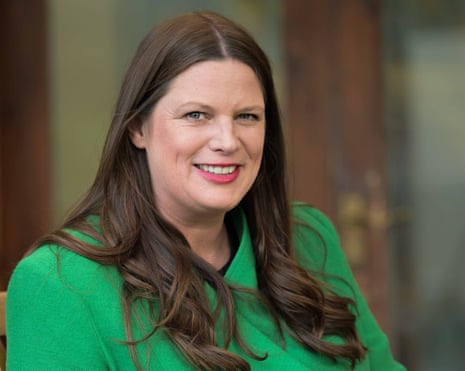
This diplomatic exchange foreshadows a speech by Wong, where she is expected to deliver a strong message that Australia will not be "bullied" by Beijing as it continues to expand its military and nuclear capabilities. The ongoing dialogue highlights Australia’s delicate balancing act of maintaining crucial economic ties with China while asserting its regional security interests and those of its allies.
Sporting Spirit: Commonwealth Games Hopefuls
Amidst the national and international complexities, Australia also turns its attention to the unifying spirit of sport. Pole vault sensation Nina Kennedy and decorated para-swimmer Tim Hodge are set to lead the Australian team at the Commonwealth Games opening ceremony in Glasgow. Kennedy will carry the flag, becoming the 24th Australian to do so at the Games, while Hodge will bear the Games baton – a new honour this year, with each of the 74 participating nations and territories decorating their own baton, each containing a single word from King Charles III’s message.
Both athletes are at the peak of their disciplines, having won gold at the previous Birmingham Games four years ago. Kennedy recently broke the Australian record with a 4.95m vault at the Monaco Diamond League, signaling her formidable form despite a recent hamstring injury. Hodge, a celebrated para-swimmer, also brings a strong track record. Their leadership at the ceremony symbolizes Australia’s sporting prowess and its commitment to international camaraderie through athletics.
Conclusion
As the Labor national conference unfolds, Australia faces a formidable array of challenges, from domestic economic pressures and social inequalities to complex geopolitical tensions. The government’s policy directions on issues like gas taxation, education funding, and international relations will be critical in navigating these turbulent waters. The dialogue between political leaders and the public, punctuated by stark data on hygiene poverty and domestic violence, underscores the urgent need for comprehensive and compassionate solutions to build a more resilient and equitable nation. Simultaneously, Australia’s engagement on the global stage, particularly in the Indo-Pacific, reflects its commitment to regional stability in an increasingly uncertain world.
Related posts: