Public Dissatisfaction Surges as Fox News Poll Reveals Widespread Desire for Political Upheaval Ahead of Midterm Elections

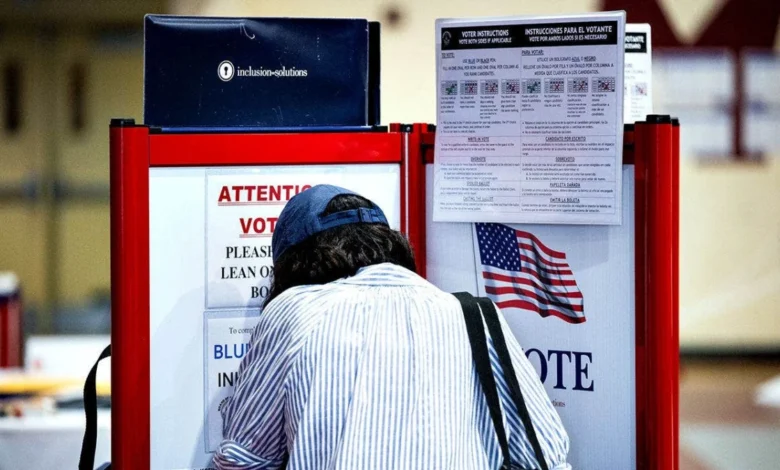
A recent Fox News Poll, conducted from July 17-20, 2026, has unearthed a deep vein of voter dissatisfaction and a pronounced appetite for systemic change across the American political landscape, findings that could significantly shape the upcoming midterm elections. The comprehensive survey paints a challenging picture for incumbent President Donald Trump, whose job approval remains near a record low, and indicates a significant shift in voter preferences towards the Democratic Party on a range of critical issues. The poll’s results suggest a nation weary of the status quo, with a substantial portion of the electorate yearning for "dramatic" or even "revolutionary" transformation in government.
Midterm Landscape and Shifting Tides
The political climate leading into the November 2026 midterm elections is characterized by intense partisan skirmishes, as highlighted by discussions among strategists like Republican Collin Reed and Fox News contributor Richard Fowler on "America’s Newsroom." Their analyses, alongside anchor Bill Hemmer’s breakdown of House and Senate power rankings, underscore the high stakes of an election cycle where control of Congress hangs in the balance. Historically, midterm elections often serve as a referendum on the sitting president’s party, and the latest Fox News Poll provides crucial insights into the public’s current sentiment.
One of the most striking findings is the surge in Democratic motivation. A significant 68% of Democrats report being "extremely motivated" to vote in November, a notable 11-point lead over Republicans, only 57% of whom express similar enthusiasm. This motivational gap is even more pronounced within the Republican base, with 66% of "MAGA Republicans" extremely motivated compared to just 41% of "non-MAGA Republicans." Such disparities in voter enthusiasm can be decisive in close elections, potentially translating into higher turnout for the energized party.
When asked about their hypothetical House district vote, 53% of voters indicated they would back the Democratic candidate, while 46% favored the Republican. This 7-point lead for Democrats falls just outside the poll’s margin of error and represents an increase from their 5-point advantage in April. Notably, the 53% figure marks the highest percentage either party has garnered on the generic House ballot in Fox News polling since 1996, signaling a potentially robust wave for Democrats. This trend is further amplified in crucial swing districts; in counties where the 2024 presidential election between Donald Trump and the Democratic contender (identified as former Vice President Kamala Harris in the poll’s framing) was decided by less than 10 points, the Democratic candidate leads by an even wider 59-41%.
However, Republican pollster Daron Shaw, who conducts Fox News polls alongside Democrat Chris Anderson, offers a cautious interpretation. Shaw notes that "although these data look promising for the Democrats, some of their support is in less-contested districts, padding their national totals without adding House seats." He estimates that the GOP could still retain the House even if Democrats win the national popular vote by 2-3 points, but a 6-7 point Democratic victory would likely flip control of the chamber. This analysis underscores the complexities of translating national polling averages into actual seat gains due to the geographically distributed nature of congressional districts.
Economic Pessimism and Presidential Approval
A significant driver of the current political mood is widespread economic pessimism. Three-quarters of voters rate the economy negatively, a sentiment that has remained largely consistent over the past six months. Furthermore, an alarming three-quarters of respondents report experiencing financial hardship due to inflation, with 34% categorizing this hardship as "serious"—an increase from 26% last year. Looking ahead, 54% expect the economy to worsen in the coming year, a bleak outlook shared by Democrats (75%) and independents (64%), with only Republicans (71%) expressing optimism.
This economic malaise coincides with President Donald Trump’s job approval rating standing at 39%. This figure remains unchanged for the third consecutive month and is just one point above his record low of 38% in October 2017 during his previous term. For context, this approval rating is slightly lower than former President Barack Obama’s 42% at the same point in his second term (July 2014), indicating a persistent struggle for the current administration to gain broad public endorsement. The poll also highlighted specific areas where President Trump received net-negative ratings: immigration (42% approve, 57% disapprove), Iran (34-66%), the economy (33-67%), and inflation (27-73%). These figures underscore deep public discontent with the administration’s handling of key policy areas, directly impacting voter perceptions.
Voter Priorities and Party Competence
The poll also delved into which party voters trust more to handle specific issues, revealing significant advantages for Democrats on several fronts. Voters believe Democrats are better equipped to tackle income inequality (+22 points), healthcare (+21), inflation (+10), the economy (+9), and foreign policy (+7). This broad trust on critical domestic and international issues provides Democrats with a strong platform for their midterm campaigns.
Republicans maintain an advantage on crime (+7 points), an issue traditionally associated with the GOP. However, their lead on other issues has either narrowed or disappeared. Government spending (Democrats +3) and national security (Republicans +2) are now more evenly divided. Most notably, the Republican Party’s 8-point lead on immigration in April has evaporated, with Democrats now preferred by a single point, signaling a significant shift in public perception on a traditionally strong Republican issue. This erosion of trust on core Republican issues, coupled with Democratic gains, indicates a challenging environment for the GOP.
Systemic Disillusionment and Calls for Radical Change
Beyond specific issues and party preferences, the poll reveals a profound disillusionment with the political system itself. A striking finding is the shared belief among Democrats and Republicans that "elected officials answer to the elites," the "system is rigged," and there’s a need for "new blood in office." Both feel "betrayed by their party" and "disapprove of their members in Congress," with a shared desire for a "mandatory retirement age for Congress."
A substantial 70% of respondents believe the Republican Party is closely tied to elite interests, while 55% say the same about the Democratic Party. The 15-point gap indicates a stronger perception of elitism associated with the GOP, though a majority also perceives it within the Democratic ranks. This sentiment of betrayal is palpable within both parties, with 48% of Democrats and 41% of Republicans feeling let down, primarily attributing it to their parties "selling out to special interests."
This perception that the political system favors elites is actively reshaping views on economic policy. The number of voters who accept income inequality as "how our economy works" has plummeted by 16 points since 2014 (from 62% to 46%), while the share advocating for government intervention has more than doubled (from 13% to 30%). Concurrently, 65% of voters now believe the country’s system is rigged in favor of the wealthy, a 9-point increase since 2019. These figures collectively suggest a growing public demand for fundamental economic and political reforms.
The desire for change is not merely incremental; it is profound. Overall, 19% of voters explicitly call for "revolutionary change" in the nation’s government, while an additional 38% want "substantial" change, and 23% desire "dramatic" change. Combined, 4 in 10 voters express a yearning for either "dramatic" or "revolutionary" transformation. This sentiment is notably stronger among Democrats, with 52% favoring dramatic or revolutionary change, compared to 28% of Republicans. This divergence suggests that while both parties harbor disillusionment, the Democratic base is more inclined towards radical systemic overhaul.
The pervasive dissatisfaction extends directly to Congress. Nearly 7 in 10 voters disapprove of both Democrats and Republicans in Congress. While 32% of Republicans disapprove of their party’s lawmakers and 39% of Democrats disapprove of theirs, independents show overwhelming disapproval, with more than 8 in 10 expressing negative views of both parties in the legislative branch. This bipartisan and independent condemnation of congressional performance highlights a crisis of confidence in America’s governing institutions.
In response to this widespread disillusionment, 85% of voters now support a mandatory retirement age for members of Congress, a remarkable 20-point increase since 2002. Of those in favor, 80% believe the cutoff should be before age 75, with 61% specifically advocating for an age between 65 and 74. This proposal garners support from more than half of every generation, signaling a broad consensus for injecting "new blood" into Washington. By a 2-to-1 margin, voters prioritize electing new people over retaining experienced incumbents, further emphasizing the demand for a fresh approach to governance.
Ideological Currents and Popular Figures
The poll also delved into public perceptions of economic ideologies and prominent political figures. Only 50% of voters now hold a positive view of capitalism, a decline from 57% in 2019. Conversely, favorable views of socialism have risen slightly to 30% from 27% last year, though still below the 32% recorded in 2021. The Democratic Socialists of America are viewed positively by 31% of respondents. These trends highlight an ongoing ideological realignment, particularly within the Democratic Party. An 11-point margin shows more Democrats having a favorable opinion of socialism (52%) than capitalism (41%). In stark contrast, Republicans favor capitalism over socialism by a massive 50-point margin (61% vs. 11%).
Among individual political figures, Vermont Senator Bernie Sanders, an independent, garners a 45% favorable rating, making him more popular than Vice President JD Vance (41% favorable), President Donald Trump (38%), and Representative Alexandria Ocasio-Cortez (35%). All these figures are viewed more unfavorably than favorably overall. Sanders’ popularity spans generations, with voters under 30 (48%) and those aged 65+ (46%) equally likely to view him positively. For Ocasio-Cortez, older voters (41% of those 65+) surprisingly hold a more favorable view than younger voters (33% of those under 30), while a significant 30% of voters under 30 report never having heard of her, compared to 9% of those 65+.
Finally, the poll touched upon international perceptions, noting that 44% of voters have a favorable view of Israel, a decline from 58% a decade ago. Positive ratings have decreased across the political spectrum: by 14 points among Democrats, 12 points among Republicans, and 21 points among independents. This shift is particularly pronounced generationally, with voters aged 65 and over (56%) twice as likely to view Israel favorably as those under 30 (27%).
Methodology and Implications
The Fox News survey, conducted by Beacon Research (D) and Shaw & Company Research (R), interviewed 1,003 registered voters from July 17-20, 2026. Respondents were selected randomly from a national voter file and reached via landlines (70), cellphones (681), or online after receiving a text (252). The results for the full sample carry a margin of sampling error of ±3 percentage points. An oversample of 200 voters aged 18-29 brought that subgroup’s size to 350 (±5). Weights were applied to demographic variables to ensure representativeness of the registered voter population.
The findings of this comprehensive poll underscore a critical juncture in American politics. With a deeply dissatisfied electorate, widespread economic anxiety, declining trust in institutions, and a clear preference for change, both major parties face significant challenges. The Democratic Party appears to have an advantage in harnessing this desire for change and addressing key voter concerns, particularly on economic issues and healthcare. However, the pervasive disillusionment with both parties, coupled with calls for radical systemic overhauls like mandatory retirement ages for Congress, suggests that simply winning elections may not be enough to appease a public demanding fundamental reforms. As the midterm elections approach, the ability of candidates to genuinely connect with and respond to this profound yearning for change will likely determine the balance of power in Washington and shape the nation’s political trajectory.
Related posts: