House Speaker Mike Johnson Sends Lawmakers Home Early to Avoid Contentious Impeachment Vote on Pentagon Chief Pete Hegseth



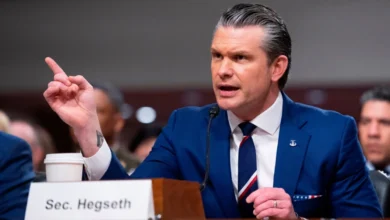
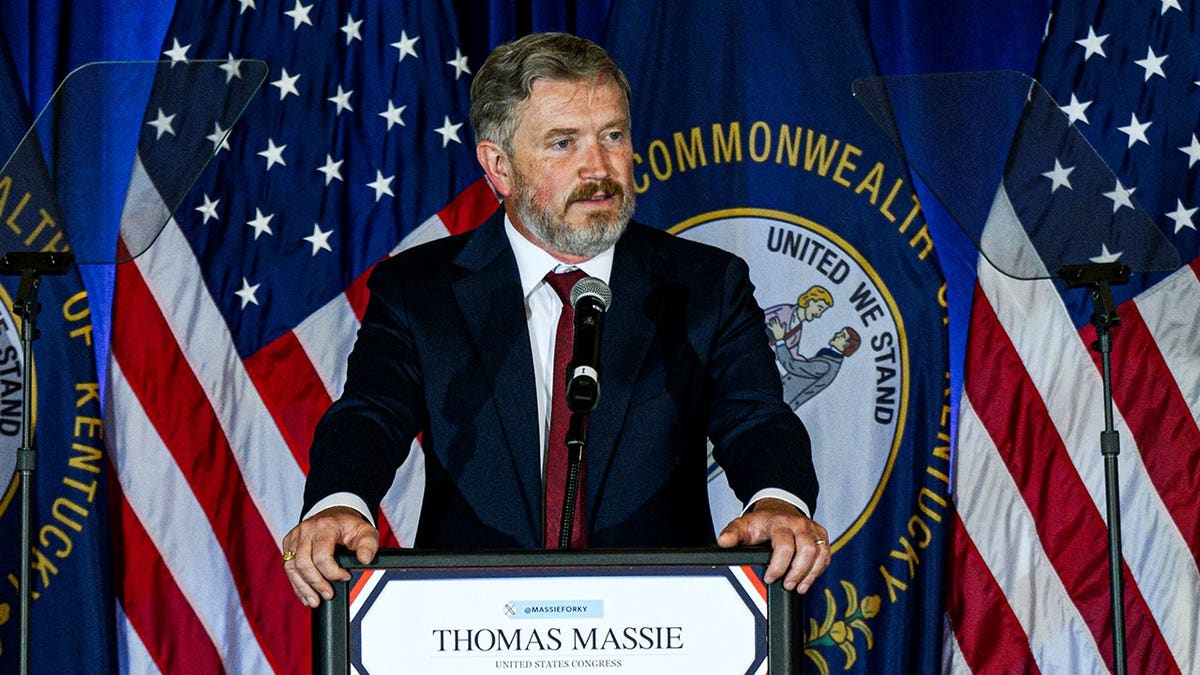
WASHINGTON — In a sudden and politically charged procedural maneuver, House Speaker Mike Johnson, R-La., elected to send members of the House of Representatives home early, abruptly clearing the legislative calendar ahead of a looming showdown. The decision directly forestalls a high-stakes legislative confrontation initiated by Representative Thomas Massie, R-Ky., who had formally filed eight sweeping articles of impeachment against Pentagon chief and War Secretary Pete Hegseth.
Under the stringent operational guidelines of the House, the chamber was legally mandated to consider Massie’s privileged resolutions within a tight procedural window. However, by abruptly adjourning the session and canceling upcoming business, leadership has effectively short-circuited the impeachment mechanism. Lawmakers will not reconvene for formal legislative business until after the midterm elections conclude in mid-November, leaving the contentious motion trapped in procedural limbo.
The maneuver has intensified friction within the Republican caucus, highlighting deep fractures over accountability, legislative oversight, and the political survival of high-ranking executive branch officials. Massie and his supporters argue that the hurried adjournment was a calculated preemptive strike designed to shield vulnerable lawmakers from taking a difficult, career-defining vote on the floor of the House.
The Anatomy of a Procedural Escape Hatch
To fully understand the gravity of Speaker Johnson’s decision, one must examine the mechanics of privileged resolutions in the House of Representatives. Under long-standing congressional rules, any member can introduce articles of impeachment as a "privileged question." This status forces the leadership’s hand, requiring the chamber to address the measure within two legislative days.
Once such a resolution reaches the floor, the standard parliamentary playbook for the majority party is to offer a "motion to table." A motion to table is a procedural tool used to kill a measure immediately without debating or voting on the underlying merits. If successful, the motion disposes of the resolution permanently, allowing members to sidestep a direct yes-or-no vote on the controversial subject matter.

However, the motion to table is not foolproof. If a sufficient number of members defect and vote against tabling the resolution—joining the sponsor and opposing leadership—the motion fails. The House is then compelled to proceed to a substantive debate and subsequent votes on the actual articles of impeachment.
When questioned about the potential outcome had the vote gone forward, Massie expressed strong confidence that leadership was running from an unpredictable floor tally. In an interview discussing the maneuver, Massie bluntly assessed the situation: "A vote on a motion to table. He may not have survived that vote."
This assessment underscores the underlying anxiety among congressional leadership. Had enough moderate or dissident Republicans joined Democrats to defeat the motion to table, the House would have been plunged into a full-scale impeachment trial of a sitting cabinet official—a scenario that could severely disrupt party unity weeks before a critical national election.
Background and Context of the Hegseth Impeachment Push
The conflict centers on Secretary Pete Hegseth, whose tenure at the Pentagon has frequently been a lightning rod for debate. Massie’s decision to file eight distinct articles of impeachment represents an escalation of oversight tensions between Capitol Hill and the executive branch. The articles target various policy decisions, administrative actions, and constitutional questions surrounding Hegseth’s leadership of the Department of Defense.
Impeachment of a cabinet secretary is an exceptionally rare constitutional remedy. While the Constitution grants the House the power to impeach "all civil officers of the United States," civil officers below the presidency and vice presidency are rarely subjected to the process. Historical precedent shows that only one cabinet secretary in American history has ever been impeached: Secretary of War William W. Belknap in 1876, amid a corruption scandal during the Grant administration. Belknap resigned hours before the House voted to impeach him, though the Senate ultimately proceeded with a trial before acquitting him due to questions of jurisdiction over a private citizen.
Massie’s modern-day effort against Hegseth is part of a broader ongoing debate regarding the limits of executive authority and the constitutional prerogatives of Congress in matters of war, defense spending, and military administration. While institutionalists on both sides of the aisle typically view cabinet-level impeachments as extreme measures reserved for high crimes and misdemeanors, populist and libertarian factions within the Republican caucus have increasingly utilized procedural leverage to challenge executive branch policies.

Strategic Calculations and Midterm Implications
The timing of Speaker Johnson’s decision cannot be divorced from the broader electoral calendar. With the midterm elections looming in mid-November, both political parties are fiercely protective of their members’ voting records. Incumbents running for reelection prefer to campaign on popular domestic issues, economic achievements, and constituency service rather than polarizing national security showdowns and constitutional crises.
A recorded vote on a motion to table an impeachment resolution against a high-profile Pentagon official would create immediate political liabilities. In safe districts, conservative members might face primary pressure from the right if they voted to table the measure, with critics accusing them of protecting an executive official from accountability. Conversely, in swing districts, moderate Republicans forced to take a direct vote on impeachment—or even a procedural vote to kill it—could find themselves vulnerable to attack ads from Democratic opponents framing them as either chaotic or complicit.
By sending the chamber home early, Speaker Johnson effectively neutralized these immediate political pressures. Members return to their home districts to campaign without the burden of casting a vote that could be weaponized by primary challengers or general election opponents.
At the same time, the move carries inherent political risks. Critics, including government transparency advocates and political opponents, frequently characterize early adjournments as an evasion of congressional responsibility. By cutting the legislative session short, the House leaves critical unfinished business on the table, including pending appropriations bills, defense authorization measures, and ongoing oversight investigations.
Chronology of the Legislative Standoff
The sequence of events leading up to the abrupt adjournment highlights the rapid escalation of tensions on Capitol Hill:
- Introduction of Articles: Representative Thomas Massie formally files eight articles of impeachment against Pentagon chief Pete Hegseth, invoking privileged resolution status under House rules.
- The Procedural Clock: Under parliamentary guidelines, the House leadership is placed on a strict timeline, forcing the chamber to address or schedule action on the articles within two legislative days.
- Calculations Behind Closed Doors: Republican leadership weighs the risks of bringing the measure to the floor, recognizing that a motion to table could fail if enough party dissidents defect.
- The Adjournment Decision: Speaker Mike Johnson announces an immediate alteration to the House schedule, canceling upcoming sessions and sending lawmakers home early.
- Fallout and Reaction: Lawmakers disperse for the campaign trail ahead of the mid-November elections, freezing the impeachment effort and postponing any potential floor debate indefinitely.
Fact-Based Analysis of Broader Institutional Impacts
The decision to avert a floor vote through early adjournment highlights a growing trend in modern congressional governance: the increasing use of procedural safeguards by leadership to manage narrow majorities and intense internal ideological divisions.
In a closely divided House where the majority party holds a razor-thin margin, party discipline is notoriously difficult to maintain. Mailed-in legislation, privileged resolutions, and discharge petitions can quickly become vehicles for legislative mutiny, allowing small factions of lawmakers to hijack the floor agenda and force the entire chamber into uncomfortable votes.
Speaker Johnson’s deployment of the recess option demonstrates the executive control leadership must frequently exercise to maintain party unity. However, recurring reliance on procedural avoidance can also erode institutional norms. When mechanisms designed for accountability and oversight are bypassed to protect members from electoral accountability, public trust in the legislative process often suffers.
Furthermore, the postponement of the Hegseth impeachment articles until after the mid-November midterms leaves the future of the resolution highly uncertain. Whether Massie will choose to reintroduce the articles in the post-election lame-duck session—a period historically fraught with unexpected legislative maneuvers—remains to be seen. The political landscape of the next Congress will depend heavily on the outcome of the midterms, which will determine the balance of power and the appetite for institutional confrontation in the new year.
As Washington transitions from legislative battles to the final stretch of the electoral campaign, the aborted impeachment push stands as a stark reminder of the fragile equilibrium governing Capitol Hill. For now, the debate over Pete Hegseth’s tenure at the Pentagon has been successfully deferred from the House floor, but the underlying tensions that sparked the motion remain unresolved beneath the surface of American politics.
Related posts: