Defense Secretary Pete Hegseth Engages in Fiery Exchange with Democratic Senators Over Iran War Strategy and Defense Spending

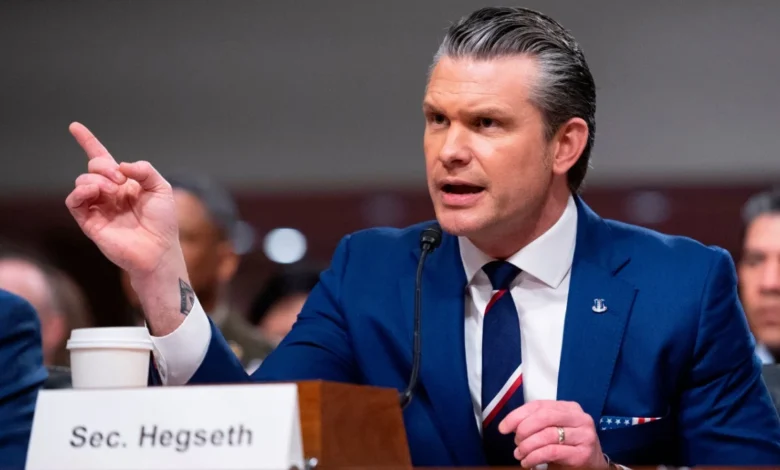
WASHINGTON D.C. – Secretary of Defense Pete Hegseth engaged in a heated confrontation with Democratic senators on Tuesday, vigorously defending the administration’s conduct of the protracted war with Iran and challenging accusations of a leadership vacuum. The high-stakes hearing, which took place on Capitol Hill, underscored the deep partisan chasm over military strategy, national security priorities, and the escalating costs of the conflict, particularly as Congress deliberates a record-setting defense budget request for the upcoming fiscal year.
The contentious exchange saw Secretary Hegseth directly challenge Democratic lawmakers who criticized the administration’s approach, accusing them of undermining national security through partisan political maneuvering and a perceived reluctance to adequately fund the armed forces. The confrontation highlights the intricate political tightrope Democrats walk, attempting to hold the administration accountable for its decisions without appearing to oppose the U.S. military itself.
The Contentious Hearing: Hegseth vs. Peters
The primary catalyst for the day’s fiery debate was Senator Garry Peters (D-Mich.), who pressed Secretary Hegseth extensively on the absence of a clear strategy to conclude the ongoing conflict with Iran. Senator Peters voiced profound skepticism regarding the administration’s management of the war, asserting that the nation found itself in a more precarious position than at the outset of hostilities.
"You don’t have a strategy, you don’t have a long-term plan to actually win this war. Win the war! The men and women are going to be able to do it, but they need leadership. When will you show leadership?" Senator Peters demanded, his voice echoing through the committee room. He further accused Hegseth of leaving the country in a demonstrably worse state than when the conflict commenced.
Secretary Hegseth, undeterred by the senator’s pointed criticisms, launched a forceful counter-offensive. He swiftly pivoted, redirecting the blame towards Democratic lawmakers for what he characterized as a pattern of partisan obstructionism that extended to critical funding for the military and its service members. Hegseth contended that Democratic hesitations regarding the administration’s border enforcement policies had spilled over, negatively impacting defense appropriations.
"When will you show leadership and stand up to your fellow Democrats who won’t fund the troops, who play partisan politics while you don’t give us the money? You want to stand up here and talk about the troops?" Hegseth retorted, his voice rising. He continued, "You won’t show any political courage to actually fund our department because you have Trump derangement syndrome and you won’t commit to anything meaningful. So, I put this on you, senator." This sharp rebuke encapsulated the deep-seated political animosity pervading Washington, framing the defense budget debate not merely as a policy disagreement but as a symptom of broader political antagonism.
The Protracted Conflict: Background on the Iran War
The war with Iran, now well beyond its initial promised conclusion, has become a defining feature of the current geopolitical landscape. The conflict officially began on February 28, with joint U.S. and Israeli strikes that targeted and ultimately resulted in the death of Ayatollah Ali Khamenei, Iran’s Supreme Leader. This dramatic opening salvo was intended to decapitate the Iranian regime’s leadership and cripple its operational capabilities, with the administration initially promising a swift resolution within 60 days.
However, despite these optimistic projections and multiple attempts to broker a peace deal, the United States remains entangled in a persistent struggle with Tehran. The primary strategic objective of the conflict has coalesced around securing control of the Strait of Hormuz, a critical maritime choke point that funnels approximately one-fifth of the world’s total oil consumption. The failure to achieve a decisive victory within the initial timeframe has led to accusations of mission creep and a lack of a coherent exit strategy.
Reports from the frontlines indicate a complex and fluid situation, characterized by asymmetric warfare tactics employed by Iranian forces and their proxies, including sophisticated drone attacks, naval skirmishes, and cyber operations targeting critical infrastructure. U.S. and allied forces have reportedly faced significant logistical challenges in maintaining supply lines and countering Iran’s layered defense strategies within its territorial waters and along its extensive coastline.
Geopolitical Stakes: The Strait of Hormuz
The Strait of Hormuz, a narrow waterway between the Persian Gulf and the Gulf of Oman, is undeniably one of the most strategically vital maritime passages globally. Its control is synonymous with influence over international energy markets and regional stability. For decades, the flow of oil through this strait has been a cornerstone of the global economy, making any disruption a potential catastrophe for industrialized nations worldwide.
Prior to the current conflict, Iran had repeatedly threatened to close the strait in response to international sanctions or military pressures, underscoring its strategic importance as a potential leverage point. The ongoing hostilities have transformed these threats into a tangible reality, with intermittent disruptions to shipping causing significant volatility in global oil prices and raising fears of a broader economic downturn. Analysts from the International Energy Agency have warned that prolonged instability in Hormuz could trigger a global energy crisis reminiscent of the 1970s oil shocks, potentially leading to unprecedented economic hardship and exacerbating existing inflationary pressures worldwide. Major oil-importing nations, particularly in Asia and Europe, have expressed grave concerns, urging for a swift and peaceful resolution to safeguard global energy security.
The Economic Toll: Soaring War Costs and Budgetary Debates
The financial burden of the Iran war has rapidly escalated, becoming another flashpoint in the congressional debate. The cost of the conflict has reportedly surged to $80 billion, a figure more than double what Congress was initially informed. This significant overrun has fueled criticism from both sides of the aisle regarding fiscal responsibility and transparency in military expenditures. The disparity between projected and actual costs has led to calls for greater oversight and more rigorous accounting practices from the Department of Defense.
This revelation comes as lawmakers weigh the Department of Defense’s spending needs for fiscal year 2027. The administration has submitted a request for a record-breaking $1.5 trillion budget, representing a substantial increase over the approximately $900 billion Congress allocated for 2026. This proposed budget aims to fund ongoing operations in Iran, invest in critical modernization programs, and address perceived deficiencies in military readiness.
Critics argue that such an exorbitant budget, particularly given the escalating war costs, is unsustainable and diverts crucial resources from domestic priorities. Proponents, including Secretary Hegseth, counter that the increased funding is essential to maintain military superiority, deter emerging threats, and ensure the safety and effectiveness of U.S. forces operating in increasingly complex global environments. They point to the necessity of replenishing depleted stockpiles, investing in next-generation technologies, and enhancing soldier welfare amidst sustained combat operations. The debate over the budget is not merely about numbers but reflects fundamental disagreements about the scope of American military engagement and the nation’s strategic priorities.
Political Crossfire: Bipartisan Discord and Funding Battles
Secretary Hegseth’s accusation of "Trump derangement syndrome" as the underlying cause for Democratic resistance to military funding highlights the intensely polarized political environment in Washington. This narrative suggests that opposition to the administration’s defense policies is not rooted in genuine strategic concerns but rather in a visceral, politically motivated animosity towards the current presidential administration.
This political dynamic makes consensus-building on critical national security issues exceedingly difficult. Democrats, while expressing reservations about the administration’s military decisions, are wary of being portrayed as unsupportive of the troops. Conversely, the administration and its allies frequently frame any criticism of defense spending or military operations as an attack on the armed forces themselves, thereby complicating genuine policy debate.
The ongoing standoff over military appropriations risks creating operational gaps and undermining troop morale. Defense analysts warn that continued political infighting could delay vital procurement programs, impede training exercises, and ultimately compromise the readiness of the U.S. military. The implication is that partisan squabbles are directly impacting the nation’s ability to project power and protect its interests globally, potentially emboldening adversaries who perceive disunity within the U.S. political system.
Strategic Concerns: The Hypersonics Gap and Past Defense Policy
Beyond the immediate conflict with Iran, Secretary Hegseth broadened his criticisms to encompass what he described as a historical pattern of neglect within previous administrations, particularly concerning advanced military technologies. He specifically referenced the "Biden administration ignored hypersonics," referring to the development of missiles capable of traveling at speeds exceeding Mach 5.
China’s breakthrough in hypersonic technology in 2019, which saw Beijing successfully test a fractional orbital bombardment system, sent shockwaves through the global defense community. This development underscored a significant shift in the strategic balance of power, as hypersonics offer unprecedented speed and maneuverability, making traditional missile defense systems potentially obsolete. Hegseth contended that the previous administration’s perceived failure to invest adequately in this critical area left the U.S. vulnerable and playing catch-up.
"They just decided to pretend like that technology didn’t exist and we shouldn’t invest in it. There are things – I don’t know what Lloyd Austin did for four years. I really don’t. The amount of neglect, the amount of stale thinking and bureaucracy; it was staggering when we took over," Hegseth stated, directly criticizing his predecessor, Lloyd Austin, who served as Secretary of Defense under President Joe Biden. This critique suggests a fundamental divergence in strategic priorities and a perceived lack of foresight in anticipating future threats. The current administration, Hegseth implied, is now tasked with rectifying these past oversights and rapidly accelerating U.S. capabilities in areas like hypersonics, artificial intelligence, and cyber warfare to regain a competitive edge against near-peer adversaries.
Timeline of Key Events:
- 2019: China achieves a significant breakthrough in hypersonic missile technology, raising global strategic concerns.
- February 28, 2026: U.S. and Israeli forces launch joint strikes against Iran, resulting in the death of Ayatollah Ali Khamenei. The administration publicly states the conflict is expected to conclude within 60 days.
- April 28, 2026 (Approximate): The initial 60-day window for ending the conflict expires, with hostilities still ongoing.
- Late April 2026: President Trump indicates that an Iran deal is "largely negotiated" as the "84-day war nears possible end," suggesting ongoing diplomatic efforts even as the conflict continues.
- April 30, 2026: Secretary of Defense Pete Hegseth testifies before the Senate Armed Services Committee on Capitol Hill, facing intense scrutiny over the prolonged conflict and defense spending.
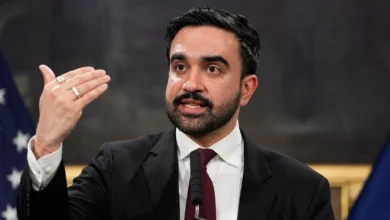
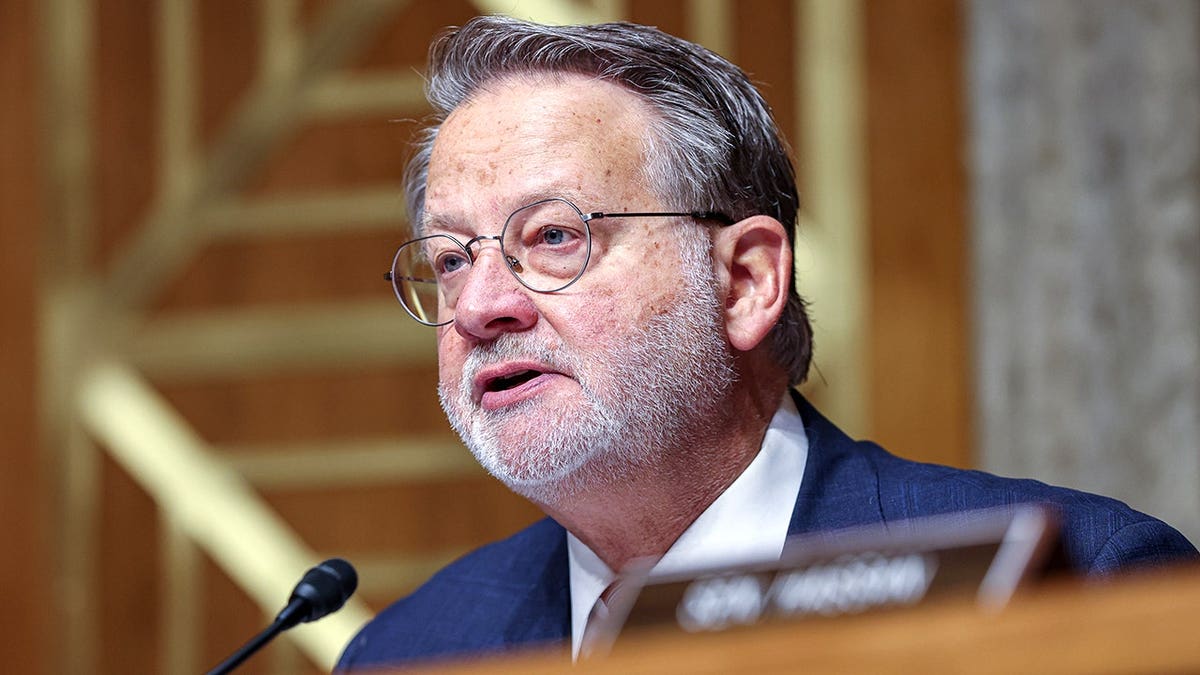
- June 24, 2026 (Image Date): Senator Garry Peters is pictured at a hearing, underscoring ongoing congressional scrutiny and debate.
Looking Ahead: Implications for National Security and Regional Stability
The contentious hearing and the ongoing war with Iran carry significant implications for both domestic politics and international relations. Domestically, the escalating costs and prolonged nature of the conflict could erode public support for military interventions and further deepen partisan divisions ahead of upcoming elections. The debate over the $1.5 trillion defense budget will undoubtedly be a central theme in congressional discourse, shaping both fiscal policy and national security priorities.
Regionally, the continued instability in the Persian Gulf and the Strait of Hormuz poses a persistent threat to global energy security and could draw other regional and international actors into the conflict. The involvement of various proxy groups, coupled with the potential for miscalculation, creates a volatile environment that could quickly spiral out of control. The long-term consequences for the Middle East’s geopolitical landscape, including alliances, power balances, and humanitarian impacts, remain uncertain.
Internationally, the U.S.’s perceived struggle in Iran could influence perceptions of American power and resolve, potentially emboldening rivals and raising questions among allies. The discussion surrounding the hypersonics gap, in particular, underscores a broader arms race in advanced military technologies, necessitating a reassessment of global defense strategies and investments in innovation. The coming months will be crucial in determining the trajectory of the Iran conflict, the fate of the ambitious defense budget, and ultimately, the future direction of U.S. foreign and defense policy. The political and strategic fallout from this protracted conflict is likely to resonate for years to come, shaping both domestic priorities and the global order.
Related posts: