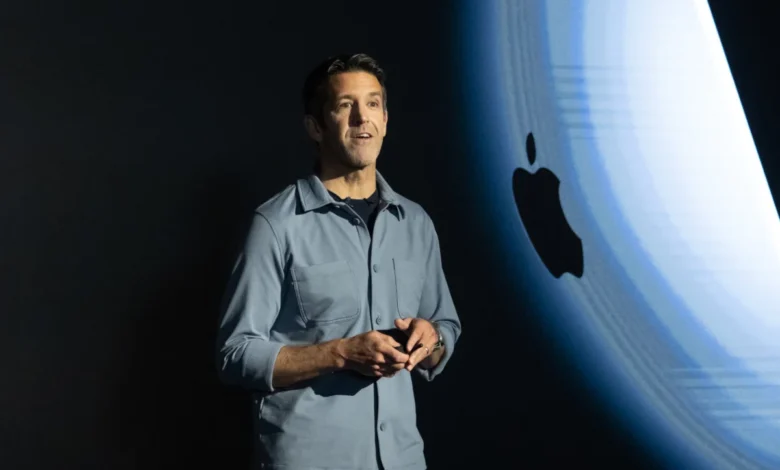
After a remarkable 15-year tenure that saw Apple ascend to unprecedented heights, Tim Cook will step down from his role as Chief Executive Officer, handing the reins to John Ternus, the company’s seasoned Senior Vice President of Hardware Engineering. The transition, effective September 1, will place Ternus at the helm of one of the world’s most valuable and influential companies. While Ternus may not be a household name to casual observers, his nearly quarter-century dedication to Apple and his pivotal role in developing some of its most iconic hardware products make him a familiar and respected figure within the company’s Cupertino headquarters and among industry insiders. This leadership change signals a deliberate and carefully planned succession, underscoring Apple’s commitment to continuity and its foundational emphasis on hardware innovation.
The End of an Era: Tim Cook’s Transformative Leadership
Tim Cook’s departure marks the close of an extraordinary chapter in Apple’s history. Taking over from the visionary co-founder Steve Jobs in August 2011, Cook inherited a company revered for its groundbreaking products and meticulous design. Skeptics initially questioned whether Apple could maintain its innovative edge without Jobs. However, Cook not only sustained Apple’s momentum but dramatically expanded its global footprint, market capitalization, and product ecosystem. Under his leadership, Apple’s market valuation soared from approximately $350 billion to over $3 trillion, making it the first company globally to achieve such a milestone.
Cook’s strategic genius lay in his mastery of global supply chains, his unwavering focus on operational efficiency, and his shrewd diversification into services. He oversaw the introduction and refinement of hugely successful products like the Apple Watch and AirPods, which cemented Apple’s dominance in the wearables market. Furthermore, he spearheaded the explosive growth of Apple’s Services division, encompassing the App Store, Apple Music, Apple TV+, and iCloud, transforming it into a multi-billion-dollar revenue stream that provided stability beyond hardware sales. His era was also characterized by a strong stance on user privacy and a commitment to environmental sustainability, initiatives that resonated with a growing segment of consumers. The decision to promote from within, much like Cook’s own elevation, reflects Apple’s deep bench of talent and its preference for leaders steeped in the company’s unique culture and values.
John Ternus: A Profile of Apple’s Next Leader
John Ternus, 51, embodies the deep institutional knowledge and engineering prowess that Apple values. A graduate of the University of Pennsylvania’s engineering school, where he developed an innovative feeding arm controllable by head movements for his senior project, Ternus’s career trajectory has been almost exclusively intertwined with Apple. He joined the company’s product design team in 2001, making Apple only his second professional role after a brief stint at Virtual Research Systems, a small maker of virtual reality devices. This early experience in VR, while nascent at the time, offers an intriguing precursor to his later involvement with Apple’s Vision Pro.
Ternus’s ascent within Apple has been steady and deliberate. By 2013, he was recognized for his contributions and promoted to Vice President of Hardware Engineering. His influence continued to grow, culminating in his elevation to Senior Vice President of Hardware Engineering in 2021, a role that placed him at the apex of all hardware development across Apple’s vast product portfolio. In this capacity, he reported directly to Tim Cook, whom he has publicly acknowledged as a mentor. His long tenure and progression through various critical engineering roles provide him with an unparalleled understanding of Apple’s product development cycle, manufacturing processes, and design philosophy.
One of Ternus’s defining characteristics, as revealed in his 2024 commencement speech at his alma mater, is a philosophy centered on humility and continuous learning. He advised graduates to "Always assume you’re as smart as anyone else in the room, but never assume that you know as much as they do," emphasizing the "humility to ask questions." This perspective stands in stark contrast to the often-abrasive egos prevalent in the tech industry and suggests a collaborative, inquiry-driven leadership style. His notable absence from major social media platforms, such as X (formerly Twitter), further reinforces his reputation as a focused, results-oriented leader who shies away from public grandstanding, preferring to let Apple’s products speak for themselves. This understated approach aligns with Apple’s traditionally secretive culture, where product excellence is paramount.
A Deep Dive into Ternus’s Hardware Legacy
Ternus’s impact on Apple’s hardware ecosystem is extensive and multifaceted. His earliest known project at Apple, as he recalled in his commencement speech, involved the meticulous scrutiny of parts for the Apple Cinema Display. He recounted a memorable incident where he spent "well past midnight" at a supplier facility, using a magnifying glass to count screw grooves, engaging in a precise argument over a 10-groove discrepancy. This anecdote, while seemingly minor, perfectly illustrates the fanatical attention to detail that defines Apple’s product development and which Ternus has evidently internalized. He connects this personal experience to Steve Jobs’s own legendary obsession with craftsmanship, recalling Jobs’s reflection on a carpenter who finished the back of a chest of drawers beautifully, even though it would never be seen. For Ternus, this exemplifies Apple’s ethos: "It finished the back as beautifully as the rest of it, even though nobody was going to see it, right? And I think about that all the time because I think that perfectly exemplifies what we do here."
As his responsibilities expanded, Ternus played a critical role in bringing to market some of Apple’s most successful and innovative products. He oversaw the hardware development behind the wildly popular AirPods, which redefined the wireless earbud category, and the Apple Watch, which became the world’s best-selling smartwatch. More recently, he was instrumental in the ambitious Vision Pro, Apple’s foray into spatial computing, a product that represents a significant bet on the future of human-computer interaction.

Beyond individual products, Ternus also spearheaded major architectural shifts within Apple’s hardware strategy. Notably, he was a key figure in Apple’s monumental transition from Intel chips to its proprietary Apple silicon for its Mac lineup. This move, which began with the M1 chip, allowed Apple to achieve unprecedented levels of performance, power efficiency, and seamless integration between hardware and software, fundamentally reshaping the personal computing landscape. The success of Apple silicon is a testament to Ternus’s ability to guide complex engineering initiatives with long-term strategic vision.
His most recent high-profile project involved the production of the MacBook Neo, Apple’s new, more affordable laptop model. The Neo, starting at $599, represents a strategic pivot for Apple, aiming to capture a broader market segment by offering a premium experience at a more accessible price point. This was achieved through innovative hardware design and clever trade-offs, such as leveraging an iPhone chip to power the device. Ternus articulated the philosophy behind the Neo, stating, "We never want to ship junk. We want to ship great products that have that Apple experience, that Apple quality. To do that with the Neo required building something completely new from the ground up… leveraging both the technologies we’d been developing like Apple silicon, but also the kind of expertise that we’ve developed over many, many years of building Macs, and building phones, and building iPads, and all of these things." This statement underscores his commitment to maintaining Apple’s quality standards even while pursuing new market strategies.
Navigating Future Challenges and Opportunities
As CEO, John Ternus inherits a company in robust health but also one facing significant strategic challenges and immense opportunities. Foremost among these is Apple’s position in the rapidly evolving artificial intelligence (AI) landscape. While Apple has long integrated AI into its products through features like Siri, Face ID, and computational photography, it is perceived by some analysts as lagging behind competitors like Google and Microsoft in the generative AI race. Ternus will need to steer Apple’s AI strategy, ensuring that the company innovates rapidly and effectively integrates cutting-edge AI capabilities across its hardware, software, and services ecosystem in a way that aligns with Apple’s core values of privacy and user experience.
Another critical task will be to define the long-term trajectory for the Vision Pro. While technologically impressive, the initial high price point and niche applications mean it has yet to achieve mainstream adoption. Ternus will be responsible for scaling the underlying spatial computing technology, fostering a robust developer ecosystem, and potentially introducing more accessible versions to broaden its appeal. This involves not only hardware innovation but also a vision for how mixed reality will integrate into daily life.
Beyond product innovation, Ternus will face the ongoing complexities of global supply chain management, an area where Cook excelled. Maintaining Apple’s intricate manufacturing network, especially in an era of geopolitical tensions and supply disruptions, will be crucial. Furthermore, Apple continues to face increasing regulatory scrutiny worldwide, particularly regarding antitrust concerns related to its App Store policies and market dominance. Navigating these legal and political landscapes will demand shrewd leadership and strategic engagement.
The appointment of Ternus, who is 15 years younger than Cook, also suggests Apple is looking for a leader who can guide the company for a sustained period, upholding the tradition of long-term leadership continuity that has characterized its modern history. Apple has only had two CEOs this millennium – Steve Jobs and Tim Cook – making these transitions rare and profoundly significant.
A Brief Chronology of Apple CEO Transitions:
- 1977-1985: Steve Jobs (Co-founder & CEO)
- 1985-1993: John Sculley
- 1993-1996: Michael Spindler
- 1996-1997: Gil Amelio
- 1997-2011: Steve Jobs (returned as interim CEO, then CEO)
- 2011-2026: Tim Cook
- September 1, 2026: John Ternus
Market Reactions and Implications
While immediate stock market reactions cannot be predicted with certainty, the announcement of an internal, deeply experienced leader like Ternus is generally viewed positively by investors. It signals stability, continuity, and a clear strategic direction. Analysts are likely to focus on Ternus’s hardware expertise as a strength, particularly as Apple seeks to innovate in new categories like spatial computing and potentially automotive. The transition is expected to be smooth, given Ternus’s long history with the company and his mentorship under Cook. Investor confidence will hinge on his ability to articulate a compelling vision for Apple’s future, particularly concerning AI, new product categories, and sustained growth in key markets.
Public records of political donations show Ternus made a $2,900 donation to Senator Chuck Schumer (D-NY) in 2021, a detail that provides a rare glimpse into his personal civic engagement, albeit one largely detached from his professional role. Overall, Ternus has meticulously maintained a low public profile, allowing his work and Apple’s products to take center stage.
In conclusion, John Ternus’s ascension to Apple CEO marks a pivotal moment for the tech giant. His deep understanding of Apple’s engineering DNA, his proven track record in hardware innovation, and his collaborative leadership philosophy position him to guide the company through its next phase of evolution. As Apple faces the dual imperatives of advancing in AI and expanding its spatial computing vision, Ternus’s challenge will be to harness Apple’s immense creative and engineering talent to deliver the next generation of groundbreaking products and experiences, all while upholding the exacting standards of quality and user experience that have defined the company for decades. The world will be watching as this new chapter in Apple’s storied history unfolds.