The historical and ongoing drainage of the world’s peatlands has emerged as a significant, yet often overlooked, driver of anthropogenic climate change. A comprehensive new study published in the journal Nature (2026) quantifies the climate impact of these water-logged ecosystems, revealing that human-induced drainage of peatlands has already altered Earth’s energy budget in ways that will continue to resonate for decades. By analyzing the interplay between carbon dioxide (CO2) emissions and methane (CH4) reduction, researchers have provided a granular view of how land-use change continues to warm the planet long after the initial drainage occurs.
The study, led by researchers including Yu et al., establishes that the simplest metric to measure this impact is the change in Earth’s energy budget—a direct indicator of the greenhouse effect’s intensification. As of 2020, the cumulative radiative forcing from CO2 emissions resulting from peatland drainage stood at approximately +83 milliwatts per square meter (mW/m²) of the Earth’s surface. Conversely, the drainage also led to a reduction in methane emissions, as drier soils are less conducive to the methanogenesis that occurs in saturated, anaerobic peat conditions. This resulted in an offsetting effect of -9 mW/m². The net result is a positive forcing of +73 mW/m², which accounts for roughly 2.7 percent of the total human-caused change in Earth’s energy budget. When accounting for statistical error margins, this contribution ranges between 1.8 and 3.6 percent of total anthropogenic warming.
The Scale of Carbon Loss
Peatlands act as one of the most effective terrestrial carbon sinks on the planet. Covering only about 3 percent of the global land surface, they store twice as much carbon as all the world’s forests combined. The drainage of these areas for agriculture, forestry, or infrastructure development effectively "unlocks" this stored carbon, exposing it to oxidation and subsequent release into the atmosphere.
Current estimates suggest that approximately 4 percent of all the carbon that was historically sequestered in peatlands has now transitioned into the atmosphere due to human activity. This is not merely a historical statistic; it is an ongoing process. Because the decomposition of organic matter in drained peat is a slow, steady decay, the carbon released today is largely the result of management decisions made years or even decades ago. This creates a "carbon debt" that continues to grow, even in regions where active drainage has slowed.
Regional Disparities and Temporal Shifts
The contribution to global warming from peatland drainage is not distributed evenly across the globe. The historical patterns of land use have created distinct regional signatures in the atmospheric data. Europe, where large-scale peatland drainage began centuries ago for agricultural expansion and peat fuel extraction, accounts for more than half of the total cumulative CO2 emissions from this source.
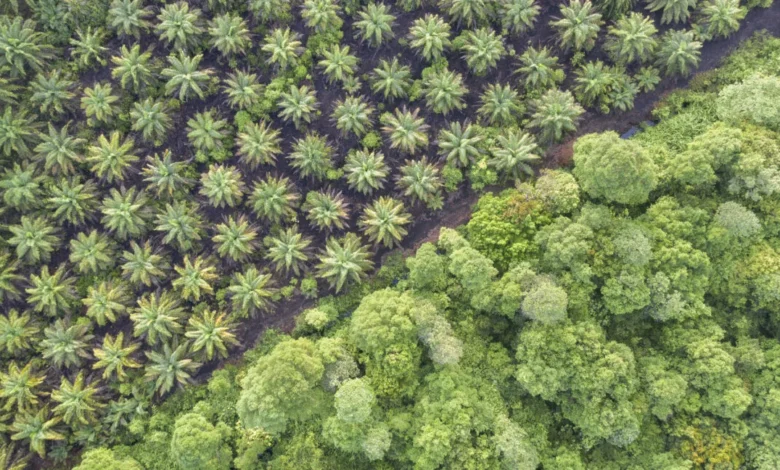
In contrast, Southeast Asia’s contribution is a more recent phenomenon. While Europe’s impact has been a long, slow accumulation, Southeast Asia’s emissions trajectory has seen a dramatic, sharp spike in the last few decades. This shift is primarily driven by the conversion of tropical peat forests into palm oil plantations and industrial timberlands. While North America contributes only 14 percent of the global total, its historical management of peatlands remains a significant component of the broader carbon budget.
These regional differences highlight the varied drivers of environmental change. In some nations, the legacy is one of industrialization and agricultural revolution dating back to the 18th and 19th centuries. In others, particularly in the tropics, the impact is tied to modern globalization and the surging demand for specific agricultural commodities.
Modeling the Future: The 2100 Forecast
One of the most critical findings of the 2026 study is that the damage is far from complete. Because the oxidation of peat continues as long as the water table remains low, the climate impact of past drainage will continue to climb throughout the 21st century.

Researchers utilized forward-looking climate models to project the state of these ecosystems through 2100. If water levels in currently drained peatlands are held constant at 2020 levels, the total radiative forcing effect is projected to nearly double, rising from 73 mW/m² to 138 mW/m². This suggests that even without further land-use changes, the current landscape will continue to contribute to global warming for generations.
However, the study also offers a pathway for mitigation. Moderate restoration efforts—such as rewetting drained peatlands—could significantly curtail this upward trajectory. In an "ambitious restoration" scenario, where global water tables are raised across vast, degraded peat landscapes, the total energy forcing could be effectively halted or even slightly reduced below 2020 levels. This confirms that while the climate system is sluggish in its response, it is not beyond the reach of human intervention.
Broader Climate Implications
The findings underscore a fundamental challenge in climate policy: the "long-tail" effect of land management. While much of the global discourse focuses on the immediate reduction of fossil fuel combustion, the silent, slow-motion release of carbon from the soil represents a significant portion of the total warming commitment.
Scientific experts in the field of carbon cycling suggest that these results necessitate a rethink of land-use policy. If the goal is to stabilize the global temperature, preserving existing intact peatlands and restoring degraded ones must be prioritized alongside decarbonizing the energy sector. The "slow-burn" nature of peatland emissions means that delay in restoration effectively locks in future warming that is difficult to reverse once the carbon has been liberated.
From a regulatory perspective, the inclusion of peatland emissions in national greenhouse gas inventories is becoming increasingly critical. Historically, many jurisdictions have underestimated the net climate impact of land-use changes by failing to account for the long-term, post-drainage decomposition of soil carbon.
The Path Forward: Restoration and Policy
The evidence presented by the 2026 study serves as both a warning and a template for policy action. While returning the global landscape to its pre-1800 state is physically and economically impossible, the potential for targeted restoration is immense.
The study indicates that for many nations, the "low-hanging fruit" of climate mitigation may exist in the form of water management in peat-rich areas. By elevating water tables, land managers can effectively stop the aerobic decomposition that leads to CO2 release, while simultaneously managing the trade-offs associated with methane emissions. While rewetting can increase methane output, the net climate benefit—achieved by stopping the significantly more potent and long-lasting carbon dioxide emissions—is overwhelmingly positive over the long term.
As the international community grapples with the targets set by the Paris Agreement and subsequent climate accords, the "peatland factor" will likely move from the periphery of climate science to the center of policy debate. The data shows that the climate system is not merely a reactive environment responding to immediate emissions; it is a repository of past decisions, with the soil beneath our feet holding the key to future temperature trends.
In conclusion, the 2026 study provides a stark, data-driven reminder that the climate crisis is not solely a product of the current industrial era, but a legacy of centuries of landscape modification. With the projected doubling of radiative forcing by 2100 in a business-as-usual scenario, the urgency of peatland restoration is clear. It remains one of the few areas where the climate impact can be directly and effectively moderated through human action, provided there is the political and economic will to manage these vital ecosystems as the global carbon assets they are.