The Controlled Destruction of Nearly Five Tons of Unstable Lead Azide at the Iowa Army Ammunition Plant Concluded Without Incident

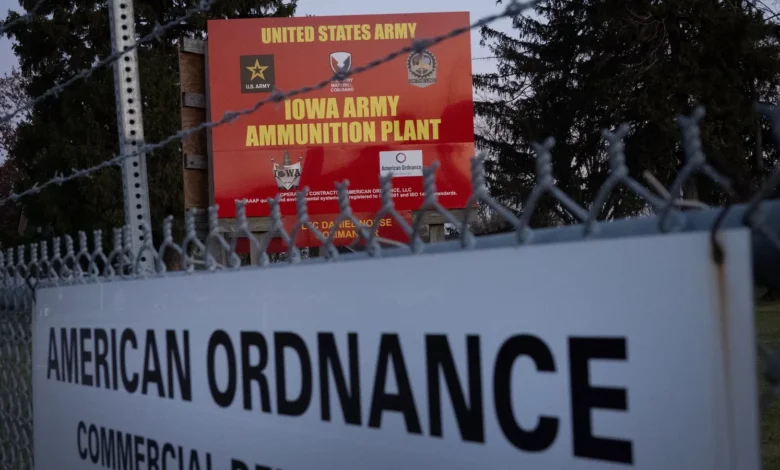
After months of intense public anxiety, political maneuvering, and legal wrangling, the United States Army successfully executed the controlled detonation of approximately 9,700 pounds of degraded lead azide at the Iowa Army Ammunition Plant near Middletown, Iowa. The operation, which took place shortly after 9 a.m. on a crisp winter morning, concluded in seconds, resulting in two distinct booms and wispy, white plumes that dispersed rapidly into the atmosphere. Despite widespread concerns regarding the potential release of a toxic lead-laden cloud over rural communities and farmland, initial data from the Environmental Protection Agency (EPA) indicate that the detonation did not result in detectable airborne lead levels in the immediate aftermath.
This high-stakes operation serves as a critical case study in the intersection of military industrial maintenance, environmental regulation, and public safety. While the event concluded without the feared fallout, it has ignited a broader conversation regarding the risks associated with aging munitions stockpiles and the complexities of managing hazardous waste in populated regions.
A Timeline of Escalating Risk
The necessity for this operation originated in March, when routine inspections at the Iowa facility identified 68 drums of lead azide—a primary explosive compound used in detonators—that had reached a state of hazardous instability. Over time, the material had begun to crystallize, a chemical transformation that rendered it hypersensitive to external stimuli, including minor vibrations, friction, or fluctuations in ambient temperature.
The urgency of the situation was emphasized by chemistry experts, who warned that the sheer volume of the material, combined with its degraded state, posed a risk of spontaneous detonation. Following the identification of the hazard, the Army, in coordination with the EPA and the Bureau of Alcohol, Tobacco, and Firearms (ATF), determined that attempting to transport or stabilize the material was too dangerous. The decision to perform an in-situ detonation was reached as the safest, albeit most logistically complex, alternative.
The path to the detonation was fraught with public and political opposition. Throughout November, elected officials from both Iowa and Illinois expressed significant apprehension regarding the potential for toxic exposure. Governor Kim Reynolds and Governor-elect Rob Sand joined a chorus of voices requesting a delay to allow for further independent verification of safety protocols. Simultaneously, environmental advocacy groups, including Earthjustice, initiated legal challenges to halt the operation, citing concerns over the adequacy of the EPA’s emergency permit and the potential for long-term contamination of the soil and water supply. These efforts reached a climax on Monday, when a federal appeals court lifted an administrative stay, effectively providing the green light for the Army to proceed.
Operational Precautions and Monitoring Data
The scale of the preparation reflected the potential risks. The EPA mobilized a massive contingent of 300 personnel and contractors to ensure comprehensive monitoring. Prior to the blast, the agency established a rigorous baseline of environmental health, collecting over 1,200 samples of air, soil, and water across the region. This data was intended to provide a clear benchmark to evaluate any impact caused by the explosion.
The Army employed a "mitigated detonation" strategy, designed to minimize the dispersal of particulate matter. This involved specific environmental modeling to predict plume trajectory, which had initially suggested a southwestward path away from high-density residential areas in Illinois. While the immediate air-monitoring results provided a sense of relief to local officials and residents, experts caution that the absence of airborne lead does not preclude the possibility of heavy metal deposition.
"Lead is a persistent element; it does not degrade or disappear," noted Robert Hirschfeld, director of water policy at the Prairie River Network. The focus of the mission has now shifted from the detonation itself to post-blast remediation. Teams are currently scouring the designated "path of concern" to collect surface samples. The objective is to determine if lead dust settled on agricultural land, grazing pastures, or residential properties, which would necessitate targeted cleanup efforts.
The Chemical and Health Context
Lead azide, or Pb(N3)2, is a highly sensitive inorganic compound. Because of its explosive sensitivity, it is rarely handled in large quantities outside of specialized manufacturing or disposal environments. The 9,700 pounds destroyed in Middletown represent an unprecedented quantity for a single detonation event. The potential health impacts of exposure to lead are well-documented and severe. As a potent neurotoxin, lead can cause irreversible damage to the brain and central nervous system, particularly in developing children and pregnant women. Chronic exposure is linked to cognitive impairment, cardiovascular disease, and reproductive health issues.
Because of these risks, the Iowa Department of Agriculture and Land Stewardship took proactive measures, advising farmers within the projected blast zone to move livestock indoors and secure feed and water sources. Approximately 350 farms were identified as potentially sitting in the path of the plume. While agricultural officials are monitoring for signs of lead poisoning in livestock, the long-term impact on the food supply remains a point of intense scrutiny. The USDA has pledged to assist in the monitoring of soil and forage to ensure that contaminated produce does not enter the market.
Official Responses and Future Implications
The success of the operation has been touted by federal officials as a testament to meticulous planning and inter-agency cooperation. Army Sustainment Command officials, while acknowledging the unprecedented nature of the quantity involved, emphasized that the detonation was the only viable path to mitigating a "ticking time bomb."
However, the event has left a lasting impression on the communities surrounding the Iowa Army Ammunition Plant. Local advocacy groups have questioned whether the facility’s historical management practices were sufficient to prevent the degradation of such hazardous materials in the first place. The incident has prompted calls for increased transparency and a more robust oversight mechanism for the long-term storage of military explosives near residential areas.
For the EPA, the event serves as a high-visibility test of its ability to manage emergency environmental hazards while maintaining public trust. The agency’s commitment to providing real-time data and transparency throughout the process was seen as an effort to counter the skepticism generated by the secrecy often associated with military operations.
Analyzing the Broader Impact
Beyond the immediate safety of the residents of Middletown and the surrounding counties, the Middletown detonation underscores a systemic challenge facing the Department of Defense: the decommissioning and disposal of aging munitions. As the military transitions to new technologies and modernizes its stockpiles, the management of legacy explosives becomes an increasingly common environmental burden.
The reliance on controlled, open-air detonation—a method that has drawn fire from environmentalists for years—is now under closer observation than ever. Critics argue that as the quantities of materials to be disposed of grow larger, the risks of accidental contamination or environmental fallout necessitate a shift toward more advanced, contained disposal technologies, such as closed-detonation chambers or chemical neutralization processes.
As post-blast testing continues, the data gathered will likely be used to inform future protocols for similar operations. The successful, albeit uneventful, conclusion of this week’s detonation does not mark the end of the issue. Rather, it serves as a starting point for a deeper investigation into the environmental legacy of the site. Local communities remain on high alert, awaiting final reports on soil and water quality. The Army, meanwhile, faces the task of verifying that its cleanup operations were sufficient to restore environmental safety, ensuring that the legacy of this 9,700-pound stockpile does not persist in the form of soil contamination or long-term public health liabilities.
Ultimately, while the skies over Iowa cleared quickly following the blast, the incident serves as a stark reminder of the complexities of managing hazardous materials in a modern, populated landscape. The balance between necessary military operations and the imperative to protect public and environmental health remains a delicate one, necessitating constant vigilance and rigorous scientific oversight.