Ford enters the global endurance racing arena with the GT41 prototype to challenge the world’s elite manufacturers

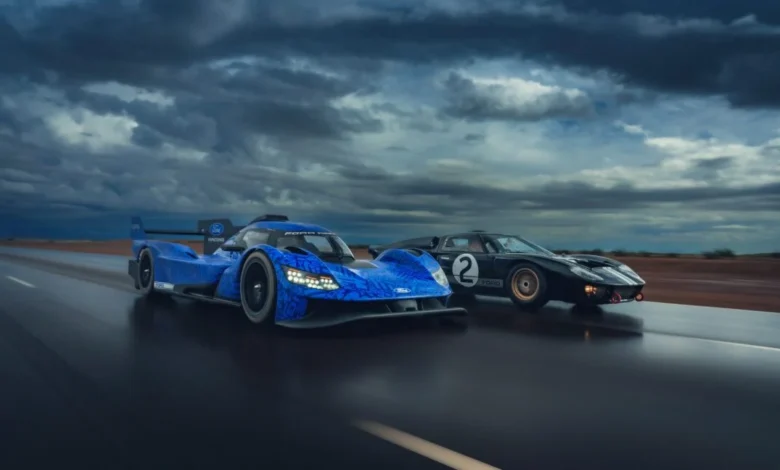
The landscape of global endurance racing is undergoing a seismic shift as Ford prepares to launch its latest challenger, the GT41, into the World Endurance Championship (WEC). This new prototype represents a strategic pivot for the American automotive giant, which has opted to bypass the domestic IMSA WeatherTech SportsCar Championship in favor of a direct entry into the premier international stage. The GT41, a machine engineered to exploit the technical freedoms of the current Hypercar regulations, signals Ford’s commitment to hybrid performance, utilizing a powertrain architecture that draws heavily from its successful Mustang heritage.
The Engineering Pedigree: Coyote Power Meets Hybrid Efficiency
At the heart of the GT41 lies a sophisticated 5.4-liter V8 engine, a powerplant derived directly from the architecture of the Ford Mustang’s acclaimed Coyote engine. This choice is deliberate, aiming to bridge the gap between track performance and the brand’s road-going identity. While the internal combustion engine provides the visceral, high-revving character associated with Ford’s performance division, it is integrated into a standardized hybrid system and transmission package mandated by the WEC’s technical regulations.
Ford has taken full responsibility for the proprietary software that manages the delicate balance between the V8 engine and the electric motor. This hybrid powertrain control unit is the "brain" of the operation, tasked with optimizing energy deployment and recovery—critical factors in endurance racing where fuel management and tire preservation dictate the outcome of races lasting anywhere from six to 24 hours. The decision to base the racing engine on the Coyote platform is supported by the engine’s proven reliability and performance in the Ford Mustang GT3, which has already established itself as a formidable competitor in GT-class racing. By leveraging the existing R&D from the Mustang program, Ford has significantly accelerated its development timeline for the GT41.
Regulatory Freedom and Aerodynamic Philosophy
The technical regulations governing the WEC’s Hypercar class represent a departure from the restrictive "spec" eras of the past. Regulators have capped the absolute amount of aerodynamic downforce and established a floor for minimum drag, effectively forcing manufacturers to innovate within a box rather than simply throwing resources at raw speed. Crucially, these rules encourage OEMs to incorporate road-car design language into their prototypes.
This regulatory philosophy aims to make the cars recognizable as "branded" products rather than anonymous carbon-fiber silhouettes. While the GT41 is a ground-up prototype, sharp observers will note design cues that echo the broader Ford performance portfolio. The vehicle features styling nuances that create a visual link between the track car and the showroom, though the engineering team has prioritized aerodynamic efficiency over aesthetic indulgence. When compared to the current field, such as the Genesis LMDh project or the highly refined Ferrari 499P, the GT41 occupies a distinct space. Its silhouette suggests a focus on cooling efficiency and air-flow management, essential for surviving the grueling heat of circuits like Qatar, where the season will commence.
A Global Debut: The Path to Qatar
Ford’s decision to eschew the IMSA series—at least for the inaugural season of the GT41—is a calculated move to prioritize the prestige and global marketing reach of the WEC. The team will skip the traditional season-opening events at Daytona, choosing instead to focus all testing and logistics toward the season opener in Qatar this coming March. This will be the first of nine rounds in the 2025 WEC calendar, a grueling schedule that spans three continents and culminates in the crown jewel of motorsport, the 24 Hours of Le Mans.
The chronology of this entry follows an intense development phase throughout 2024. Following the initial announcement of the GT41 program, Ford engineers collaborated with key technical partners to refine the hybrid system’s integration. By forgoing a mid-season entry, Ford ensures that the GT41 arrives in the Middle East with a full winter of durability testing completed. This measured approach is intended to mitigate the "new car blues" that often plague manufacturers entering a championship as competitive as the WEC.
The Competitive Landscape: A Golden Era of Endurance
Ford is entering the WEC at arguably the most competitive moment in its history. The Hypercar class has become the primary battleground for the world’s most significant automotive manufacturers. The 2025 season will see a robust grid featuring a blend of returning champions and ambitious new entrants.
Toyota, the reigning powerhouse that has dominated the WEC for years, remains the benchmark for reliability and hybrid optimization. Ferrari, coming off a period of dominance at Le Mans, continues to refine the 499P, a car that successfully blended raw pace with tactical versatility. However, the list of challengers is long and formidable. BMW, Cadillac, and the returning Aston Martin programs provide significant depth to the entry list. Furthermore, the entry of McLaren adds another layer of intrigue, as the British manufacturer brings its own unique approach to hybrid performance.
The absence of Peugeot and Alpine for the upcoming season does little to diminish the intensity of the competition. If anything, it shifts the focus toward the battle between the remaining giants. For Ford, the challenge is clear: they must demonstrate that the GT41 can maintain pace with established prototypes that have had years of data collection and refinement.
Official Perspectives and Strategic Implications
While Ford has remained relatively guarded regarding specific performance targets, representatives from the motorsport division have emphasized that the GT41 is a "laboratory on wheels." The implications of this project extend beyond the podium. As the automotive industry transitions toward electrification, the data gathered from the GT41’s hybrid system will prove invaluable for Ford’s passenger vehicle divisions.
"The goal is twofold," a source familiar with the program noted. "We are here to compete for the overall win, certainly, but we are also here to prove that our hybrid management software is the most efficient in the industry. Racing is the ultimate test bed for software-defined vehicles."
This focus on software is consistent with broader trends in the industry, where vehicle differentiation is increasingly defined by digital systems rather than mechanical hardware alone. By participating in the WEC, Ford is positioning its brand as a leader in the intersection of high-performance internal combustion and advanced electrical management.
Impact on the Sport and Market
The entry of the GT41 brings a level of marketing power to the WEC that few other brands can replicate. Ford’s massive global following and its deep roots in American motorsport will likely attract a new demographic of fans to the championship. Furthermore, the presence of an American manufacturer competing for the overall victory at Le Mans—a feat Ford famously achieved in the 1960s and again in 2016 with the Ford GT—carries significant historical weight.
For the WEC, the addition of another major OEM serves as a validation of its current regulatory model. The championship has managed to create a cost-effective yet high-prestige platform that appeals to boards of directors at major automotive companies. The "Hypercar" concept has successfully reversed the trend of declining participation, creating a "Golden Era" that many analysts compare to the Group C era of the 1980s.
Looking Ahead: The 2025 Calendar
As the team prepares for the inaugural green flag in Qatar, the focus remains on the "Three Pillars of Success": reliability, efficiency, and adaptability. The 2025 WEC season will demand excellence in all three. The race in Qatar is expected to be a test of cooling systems and thermal management, while subsequent races in Europe and beyond will demand precision in aero-setup and pit-lane strategy.
Ford’s entry is not merely an exercise in brand visibility; it is a clinical, data-driven effort to secure a place at the top of the sports car racing hierarchy. Whether the GT41 can outmaneuver the likes of Toyota and Ferrari in its first season remains to be seen, but the manufacturer has left nothing to chance. By aligning its race program with the Coyote-derived V8 architecture and investing heavily in proprietary hybrid control software, Ford has built a foundation that is designed to grow alongside the regulations. As the clock ticks down toward the March debut, the global motorsport community waits to see if the GT41 can become the next legend in Ford’s long and storied racing history.