S&P Global Ratings Considers Downgrading Nvidia Amid Governance Concerns and Leadership Volatility

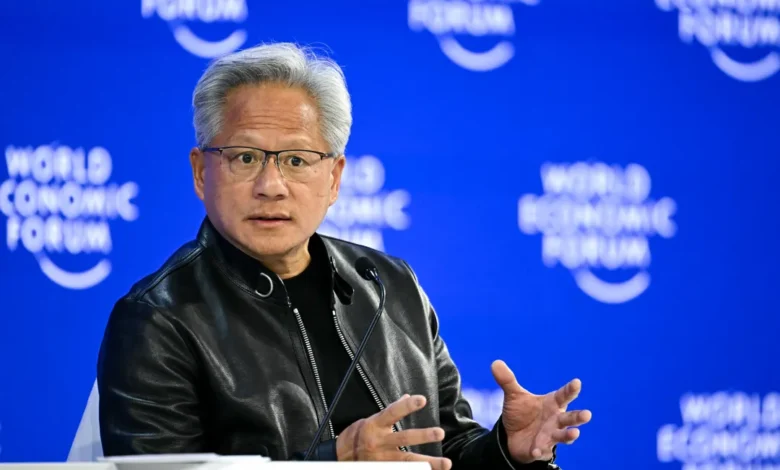
S&P Global Ratings, one of the world’s most influential credit rating agencies, has officially placed semiconductor giant Nvidia under review for a potential credit downgrade. The decision, announced on November 25, 2026, stems directly from growing apprehensions regarding the company’s internal management structures, executive governance practices, and a heavy reliance on its charismatic long-time leader.
Despite Nvidia boasting unprecedented financial performance driven by the global artificial intelligence boom, rating analysts are increasingly uneasy about corporate oversight. Specifically, the recent dramatic ouster and subsequent reinstatement of Chief Executive Officer Jensen Huang has brought latent governance vulnerabilities to the forefront. S&P highlighted what it termed "weak executive oversight and a lack of succession planning," alongside a profound "key man risk"—a scenario where an enterprise’s continued market dominance and strategic vision are perilously concentrated in a single individual.
The credit agency has indicated that its comprehensive review will conclude within a 90-day window. Should the evaluation result in a negative outcome, Nvidia’s credit rating could be reduced from AA to AA-, marking the fourth-highest tier on the S&P investment-grade scale. While this hypothetical downgrade would not strip Nvidia of its elite investment-grade status, the practical financial repercussions could reverberate far beyond the company’s corporate headquarters, impacting capital-intensive AI infrastructure projects worldwide.
The Anatomy of Governance and Key Man Risk
To understand S&P’s current stance, one must examine the unique corporate culture that has propelled Nvidia to the apex of the global technology sector. Under Jensen Huang’s visionary leadership, the company transitioned from a niche graphics processing unit (GPU) designer for video games into the undisputed engine of the generative AI revolution. However, this high-stakes dominance has historically been accompanied by a flattened management structure and a deeply entrenched reliance on Huang’s strategic intuition.
The governance alarms sounded louder following an unexpected internal power struggle that briefly saw Huang ousted from his executive position before being swiftly reinstated. Although details surrounding the boardroom conflict remain tightly controlled, the mere occurrence of such volatility exposed critical gaps in Nvidia’s institutional stability. For institutional investors and credit agencies, corporate governance is not merely an administrative checkbox; it is a vital metric for risk management. The absence of a transparent, robust succession plan for a CEO who has become virtually synonymous with the company’s market valuation introduces an unacceptable element of structural uncertainty.
S&P’s evaluation explicitly underscores these governance deficits. In corporate finance, "key man risk" implies that a company’s financial resilience is inextricably linked to the continued health, tenure, and authority of one person. When an enterprise experiences leadership disruptions—even short-lived ones—credit agencies are bound to reassess the stability of the enterprise’s forward-looking strategy.
Chronology of Recent Events
The trajectory leading to S&P Global Ratings’ recent review reflects a rapid accumulation of financial and governance pressures over the past year:

- August 2026: Nvidia announces a sweeping $500 billion financing initiative designed to accelerate global AI infrastructure development in partnership with six major financial institutions, including Goldman Sachs, Apollo, and Blackstone. Under the preliminary framework, Nvidia commits to backstopping 25% of the massive loan portfolios.
- November 12, 2026: Financial reports reveal that lenders had already been exerting intense pressure on Nvidia to increase its financial guarantees for the AI infrastructure backstops, even prior to executive turbulence.
- Mid-November 2026: Internal corporate friction leads to the abrupt ouster of CEO Jensen Huang, followed shortly by his high-profile reinstatement, laying bare underlying governance tensions.
- November 25, 2026: S&P Global Ratings formally announces a 90-day credit review, raising the prospect of a downgrade from AA to AA- due to executive oversight concerns and dependency risks.
- February 2027 (Projected): S&P is expected to finalize its review and issue a definitive ruling on Nvidia’s credit rating status.
Ripple Effects Across the AI Infrastructure Ecosystem
While Nvidia itself possesses monumental cash reserves and stellar operating margins, a credit downgrade could trigger a domino effect across the broader artificial intelligence landscape. A lower credit rating directly translates into elevated borrowing costs. For an established tech titan, an incremental uptick in debt servicing expenses is manageable. However, the true vulnerability lies in Nvidia’s extensive web of financial commitments to the broader technology ecosystem.
Nvidia serves as a crucial financial backstop for numerous neoclods and emerging infrastructure companies. Many of these specialized cloud providers lack the robust balance sheets or credit histories required to independently secure multi-billion-dollar debt facilities for data center construction and advanced chip procurement. By acting as a guarantor, Nvidia facilitates their borrowing capacity, ensuring a continuous stream of buyers for its high-end GPUs.
If Nvidia’s credit rating slips from AA to AA-, its capacity to efficiently backstop these fragile infrastructure entities diminishes. A weakened credit profile means that lenders will view Nvidia’s guarantees with heightened skepticism. Consequently, financial institutions are virtually guaranteed to demand larger guarantees, stricter collateral requirements, or higher interest rates from the outset.
Even before the recent leadership crisis, financial markets were showing signs of caution. Reports surfaced in November indicating that major lending syndicates were already pushing Nvidia to absorb a larger share of the risk associated with its ambitious $500 billion AI financing apparatus. With S&P now scrutinizing the company’s governance framework, lenders possess additional leverage to demand even more stringent financial protections.
Broader Implications and Market Outlook
The unfolding credit review serves as a cautionary tale for the broader technology sector, where extraordinary market capitalization frequently masks governance vulnerabilities. As artificial intelligence transforms from an experimental technology into foundational global infrastructure, the financial mechanisms supporting it are facing rigorous institutional examination.
Credit rating agencies like S&P, Moody’s, and Fitch are increasingly factoring non-financial metrics—such as corporate culture, board independence, and succession depth—into their algorithmic and qualitative assessments. For Nvidia, the next 90 days represent a critical period for investor relations and corporate communication. To avert a downgrade, the company’s board of directors will likely need to demonstrate tangible improvements in executive oversight, clarify its succession architecture, and reassure Wall Street that its governance standards match its technological ambition.
Ultimately, while Nvidia’s hardware remains the undisputed gold standard for artificial intelligence development, the company is learning that maintaining market dominance requires more than silicon superiority. As the financial architecture underpinning the AI boom matures, institutional stakeholders are demanding the same level of rigorous engineering in corporate governance as engineers apply to the design of the next-generation microchip.