Colleges and K-12 Schools Across the United States Pivot Curriculum and Events to Frame Thanksgiving as a Day of Mourning and Colonial Harm

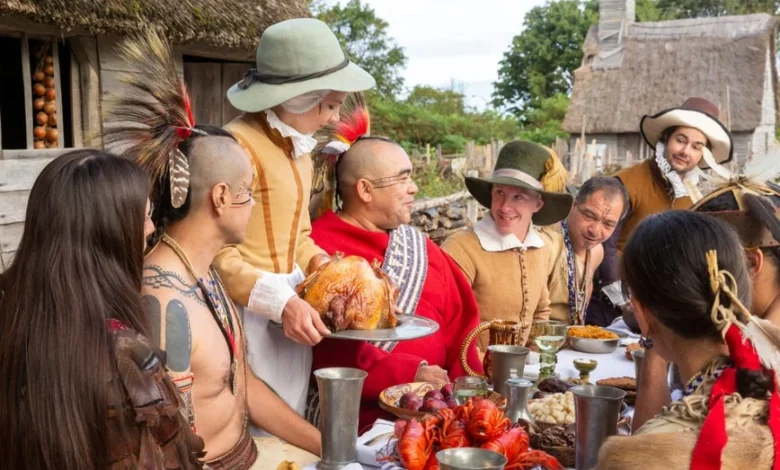
For the vast majority of Americans, the Thanksgiving holiday remains a traditional cornerstone of the autumn calendar—a day defined by family gatherings, turkey dinners, expressions of gratitude, and historical reflections on the 1621 harvest meal shared between the Pilgrims of Plymouth Colony and the Wampanoag people. However, a shifting ideological landscape across the nation’s educational institutions has increasingly reframed the national holiday. Rather than a unifying celebration of gratitude and togetherness, a growing number of universities, K-12 school districts, and institutional bodies are treating Thanksgiving as a complex, contentious occasion inextricably linked to settler colonialism, indigenous displacement, and historical trauma.
This ideological pivot has manifested in a series of academic panels, alternative community gatherings, campus symposia, and revised classroom curricula. From elite private universities to public state systems and local school boards, administrators and student life organizations are using the weeks leading up to Thanksgiving to highlight what they describe as the darker, less-celebrated realities of American history. While proponents of these initiatives argue that inclusive education and historical accountability are vital to modern social progress, critics contend that rewriting foundational traditions fosters unnecessary division, demoralizes students, and strips away a rare cultural moment centered on national unity and gratitude.
The Academic Shift: Campus Symposia and Alternative Programming
Across college campuses nationwide, the approach to the November holiday season has evolved significantly. Rather than focusing exclusively on festive preparations, university administration boards, cultural centers, and student life departments are actively curating events that challenge the conventional Thanksgiving narrative.
On November 18, George Washington University hosted a high-profile symposium titled "Breaking Bread: The Cost of Celebration." Promoted through the university’s official student life calendar, the event invited students to examine major American holidays—specifically Thanksgiving, Christmas, and Independence Day—through an intersectional analytical framework. According to event organizers, the discussions centered heavily on themes of institutional belonging, cultural erasure, and historical harm.
"Through facilitated dialogue and shared reflection, students will engage in meaningful conversations about historical memory, social responsibility, and the complexities of celebrating within a diverse society," the official event description explained. The university positioned the seminar as an opportunity for modern scholars to unpack how traditional American celebrations intersect with the lived experiences of marginalized populations.
Similarly, at the University of Wisconsin at Milwaukee, the American Indian Student Center, in collaboration with the Electa Quinney Institute for American Indian Education, hosted an alternative programming initiative on November 17. Entitled "AlterNative Giving," the event was designed as a community gathering intended to offer a deliberate departure from the traditional Thanksgiving narrative. Organizers stated that the objective was to move away from focusing on colonial histories and instead center attention on honoring Indigenous ways of knowing, being, and giving.
Other institutions have taken explicit stances by formally designating the holiday on academic calendars under alternative names. Salem State University in Massachusetts actively promoted events and resources that explicitly labeled Thanksgiving as a "National Day of Mourning." Furthermore, the university’s public messaging directed student attention toward institutional land acknowledgments, reminding the campus community that the ground upon which the university operates was historically taken from Indigenous populations.
"The land occupied by Salem State University is part of the traditional and ancestral homeland of the Massachusett tribe," a statement posted to the university’s website read. "We acknowledge the genocide and forced removal of the Massachusett tribe and their kin from their summer home in Naumkeag."
Similar ideological alignments are visible across several other higher education institutions:
- Occidental College: Academic resource guides describe Thanksgiving as a direct "reminder of settler colonialism and its devastating impact on Indigenous individuals, communities, and tribes."
- Pratt Institute: Campus calendars list the official holiday period under the dual heading of Thanksgiving and the "National Day of Mourning," emphasizing Indigenous remembrance.
- University at Albany: Official scheduling resources incorporate the dual designation to recognize both the traditional holiday and the counter-narrative of mourning.
Expansion Into K-12 Education and Public School Districts
The re-examination of Thanksgiving is no longer confined to elite higher education institutions; it has progressively filtered down into secondary and elementary school curricula. School boards and county education offices across various states have begun introducing supplemental teaching toolkits designed to challenge traditional historical storytelling in classrooms containing young children.
In Loudoun County, Virginia, local parents recently voiced strong opposition after discovering that elementary and middle school lesson plans incorporated concepts framing Thanksgiving as a day of national mourning and colonial subjugation. During public comment sessions and media interviews, parents argued that introducing complex socio-political critiques of American founding narratives to young children creates confusion and unfairly dampens a universally cherished holiday.
Meanwhile, institutional bodies at the county and district levels have institutionalized these alternative frameworks. The San Diego County Office of Education issued public guidance stating that while November is recognized as Native American Heritage Month—a designated time to honor the history and living cultures of Native peoples—the concurrent observance of Thanksgiving "carries very different meanings for different people, including many Native communities."
In Oregon, the Bethel School District integrated resources from external activist organizations directly into its official digital infrastructure. The district’s Equity, Access & Inclusion webpage prominently links to a comprehensive guide titled "Decolonizing Thanksgiving: A Toolkit for Combatting Racism in Schools." This toolkit, positioned alongside instructional materials designed to honor Native peoples, provides teachers with lesson plans aimed at dismantling what authors describe as romanticized, Eurocentric myths surrounding the early colonial period.
Historical Context and the Evolution of the Holiday
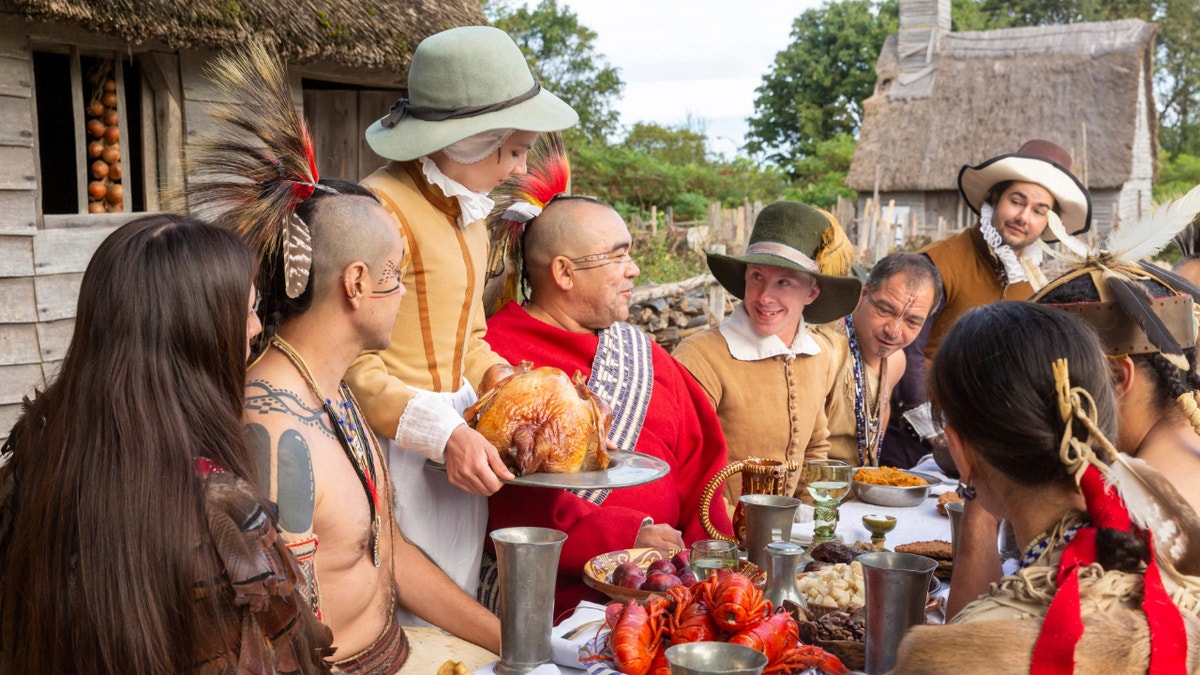
To understand the modern friction surrounding Thanksgiving, historians point to the complex evolution of the holiday itself. While the popular cultural mythos of Thanksgiving centers on the 1621 harvest feast at Plymouth Colony—where roughly 50 Pilgrims and 90 Wampanoag people, led by Massasoit, gathered for a three-day celebration of food and fragile diplomacy—the modern national holiday is a much later legislative creation.
The holiday was not officially established as a permanent national fixture until 1863, when President Abraham Lincoln proclaimed a national day of "Thanksgiving and Praise to our beneficent Father who dwelleth in the heavens," largely in an effort to foster national unity during the height of the American Civil War. Throughout the 20th century, the holiday cemented itself as a secular-religious tradition focused on family, gratitude, and culinary customs, largely divorced from rigorous geopolitical analysis.
However, the counter-narrative gained prominent institutional footing beginning in 1970, when the United American Indians of New England declared Thanksgiving to be a "National Day of Mourning." This annual protest, traditionally held on Plymouth Rock in Massachusetts, serves as a solemn reminder of the disease, displacement, warfare, and cultural suppression suffered by Indigenous Americans following European contact. Over the past two decades, as diversity, equity, and inclusion (DEI) frameworks expanded across American institutions, these critical perspectives transitioned from fringe activist protests into mainstream academic and administrative curricula.
Broader Implications and Public Debate
The growing institutional shift toward reframing Thanksgiving has sparked a vigorous national debate concerning the purpose of public education, historical memory, and national identity.
Supporters of these academic and pedagogical changes argue that a complete and honest reckoning with American history is essential for fostering true civic maturity. Proponents assert that acknowledging the darker chapters of colonialism does not negate the positive values of gratitude and family togetherness, but rather enriches students’ understanding of the nation’s multicultural fabric. From this perspective, institutional events like George Washington University’s "Breaking Bread" seminar or alternative giving circles provide vital spaces for marginalized students who have historically felt excluded from mainstream historical narratives.
Conversely, critics and watchdogs argue that the systematic deconstruction of foundational American holidays undermines civic cohesion. Opponents, including various political commentators, parents’ rights organizations, and educational reformers, suggest that framing national traditions entirely through the lens of oppression fosters collective guilt, cynicism, and social division among students.
As public funding and institutional policies increasingly reflect these ideological debates, the cultural battleground over Thanksgiving illustrates a broader, ongoing struggle over how the United States chooses to remember its past, define its present, and educate future generations of citizens.