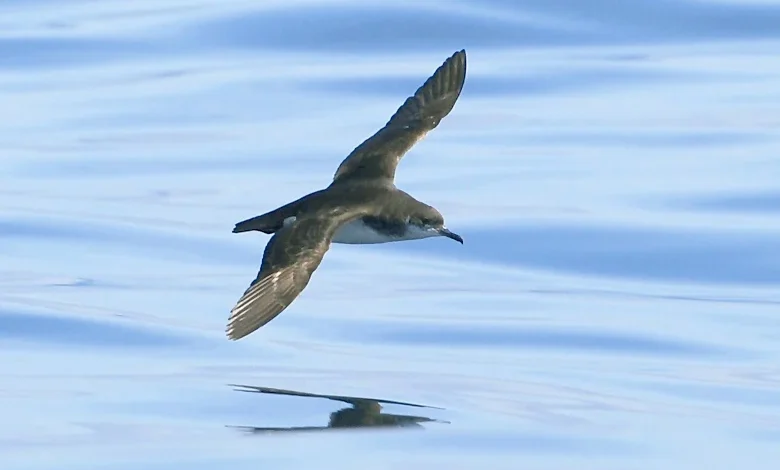
Human travelers crossing multiple time zones are intimately familiar with the physiological disorientation of jet lag, a condition where the body’s internal circadian rhythms struggle to synchronize with local solar time. For decades, this phenomenon was largely viewed through a human-centric lens. However, groundbreaking research recently published in the journal Science has revealed that Manx shearwaters—nimble seabirds capable of traversing hundreds of kilometers daily across the North Atlantic—experience a form of self-inflicted jet lag that directly impacts their ability to navigate. Because these birds rely on a Sun-based compass to find their way home, the misalignment between their internal biological clocks and the shifting solar position creates a measurable deviation in their flight paths.
The Mechanism of Avian Navigation
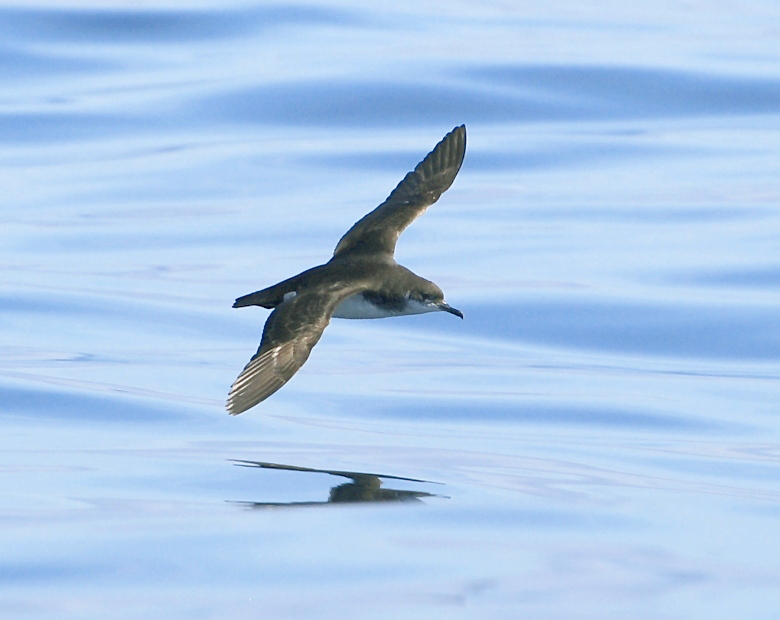
Manx shearwaters, medium-sized seabirds distantly related to the albatross, are remarkable navigators. They nest in underground burrows, primarily on islands surrounding the United Kingdom and Ireland, with a significant portion of their global population concentrated in the coastal regions of Wales. During the breeding season, these birds undertake grueling foraging trips, flying deep into the North Atlantic to hunt, often covering distances ranging from a few dozen to over 1,000 kilometers in a single excursion.
To return to their burrows, shearwaters utilize a sophisticated, two-part navigational system. Scientists believe the birds employ a "map sense"—potentially utilizing olfactory cues—to determine their general location. Once their position is established, they rely on a Sun compass to maintain a precise bearing. This method, while highly efficient, is inherently vulnerable to the Earth’s rotation. Because the Sun moves across the sky throughout the day, an animal must possess a highly accurate internal clock to adjust its heading continuously. For instance, a bird traveling south must orient itself 90 degrees clockwise of the Sun at dawn, directly toward the Sun at midday, and 90 degrees anticlockwise of the Sun at dusk.
Chronology of a Research Endeavor
The discovery of this avian jet lag is the culmination of a twenty-year longitudinal study spearheaded by behavioral and sensory ecologists at the University of Oxford. The project, which began in 2004, took advantage of advancements in miniaturized GPS technology. Early in the 21st century, GPS tags finally became light enough to be attached to medium-sized seabirds without hindering their flight performance.
Over the next two decades, researchers Tim Guilford and Chris Perrins, alongside lead author Patrick Lewin, amassed an unprecedented dataset. By the conclusion of the study, they had successfully tracked 3,688 individual foraging trips performed by 1,045 shearwaters. This vast archive of flight data allowed the team to isolate "homing" flights—the final, high-speed, direct-line journeys birds take when returning to their colonies.
By calculating the exact time of the last sunrise each bird witnessed, the researchers were able to establish a baseline for the birds’ internal clocks. By comparing subsequent GPS coordinates with the known solar position at those times, the team could determine exactly how much the birds veered off course. The findings were striking: as birds moved across lines of longitude, their internal clocks drifted out of sync with local time, leading to predictable, systematic errors in their navigation.
Quantifying the "Clockwork Compass"
The study found that for every degree of longitude a shearwater covers between sunrise and sunset, its internal clock falls approximately four minutes out of sync with the local environment. While a four-minute discrepancy might seem negligible to a human, for a bird relying on the precise angle of the Sun, it is enough to induce a navigational bias.
Data from 335 homing flights conducted over open water, far from the influence of coastal landmarks, confirmed that the birds drifted in direct accordance with their predicted Sun compass errors. When flying east, the birds tended to veer clockwise; when flying west, they veered anticlockwise. These shifts were subtle—typically involving time differences of 10 to 15 minutes, with an observed maximum of one hour—but the resulting trajectory deviations were consistent and statistically significant.
Crucially, the research team rigorously tested these observations against other potential navigational variables. They analyzed the impact of crosswinds, the Coriolis effect, and the potential influence of magnetic navigation. In all cases, these factors failed to explain the observed flight patterns as effectively as the Sun compass bias. The "jet lag" hypothesis emerged as the only model that consistently predicted the birds’ specific flight deviations.
Navigational Correction and Resilience
Despite these systemic errors, Manx shearwaters appear remarkably resilient. The team calculated that even at the maximum observed range—a 1,000-kilometer flight—the navigational error amounted to a deviation of approximately seven degrees. This translates to an additional five kilometers of travel, a relatively minor cost for a bird of this size.
The research suggests that shearwaters do not rely solely on their internal clock for the duration of the flight. Instead, they likely employ a dual-navigation strategy. As they approach their breeding grounds, they transition from relying on the Sun compass to utilizing familiar landmarks, such as coastlines. This finding mirrors previous studies on homing pigeons, which also displayed a hybrid navigation approach, suggesting that birds have evolved to keep their compass-based and landmark-based systems in constant, albeit imperfect, communication.

Broader Implications and Future Research
The implications of this study extend far beyond the migratory habits of the Manx shearwater. As researchers continue to analyze the data, the focus is shifting toward whether this "avian jet lag" has physiological consequences. Currently, there is no evidence to suggest that these birds suffer from the same symptoms humans associate with jet lag, such as sleep deprivation or metabolic distress. However, the study opens the door to critical questions: Does this clock-shift affect foraging efficiency? Does it influence the volume of food delivered to chicks? Does it play a role in long-term breeding success?
From an evolutionary standpoint, the study raises the possibility that many long-distance fliers have developed biological mechanisms to mitigate the effects of constant time-zone shifts. This is particularly relevant for species living in polar regions, where lines of longitude converge and even short flights can cause rapid changes in local solar time.
Furthermore, this research holds significant value for the field of autonomous systems. Engineers designing bio-inspired navigation for drones and other robotic platforms could find valuable insights in the way these birds navigate. By understanding how shearwaters manage to balance a fallible biological compass with environmental feedback, developers may be able to create more robust, self-correcting navigation algorithms for autonomous vehicles.
The Oxford team’s work underscores the incredible adaptability of wild animals in the face of the Earth’s physical realities. While the Manx shearwater may experience a slight drift in its course due to the limitations of its internal clock, it remains a master of the open ocean. By integrating multiple sources of information—from the Sun to the coastline—the bird effectively bridges the gap between its internal biological reality and the external world. As scientists look toward future research, the hope is that these birds might offer a "roadmap" for understanding how life manages the inherent challenges of moving across a planet that is constantly in motion. The study serves as a potent reminder that the biological rhythms governing the natural world are as complex and interconnected as the very environments they inhabit.