President Donald Trump’s Thanksgiving Message Sparks Intense Debate Over Immigration, Public Assistance, and Minnesota’s Somali Community

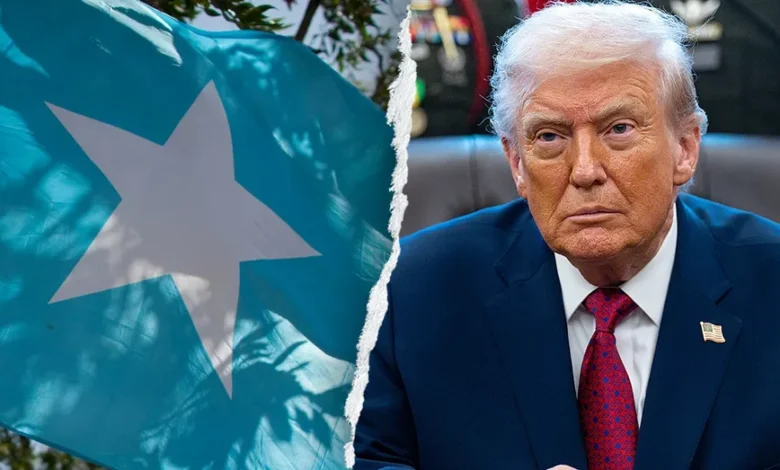
In a sweeping and unconventional Thanksgiving holiday message shared on Truth Social, President Donald Trump addressed a broad range of national issues, focusing heavily on immigration enforcement, national security, and the Somali-American community residing primarily in Minnesota. While extending holiday greetings to traditional supporters, whom he designated as "AMERICAN PATRIOTS," the President simultaneously levied harsh criticisms against the "Radical Far Left" and expressed strong dissatisfaction with the socio-economic integration of certain immigrant populations. The remarks have quickly ignited a firestorm of political debate, drawing sharp condemnation from immigrant advocacy groups and civil rights organizations, while finding staunch support among conservative lawmakers who have long raised concerns over the stewardship of federal safety-net programs.
The Thanksgiving Message: Praise, Criticism, and Deportation Claims
The holiday statement, published Thursday morning, contained starkly contrasting sentiments. On one hand, President Trump offered targeted praise to a minute segment of the Somali immigrant population. "I want to thank the 2% of our Somalian population that have a job, and are actually willing to work, without receiving Government Assistance," Trump wrote. He characterized these employed individuals as "wonderful American ‘citizens,’" asserting they should be permitted to remain in the country and partake in holiday celebrations.
Conversely, the President called for the immediate removal of unemployed Somali residents who rely on government assistance, arguing that such measures are vital to preserving the long-term viability of Minnesota. "The others should be thrown out, immediately, thereby saving the Great State of Minnesota, which has no chance if they are allowed to stay," he added.
Beyond his focus on the Somali community, Trump claimed substantial victories regarding his administration’s broader deportation agenda. He asserted that foreign-born "murderers, drug dealers, and criminals"—whom he alleged had entered the United States unlawfully after being released from foreign penal systems and psychiatric institutions—have largely been repatriated. "They are mostly gone now, brought back to their point of origin and, hopefully, living a beautiful and idyllic life, and promising, ideally, never to kill innocent people again," Trump stated, concluding the segment with a sarcastic holiday nod to individuals residing in "Faraway Lands."
Background Context and Public Assistance Statistics
President Trump’s recent statements do not exist in a vacuum; they reflect a years-long, escalating political friction point regarding demographic shifts, cultural integration, and public benefit utilization within Minnesota’s Twin Cities region, which hosts the largest concentration of Somali-Americans in the United States.
The debate over public assistance metrics within the Somali-American community has frequently occupied center stage in Washington. During a high-profile House Oversight Committee hearing earlier in January, Representative Brandon Gill, R-Texas, presented data concerning federal support programs. According to the figures cited during the hearing, approximately 54% of Somali-headed households in Minnesota participate in the Supplemental Nutrition Assistance Program (SNAP), commonly referred to as food stamps.
Republican lawmakers have repeatedly pointed to these statistics—alongside high-profile federal fraud investigations involving pandemic-era relief funds and local non-profit organizations in Minnesota—to argue for stricter oversight, increased vetting, and tighter restrictions on federal aid distribution. Congressional watchdogs, including testimony delivered to Capitol Hill committees by agricultural inspectors general, have echoed these concerns, warning that vulnerabilities in programs like SNAP can occasionally intersect with complex financial crimes or illicit networks.
Conversely, community leaders, civil rights advocates, and Democratic lawmakers have fiercely pushed back against these generalizations. They argue that broad criticisms stigmatize an entire diaspora based on the actions of a few individuals, overlooking the vital contributions Somali-Americans make as entrepreneurs, healthcare workers, educators, and taxpayers. Tensions have further escalated in recent weeks amid reports of heightened federal Immigration and Customs Enforcement (ICE) operations targeting communities in Minneapolis, prompting local demonstrations and counter-protests.
Chronology of Recent Events Involving the Minnesota Somali Community
To understand the current socio-political climate surrounding President Trump’s remarks, it is essential to examine the sequence of events leading up to the Thanksgiving holiday address:
- Late 2024 to Early 2025: Federal law enforcement agencies ramp up investigations into various welfare and pandemic relief fraud schemes in Minnesota, resulting in multiple indictments that draw national media attention.
- January: During a House Oversight Committee hearing, Republican lawmakers spotlight high rates of public benefit dependency within specific immigrant enclaves, specifically citing Minnesota’s Somali community.
- Early December 2025: Reports of targeted federal immigration enforcement operations in Minneapolis spark community-wide anxiety, leading to localized protests, rallies, and demonstrations organized by immigrant advocacy coalitions.
- Mid-December 2025: Federal law enforcement actions involving high-profile political figures and community leaders draw intense scrutiny, intensifying local and national partisan polarization regarding immigration enforcement tactics.
- Thursday (Thanksgiving Day): President Trump releases his controversial Truth Social post, distinguishing between employed and unemployed segments of the Somali population while reiterating broader deportation milestones.
Official Responses and Divergent Holiday Messages
The juxtaposition of President Trump’s hardline immigration stance with more traditional holiday reflections was underscored by other administration officials on the same day. Secretary of State Marco Rubio took to social media to share a video message emphasizing gratitude for the foundational principles of the United States.
"We know how special this country is. It’s the place that gave us freedom. It’s a place that gave us opportunity. It’s a place that’s given our parents, our grandparents, and many of you the chance not just to do well in life, but to leave our children better off than ourselves," Rubio stated in the broadcasted address. In the accompanying caption, he reinforced the theme of national blessing, writing, "Being an American is a gift unlike any ever afforded to any other peoples throughout human history—we have so much to be thankful for. Happy Thanksgiving."

While Rubio’s message focused broadly on the immigrant narrative of generational advancement and historical opportunity, critics noted the stark contrast between his inclusive framing and Trump’s explicit calls for mass deportations targeted at specific nationalities and socio-economic classes.
Broader Impact and Implications
The policy implications of President Trump’s statements point toward an intensifying push for aggressive immigration enforcement and stricter welfare eligibility verifications as the administration moves forward with its broader governance agenda.
From a political standpoint, the rhetoric serves to energize the President’s core base, which views stringent border control and the elimination of public assistance fraud as essential tenets of economic nationalism and national security. Supporters argue that welfare systems are designed as temporary safety nets rather than permanent entitlements and that legal immigration systems must prioritize self-sufficiency.
On the other hand, opponents warn that such inflammatory rhetoric alienates millions of tax-paying, law-abiding citizens and legal residents, fosters an environment of fear and xenophobia, and undermines the social fabric of multicultural urban centers like Minneapolis. Civil rights organizations have pledged to monitor federal enforcement actions closely, promising legal challenges against any administrative policies deemed to violate constitutional protections or target specific ethnic groups discriminatorily.
As the political fallout from the Thanksgiving message reverberates through Washington and the Midwest, the debate over the definition of American identity, the obligations of citizenship, and the management of federal safety nets remains one of the most deeply polarized fault lines in contemporary American politics.