The Information Crisis: How Digital Misinformation Is Undermining Disaster Response and Putting Lives at Risk

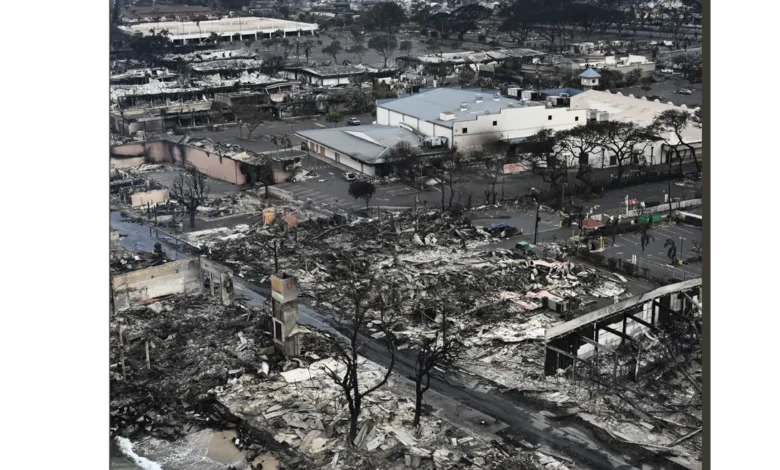
In the immediate aftermath of the 2023 Maui wildfires—a catastrophic event that claimed over 100 lives and decimated the historic community of Lahaina—the physical destruction was compounded by a rapid, virulent spread of digital falsehoods. While official investigations confirmed the fires were sparked by high winds bringing down power lines, a different narrative took hold on social media. Millions of users were exposed to baseless claims that the fires were ignited by "directed energy weapons" or lasers as part of a clandestine government plot to clear land for a "smart city." This incident represents a dangerous shift in the American landscape: the intersection of extreme weather and an increasingly fragmented, post-truth information ecosystem.
The proliferation of this misinformation is not merely an academic concern; it is a critical operational hurdle for emergency managers. When disaster strikes, the window for effective evacuation, resource distribution, and life-saving intervention is narrow. In this volatile environment, the rapid circulation of conspiracy theories, often fueled by algorithmic amplification and, increasingly, generative artificial intelligence, creates a "fog of war" that slows down recovery efforts and erodes the foundational trust between citizens and the institutions tasked with their safety.
The Anatomy of a Modern Conspiracy
The Maui misinformation cycle serves as a chilling case study in how innocuous digital content can be weaponized. The "evidence" frequently cited by conspiracy theorists relied on out-of-context imagery from years prior. For instance, a blurry 2018 photo of a flare at a Marathon Petroleum refinery in Ohio, a 2018 SpaceX rocket launch in California, and a 2023 video of a transformer explosion in Chile were all repackaged as "proof" of a laser attack in Hawaii.
Despite some original posters retracting their claims, the "remix culture" of social media ensured the damage was done. Content creators with large followings—such as the account @cultivateelevate—reshared screenshots of these debunked posts, garnishing them with fresh speculation. By the time fact-checkers intervened, the false narrative had already achieved millions of impressions, far outpacing the reach of any corrective information. This phenomenon demonstrates that in the digital age, the "first-mover advantage" belongs to the rumor, not the record.
A Shrinking Trust Deficit
The susceptibility of the public to these narratives is deeply rooted in a systemic decline in trust toward government institutions. Data from the Pew Research Center indicates that public trust in the U.S. government remains near historic lows, with fewer than 20 percent of Americans reporting that they believe the government acts in the public interest most of the time.
This skepticism is acutely felt by the Federal Emergency Management Agency (FEMA). Historically, FEMA has faced perennial rumors regarding "government camps" or the seizure of private property. However, the intensity of these claims reached a fever pitch during the 2024 response to Hurricane Helene. Misinformation regarding the agency’s intentions became so pervasive that it triggered direct threats against federal personnel. In one instance, field operations were temporarily suspended in North Carolina due to credible reports of armed individuals targeting FEMA officials. Furthermore, high-ranking agency leaders, including former administrator Deanne Criswell, were subjected to "swatting" attacks—a malicious tactic involving false reports of violent crimes to draw armed police response to a target’s home.
These disruptions are not merely administrative headaches; they translate to tangible losses. When emergency teams are sidelined or forced to navigate an environment of intense hostility, the delivery of essential supplies—water, medicine, and shelter—is delayed. Every hour spent debunking a viral lie is an hour during which a disaster victim remains unserved.
The Role of Algorithmic Amplification and Political Polarization
The current information crisis is exacerbated by the structure of modern social media platforms, which prioritize engagement over accuracy. Research from the Center for Countering Digital Hate suggests that verified accounts often play a disproportionate role in spreading disinformation. During the lead-up to the 2024 presidential election, climate-related disasters became lightning rods for partisan rhetoric. Right-wing influencers and political figures frequently used the chaos following Hurricane Helene to accuse the Biden administration of withholding aid to specific political demographics, claims that were widely circulated despite a total lack of supporting evidence.
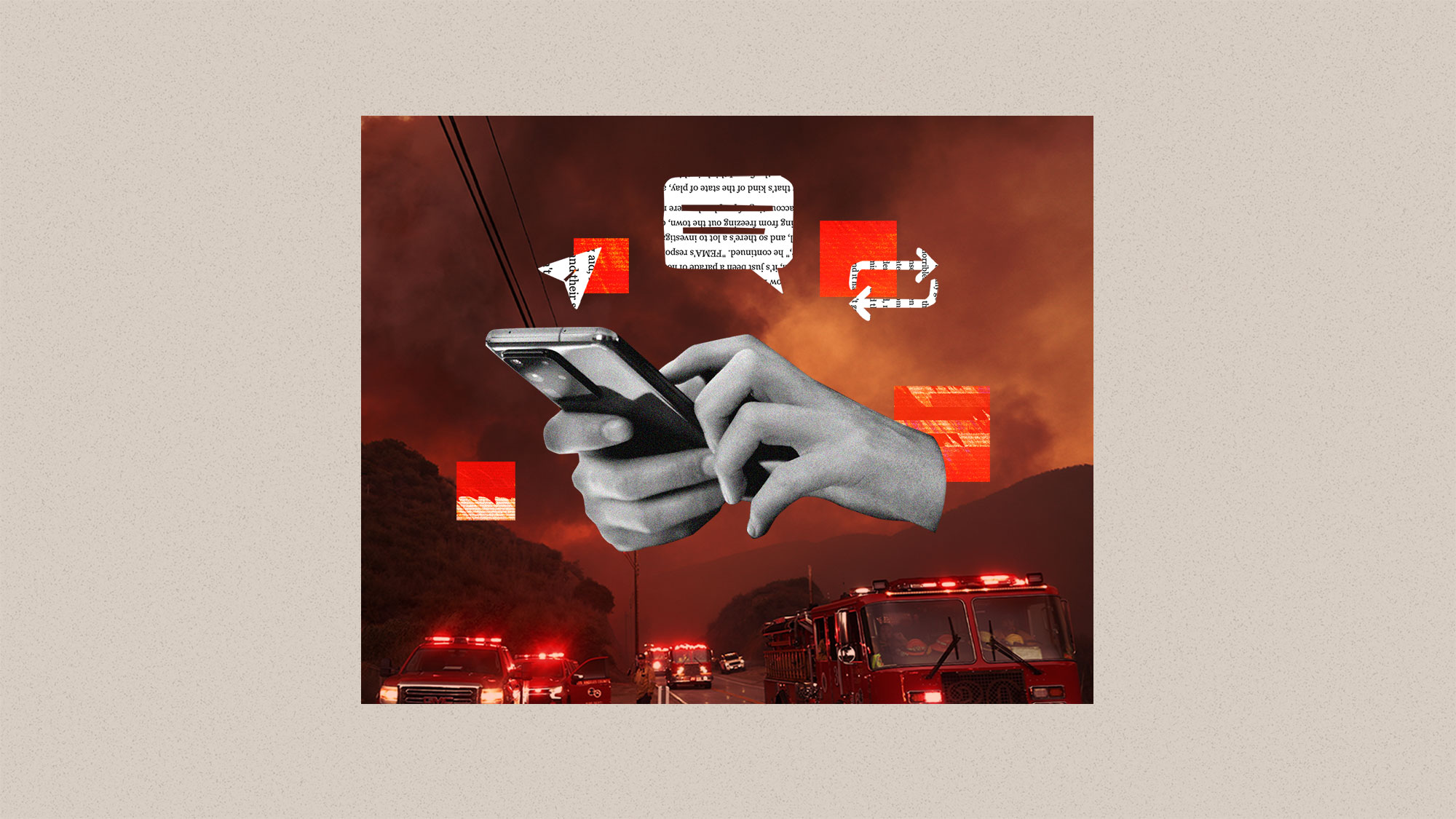
Even when high-profile figures later issue retractions, the initial, sensationalized claim often retains a much larger footprint. For example, when tech executive Elon Musk claimed on his platform, X, that FEMA was obstructing his efforts to deliver aid, his post garnered nearly 30 million views. His subsequent, quieter retraction reached a fraction of that audience. This asymmetry ensures that a significant portion of the public remains convinced of the original, false premise, regardless of the subsequent reality.
Artificial Intelligence: The New Frontier of Uncertainty
As society grapples with the fallout of social media misinformation, the rapid adoption of generative AI introduces a new layer of complexity. With roughly a quarter of American adults using AI chatbots daily, these tools are becoming a primary source of information. While current models are generally programmed to debunk clear conspiracy theories, they are not infallible.
The potential for "hallucinations"—where an AI generates incorrect but confident-sounding information—poses a significant risk during time-sensitive crises. If a user queries a chatbot about evacuation routes or aid eligibility, a slight error or an reliance on outdated scraped data could result in catastrophic consequences. Researchers at institutions like the University of Maryland are currently scrambling to study how the public interacts with these tools during disasters, noting that the objective truth matters less to the user than the perceived credibility of the answer provided. If a user trusts the AI, they will act on the information, regardless of its accuracy.
Strategies for Rebuilding Institutional Credibility
If the battle against misinformation is a form of "trench warfare," as many experts suggest, then the only viable strategy is long-term investment in community-level communication. Relying on centralized government announcements is no longer sufficient in a landscape where institutional credibility is low.
Successful models, such as those piloted by FEMA in the wake of the Maui fires, involved leveraging "trusted messengers"—local community leaders, healthcare workers, and clergy who hold inherent credibility within their specific neighborhoods. By partnering with these individuals, agencies can ensure that accurate information flows through organic networks rather than being dismissed as "official propaganda."
Furthermore, there is a clear need for increased digital literacy and a more robust approach to pre-disaster communication. Agencies must move away from reactive "myth-busting" and toward proactive engagement. This includes:
- Building pre-existing relationships: Establishing trust with community stakeholders before a crisis occurs, so that when a disaster happens, the government is not a stranger.
- Transparent communication: Providing clear, real-time data on operations to mitigate the perception of secrecy that often fuels conspiracy theories.
- Resilient infrastructure: Ensuring that information channels are decentralized so that local communities can verify facts without needing to rely on a single, potentially compromised, federal source.
The Human Cost of the Post-Truth Era
The implications of this information crisis extend far beyond the political realm. When the line between fact and fiction is blurred, the capacity for collective action—the hallmark of a functioning society—diminishes. Whether it is a resident refusing to evacuate because they believe a disaster is a government hoax, or an aid worker being harassed due to baseless online rumors, the human cost is undeniable.
As extreme weather events become more frequent and severe due to climate change, the need for a shared sense of reality has never been more urgent. The challenge is not merely technological or regulatory; it is a fundamental test of the social contract. To survive the increasingly chaotic environmental future, American institutions and the public must find a way to navigate the noise, prioritize verified data, and ensure that in the next disaster, the truth can move as fast as the lie.