Federal Court Rulings Expand Second Amendment Protections for Switchblades and Body Armor Ahead of Landmark Supreme Court AR-15 Showdown

The legal landscape surrounding the Second Amendment has shifted dramatically following two consequential federal court decisions that extend constitutional protections to personal defense items long targeted by federal and state restrictions. Issued concurrently, the rulings have injected a renewed sense of momentum and optimism into gun-rights advocacy groups across the United States. These legal victories arrive at a critical juncture, directly preceding a high-stakes Supreme Court battle centered on the constitutionality of bans targeting semi-automatic rifles, most notably AR-15-style platforms.
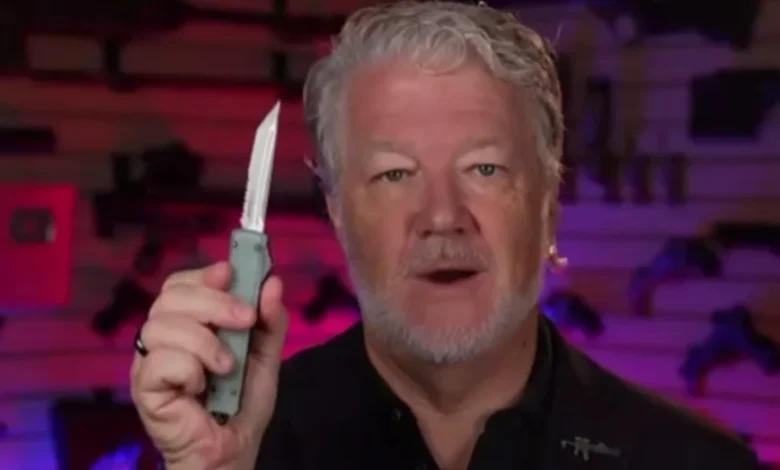
The first of the two decisions originated in the Fifth Circuit Court of Appeals, which struck down provisions of the decades-old federal law restricting the interstate commerce and possession of switchblade knives. A panel of judges determined that the statutory limits infringed upon the Second Amendment rights of citizens by prohibiting automatic knives, which the court categorized as standard, constitutionally protected "arms." Simultaneously, in the Western District of New York, a federal district judge issued a ruling invalidating the state’s strict civilian bans on personal body armor. The court rejected the state’s argument that tactical defensive gear is merely an accessory, classifying it instead as an integral component of the defensive equipment historically and textually shielded by the Second Amendment.
These parallel developments are rippling through the legal community as the Supreme Court of the United States prepares to hear oral arguments in the pivotal case of Viramontes v. Cook County. That upcoming judicial review is widely expected to establish a definitive national standard regarding whether popular semi-automatic firearms qualify as protected "arms," a decision that could invalidate sweeping municipal and state-level prohibitions nationwide.
The Historical Framework: Heller, Bruen, and the Modern Interpretation of Arms
To understand the trajectory of these recent federal rulings and their implications for the Supreme Court, legal analysts point back to two landmark jurisprudence milestones: the 2008 decision in District of Columbia v. Heller and the 2022 ruling in New York State Rifle & Pistol Association v. Bruen.
In Heller, the Supreme Court formally affirmed that the Second Amendment protects an individual’s right to possess firearms unconnected to service in a militia, specifically for traditionally lawful purposes such as self-defense within the home. Justice Antonin Scalia, writing for the majority, noted that the term "arms" extends to all instruments that constitute bearable arms, even those that were not in existence at the time of the founding. However, Heller also preserved certain historical regulatory limitations, suggesting that prohibitions on "dangerous and unusual weapons" remained permissible.
Fourteen years later, Bruen upended the methodology lower courts used to evaluate gun laws. The Supreme Court rejected the two-step balancing tests previously favored by many appellate courts, replacing them with a strict text-and-history standard. Under Bruen, if a challenged regulation burdens conduct falling within the plain text of the Second Amendment, the government bears the burden of proving that the restriction is consistent with the nation’s historical tradition of firearm regulation.
In both the Fifth Circuit switchblade case and the New York body armor challenge, the presiding courts applied this exact framework. The judges found that the items in question—switchblades and body armor—fell squarely within the textual definition of "arms." Once that threshold was met, the respective governments failed to produce sufficient historical analogues from the founding era or the 19th century demonstrating a traditional American practice of banning such civilian acquisitions.
Anticipating the Viramontes Showdown Over AR-15 Rifles
The legal reasoning applied to switchblades and body armor serves as a clear preview of the arguments expected before the Supreme Court in Viramontes v. Cook County. The case stems from a rigorous constitutional challenge against a suburban Chicago county’s ban on semi-automatic rifles and certain ammunition magazines.
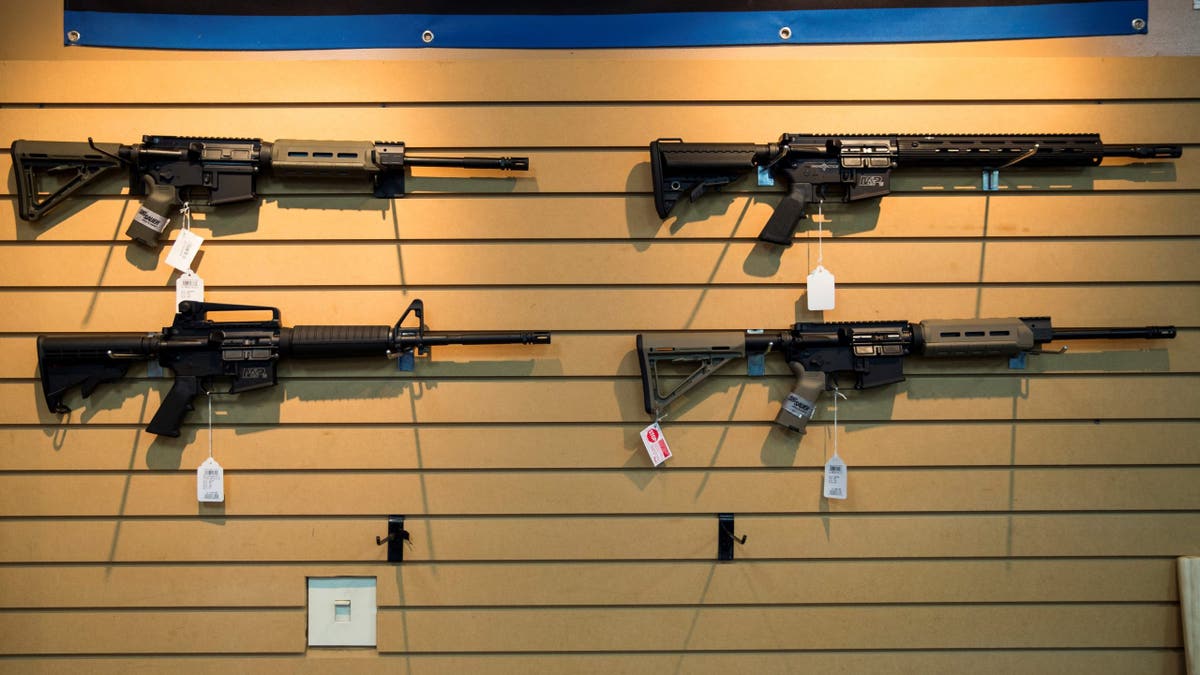
Previously, the Seventh Circuit Court of Appeals upheld the Cook County ordinance, reasoning that AR-15-style rifles closely resemble military-grade machine guns and therefore fall outside the scope of Second Amendment protection. Gun-rights organizations, including the National Association for Gun Rights (NAGR) and the National Rifle Association (NRA), have sharply criticized that logic, arguing that semi-automatic firearms operate fundamentally differently from fully automatic weapons and are owned by millions of law-abiding Americans for lawful self-defense and recreation.
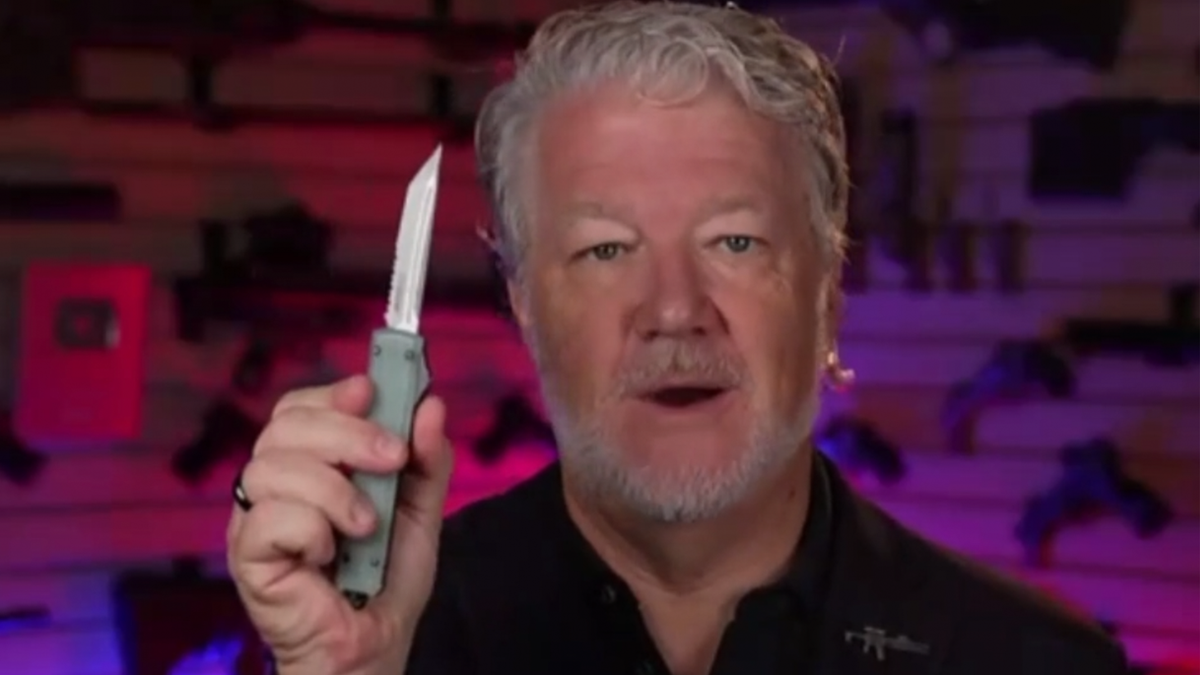
Dudley Brown, president of the National Association for Gun Rights, emphasized the interconnected nature of these ongoing legal battles. "The interesting thing about both of these cases is that they’re both going to be really decided by the U.S. Supreme Court in the Viramontes decision," Brown observed, noting that a favorable high court ruling could sweep away restrictions on a broad array of defensive tools.
Legal experts suggest that if the Supreme Court rejects the Seventh Circuit’s equivalency between semi-automatic rifles and machine guns, the ripple effects will extend far beyond firearms. Future litigation could swiftly target federal and state restrictions on firearm suppressors, high-capacity magazines, stun guns, and specialized tactical gear.
Industry and Advocacy Reactions
National advocacy groups have hailed the flurry of recent judicial opinions as a monumental correction of decades of statutory overreach. Justin Davis, director of public affairs for the National Rifle Association, framed the current judicial climate as a necessary recalibration of how constitutional rights adapt to technological innovation.
"There’s a major discussion going on in the courts about what is and what aren’t arms," Davis stated. He pushed back against arguments suggesting that the Second Amendment should be restricted solely to the military technology available during the late 18th century.
"They talk about how the Second Amendment only applied to muskets because that’s what existed at the time of the Founders, but we don’t apply the First Amendment only to newspapers, books or speech in public forums," Davis continued, pointing out that modern communication methods like social media and cellular devices did not exist when the Bill of Rights was drafted. "The world evolves, but the core fundamental rights never change."
Conversely, gun-control advocacy organizations and municipal attorneys have consistently defended these restrictions as vital public safety measures. State and local governments argue that regulations on high-capacity magazines, rapid-deployment knives, and advanced body armor are necessary to mitigate the lethality of violent crime and protect law enforcement officers during armed encounters. They maintain that historical traditions of public safety regulation grant legislatures wide latitude to restrict dangerous equipment that poses heightened risks to community welfare.
Broader Implications and Future Outlook
As legal scholars and litigants await oral arguments in Viramontes, the cumulative effect of the lower court rulings underscores a profound philosophical shift in American jurisprudence. For decades, gun control advocates relied on intermediate scrutiny standards that allowed courts to weigh public safety benefits against constitutional infringements. The modern legal framework, anchored by Bruen and reinforced by recent rulings on non-firearm defensive gear, leaves little room for policy-based balancing tests.
If the Supreme Court ultimately rules that AR-15-style rifles enjoy the same foundational protections as handguns and historical arms, the decision will trigger a sweeping review of firearms ordinances in blue states and municipalities across the country. Conversely, a ruling upholding restrictions on semi-automatic rifles could halt the current wave of lower court deregulation and stabilize existing state-level bans. Regardless of the outcome, the recent decisions concerning switchblades and body armor signal that the boundaries of the Second Amendment will remain a defining battleground in American constitutional law for years to come.
Related posts: