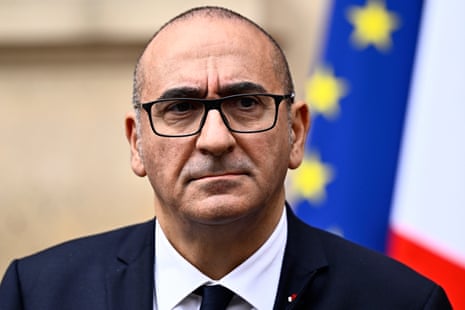
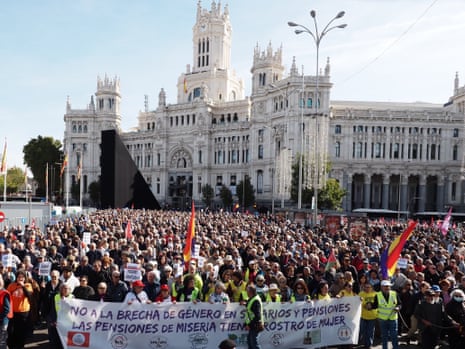
Saturday marked a turbulent turning point across Western and Southern Europe as tens of thousands of citizens took to the streets to protest worsening economic conditions, deteriorating public infrastructure, and contentious government policies. In France alone, Interior Minister Laurent Nunez announced that police arrested nearly 1,000 individuals during a nationwide mobilization that brought an estimated 410,000 demonstrators into the streets. While daytime marches in major urban centers such as Paris, Lyon, and Marseille largely maintained a peaceful atmosphere characterized by union banners, musical performances, and family participation, nightfall ushered in severe civil unrest, triggering violent confrontations with law enforcement and extensive property damage.
The demonstrations, now entering their fourth consecutive weekend, originated from student-led grievances regarding crumbling high school facilities, underfunded educational systems, and overworked teaching staff. Over the past month, these localized protests have expanded into a broader societal movement encompassing cost-of-living concerns, housing crises, and public dissatisfaction with the administration of President Emmanuel Macron. Similar waves of civil unrest rippled across neighboring nations, including Italy, Spain, and Albania, reflecting deep-seated regional anxieties over economic stability, state governance, and civil rights.
Chronology of the Day and Escalating Tensions
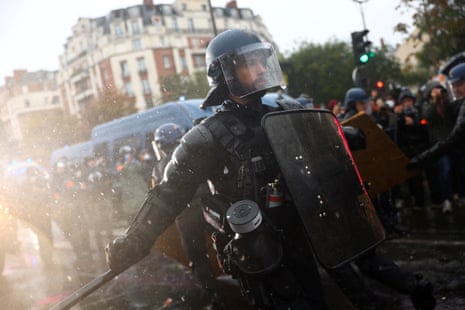
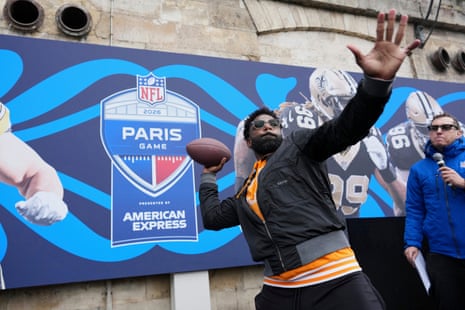
The chronology of Saturday’s events highlighted a stark transition from orderly civic expression to tactical urban warfare. Early morning gatherings in Paris saw large crowds congregating near the city’s southeastern periphery. Seeking to avert the widespread looting and ransacking that marred the previous weekend’s demonstrations, Parisian authorities implemented a heavily fortified security posture. Approximately 70,000 police officers, gendarmes, and elite tactical units were deployed nationwide—representing a 20-percent increase in police presence. In the capital, officials closed 24 metro stations, restricted public access around key historic squares like the Place de la Bastille, and ordered commercial establishments to board up their storefronts. Even international events felt the impact; the NFL abruptly closed its promotional "NFL House" in Paris ahead of a historic regular-season game between the New Orleans Saints and Pittsburgh Steelers at the Stade de France, citing public accessibility concerns.

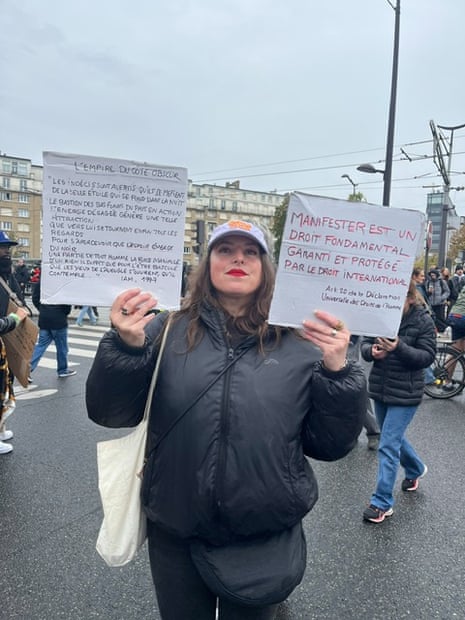
By early afternoon, protesters began marching along a tightly regulated 1.5-kilometer route extending from Porte d’Italie to Porte de Vincennes. The procession featured a diverse coalition of trade unions—such as the CGT, CFDT, FSU, and Solidaires—alongside student federations, office workers, and retirees. Interior Minister Nunez initially reported a calm atmosphere during the afternoon marches, noting that overall turnout during the morning hours stood at roughly 36,000 participants across 136 localized actions, a significant numerical decrease compared to the 264 actions recorded the prior week.
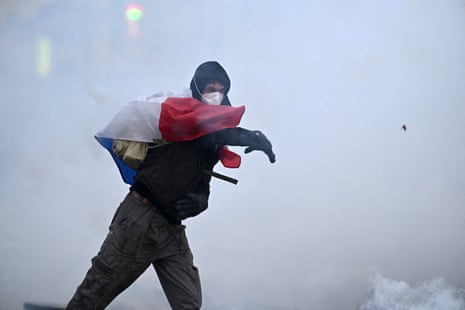
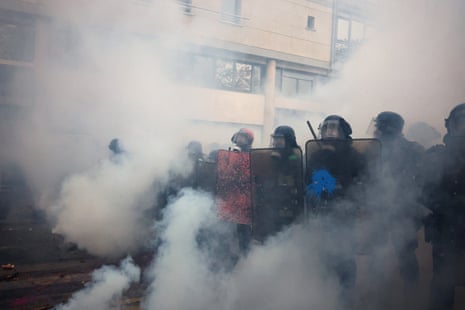
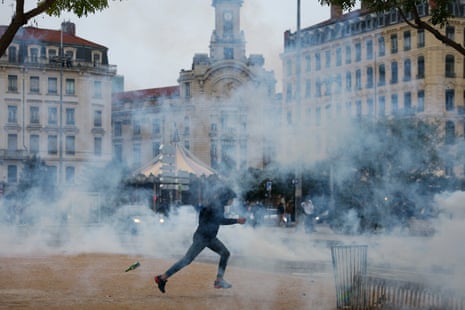
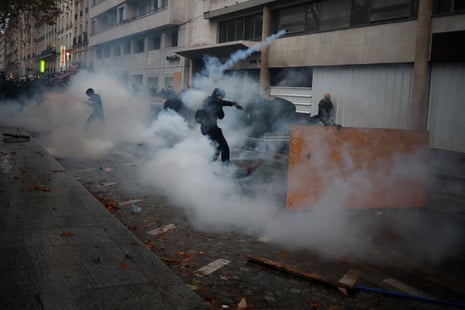
However, as evening approached, the operational environment shifted dramatically. According to eyewitness accounts and police reports, several thousand radical activists, including roughly 500 individuals identified by security forces as "ultra-left" rioters, infiltrated the tail end of the Paris march. Masked agitators began hurling projectiles, glass bottles, and stones at police lines, alongside setting fire to street bins and discharging commercial fireworks directly at law enforcement personnel. In response, security forces deployed tear gas, water cannons, and stun grenades, leading to a two-hour battle that ultimately forced the crowds to disperse.
Similar evening flashpoints materialized outside Paris. In Lyon, police utilized tear gas early in the day to break up unauthorized road blockades, while live footage from broadcaster BFMTV captured masked demonstrators setting spot fires and hurling debris in Marseille. In the central city of Orléans—which was simultaneously hosting the annual congress of Marine Le Pen’s far-right National Rally party—between 11,000 and 26,000 counter-demonstrators marched through the streets chanting anti-fascist slogans, resulting in suspended tram lines and heightened security cordons.
Supporting Data and Casualties
The severity of Saturday’s clashes resulted in multiple injuries and widespread detentions. Interior Minister Nunez confirmed that at least two individuals sustained severe, life-altering injuries during the nationwide unrest. Among them was a 20-year-old man in Toulouse who suffered traumatic amputations of his fingers after an explosive device detonated, while a second severe injury was reported in Clermont-Ferrand.
Law enforcement agencies executed sweeping security interventions. In France, the cumulative arrest toll reached nearly 1,000 by late Saturday evening, with officials warning that the figure would continue to climb as precinct databases updated overnight. Police checks across the country intercepted a vast arsenal of concealed weapons, including metal balls, lead pellets, slingshots, airsoft weapons, improvised explosives, and even a katana.
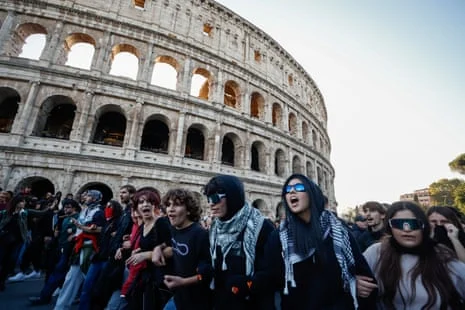
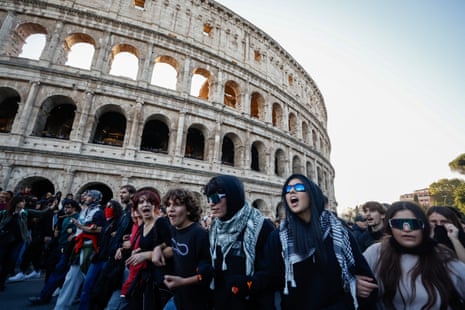
Concurrently, European neighbors experienced parallel security mobilizations. In Italy, where authorities had raided 150 homes on the eve of the demonstrations to preemptively target suspected agitators, nine individuals were formally arrested and 371 others were briefly detained across eight cities. Notably, 110 of those detained in Italy were minors. Italian Prime Minister Giorgia Meloni’s government, facing persistent youth discontent over living standards and foreign policy stances, deployed 500 elite paratroopers from the Folgore Brigade to patrol central Milan and enacted stricter legal penalties for delinquent minors following localized looting the previous week. In Rome, a small faction of protesters attempted to force entry into the historic Colosseum before being repelled by museum guards, while separate anti-war marches near the Piazza della Repubblica dissolved into skirmishes involving water cannons.

In Albania, student-led protests opposing a controversial, Trump family-backed resort project entered their twelfth consecutive day. The demonstrations in Tirana drew thousands of participants from across the Balkan state, merging environmental concerns with broader demands for the resignation of Prime Minister Edi Rama over systemic corruption. Medical officials at Tirana’s National Trauma hospital reported treating over 300 injured individuals throughout the protests, with human rights monitors raising alarms over the indiscriminate use of rubber bullets, tear gas, and batons against civilian crowds.
Official Responses and Political Repercussions
The French government faced intense political scrutiny from both the radical left and right following the police interventions. Jean-Luc Mélenchon, leader of the radical-left La France Insoumise party, harshly criticized the state’s handling of the protests, accusing law enforcement of "ruining the day" by shooting tear gas canisters indiscriminately into peaceful crowds at the march’s conclusion. Mélenchon argued that the heavy police response was orchestrated to generate dramatic footage for domestic television broadcasts.
Conversely, government officials defended the heavy policing as a necessary measure to protect public order and private property. The unrest unfolded under a cloud of heightened societal trauma following a racially motivated terrorist drive-by shooting in towns west of Paris on Friday, which claimed the life of a 26-year-old martial arts athlete and left five others injured, including a 12-year-old girl. President Emmanuel Macron condemned the shooting as an explicit hate crime, urging national unity.
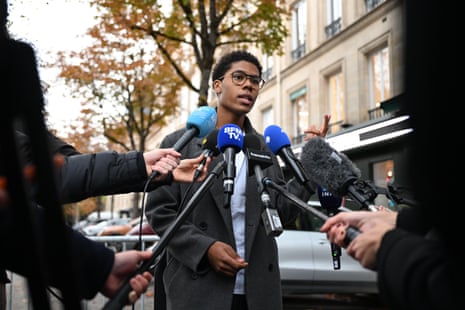
Regarding the root causes of the domestic protests, Macron’s administration has faced mounting pressure over the chronic decay of public education infrastructure. Recent parliamentary and senate reports have underscored that thousands of French primary and secondary schools—many constructed during the expansionist building booms of the 1960s—suffer from severe structural degradation, including collapsing ceilings, chronic water leaks, heating failures during extreme weather, and rodent infestations. While regional authorities responsible for high school upkeep have demanded expanded budgetary allocations from the national government, student leaders continue to press for the complete abolition of the contentious Parcoursup university admissions platform, arguing it lacks transparency and exacerbates educational inequality.
Although Macron held a lengthy two-and-a-half-hour dialogue with twenty student representatives at the Élysée Palace on Friday, student leaders maintained that talks must yield tangible legislative concessions. Following preliminary discussions, campaign groups confirmed that negotiations regarding educational reforms would continue with Prime Minister Sébastien Lecornu, even as they encouraged their peers to sustain public mobilization efforts.
Broader Implications and Outlook
Saturday’s coordinated European demonstrations underscore a volatile political climate characterized by intersecting economic pressures, systemic public service decay, and ideological polarization. In France, the endurance of the student and cost-of-living movement signals a profound structural disconnect between the electorate and executive leadership.
The decision by French authorities to deploy unprecedented security forces averted the catastrophic commercial looting witnessed during the previous weekend, yet the strategy of aggressive containment and blanket bans has intensified accusations of civil liberties infringement. As domestic political actors prepare for upcoming electoral cycles—including snap parliamentary votes in Spain and rising presidential campaign activities in France—the capacity of European governments to successfully balance public safety with the constitutional right to protest remains deeply uncertain. Interior Ministry officials confirmed that security forces will remain on maximum alert throughout the weekend, anticipating further demonstrations and potential retaliatory unrest.
Related posts: