Website Engagement Rate Ga4

Mastering Website Engagement Rate in GA4: A Deep Dive for SEO Success
Website engagement rate is no longer a simple metric; in the era of Google Analytics 4 (GA4), it represents a sophisticated understanding of user interaction and intent. GA4 has fundamentally shifted how we measure engagement, moving away from the traditional bounce rate to a more holistic view centered on engaged sessions. Understanding and optimizing your GA4 engagement rate is paramount for SEO success, as search engines increasingly prioritize user experience and how deeply visitors interact with your content. This article provides a comprehensive, SEO-friendly guide to understanding, measuring, and improving your website’s engagement rate within the GA4 framework.
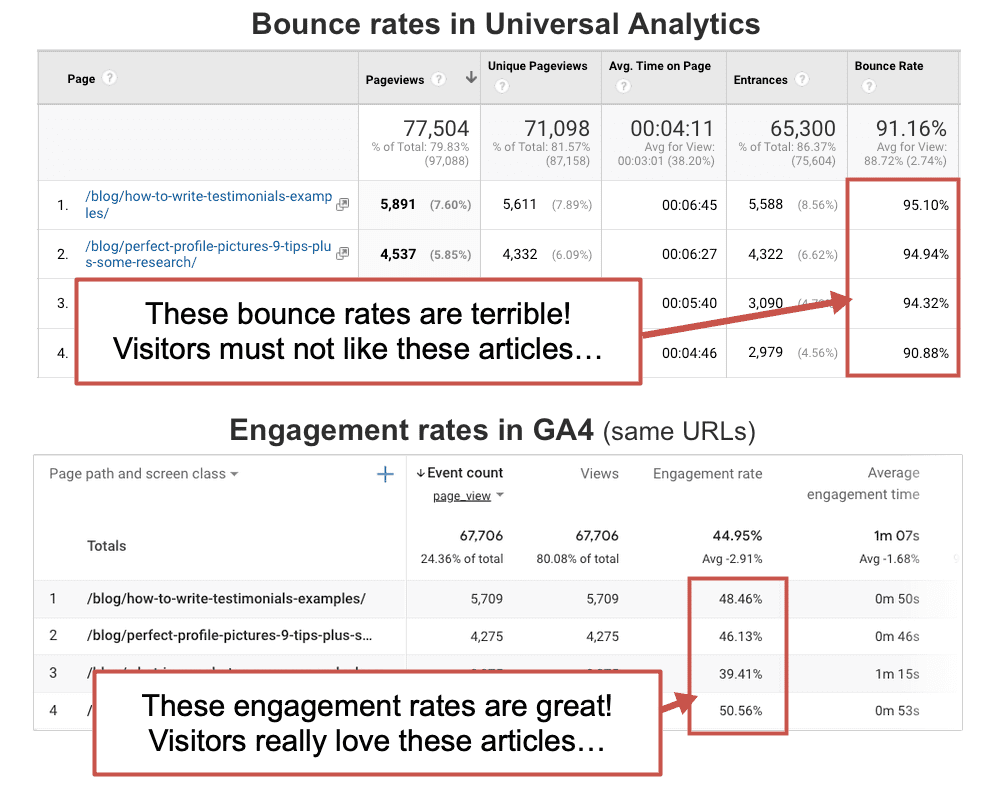
GA4 defines an "engaged session" as a session that lasts longer than 10 seconds, has one or more conversion events, or has two or more page views or screen views. This definition is critical because it directly contrasts with the older Universal Analytics (UA) definition of a bounce rate, which measured sessions where a user left your site from the entrance page without any further interaction. The GA4 model, by focusing on positive interactions, offers a much richer insight into user value. An engaged session signifies that a user found something on your site that held their attention, prompted further exploration, or led to a desired action. For SEO, this translates into a stronger signal to Google that your website is relevant, valuable, and provides a good user experience. High engagement rates indicate that users are not only finding your site via search but are also staying, interacting, and potentially returning, all of which contribute to improved search rankings.
The core metric for measuring engagement in GA4 is the Engaged Sessions per User metric. This is a ratio of engaged sessions to total sessions, divided by the number of users. It provides an average of how many engaged sessions each user initiates. While the direct "engagement rate" metric as a percentage isn’t as prominently displayed as in UA’s bounce rate, you can easily calculate it by dividing Engaged Sessions by Sessions. For instance, if you have 1000 sessions and 500 of them are classified as engaged, your engagement rate is 50%. Another vital related metric is Average Engagement Time, which measures the duration a website or app screen is in the foreground and being actively viewed. Longer average engagement times, when combined with other engagement signals, strongly suggest that users are finding your content compelling. GA4’s event-driven model also allows for a granular understanding of engagement through custom events. Tracking specific user actions like video plays, form submissions, scroll depth, and outbound link clicks can reveal how users are truly interacting with your content, offering deeper insights than a simple session duration or page view count.
Optimizing your GA4 engagement rate is intrinsically linked to improving your overall SEO strategy. Search engines aim to deliver the best possible results for user queries, and a high engagement rate is a powerful proxy for that. When users spend more time on your site, view multiple pages, and complete desired actions, it sends a positive signal to search algorithms. This can lead to improved click-through rates (CTR) from search results, better dwell time on your site, and ultimately, higher rankings for relevant keywords. A low engagement rate, conversely, suggests that users are not finding what they expect, are encountering usability issues, or your content is not compelling enough, all of which can negatively impact your SEO performance.
To improve your GA4 engagement rate, several key strategies can be implemented. First and foremost is content quality and relevance. Ensure your content directly addresses the search intent behind the keywords you are targeting. Well-researched, informative, and engaging content will naturally keep users on your site longer and encourage them to explore further. This means creating comprehensive blog posts, detailed product descriptions, informative landing pages, and captivating multimedia content. The goal is to provide answers, solve problems, or entertain your audience to a degree that compels them to stay and interact.
Website user experience (UX) is another critical factor. A well-designed, intuitive, and easy-to-navigate website is fundamental to encouraging engagement. This includes fast page load speeds, mobile responsiveness, clear call-to-actions (CTAs), and a logical site structure. Slow-loading pages are a primary reason for users to abandon a site, directly impacting your engaged sessions and average engagement time. Ensure your site is optimized for speed across all devices. Mobile-friendliness is no longer optional; with a majority of internet traffic coming from mobile devices, a poor mobile experience will decimate your engagement metrics. Intuitive navigation helps users find what they are looking for quickly, reducing frustration and encouraging them to explore more pages. Clear and compelling CTAs guide users toward desired actions, contributing to the definition of an engaged session.
Internal linking strategy plays a significant role in driving users deeper into your website. By strategically linking related content within your articles and pages, you provide users with natural pathways to discover more valuable information. This not only increases the number of page views per session but also enhances the user’s overall journey, making them more likely to find the content they need or are interested in. For example, within a blog post about "SEO Best Practices," you could link to related articles on "Keyword Research," "On-Page Optimization," and "Link Building," creating a comprehensive learning path.
Enhanced Measurement in GA4 is a powerful tool for automatically tracking key engagement signals without requiring extensive manual event setup. By default, GA4 tracks scroll depth, outbound clicks, site search, video engagement, and file downloads. Leveraging these automatically collected events provides valuable insights into how users interact with your content. For instance, understanding which outbound links users are clicking can inform your content strategy or affiliate marketing efforts. Tracking scroll depth reveals how much of your content users are actually consuming. If users are not scrolling to the bottom of your long-form content, it indicates a potential issue with content engagement or presentation.
Beyond the automatically collected events, implementing custom event tracking allows for a highly personalized and insightful understanding of user behavior. This involves defining specific actions that are critical to your website’s goals and tracking them within GA4. Examples include:
- Form Submissions: Tracking when users successfully submit contact forms, lead generation forms, or newsletter sign-ups. This is a direct indicator of engagement and intent.
- Video Plays and Completions: Measuring how many users play your embedded videos and, more importantly, how much of the video they watch. GA4’s enhanced measurement tracks video engagement, but custom events can offer more granular data on specific milestones within the video.
- Button Clicks: Tracking clicks on important buttons like "Add to Cart," "Download PDF," "Request a Demo," or any other crucial CTA.
- Interactive Element Interactions: If your site features quizzes, calculators, or interactive tools, tracking user interactions with these elements provides deep insights into their engagement.
- Adding Items to Wishlist or Cart: For e-commerce sites, these actions are strong indicators of purchase intent and a significant measure of engagement.
- Completing Specific Tutorial Steps: For educational platforms, tracking progress through interactive tutorials demonstrates deep engagement with learning materials.
To effectively implement custom events, you’ll need to utilize Google Tag Manager (GTM) or directly add GA4 event tracking code to your website. GA4’s event structure is event name + parameters. The event name should be descriptive (e.g., form_submit, video_play, download_pdf), and parameters provide additional context (e.g., form_name, video_title, file_name). Analyzing these custom events in GA4 reports, particularly in the Events report and when creating custom Explorations, allows you to segment users based on their actions and understand which content or features drive the most meaningful engagement.
When analyzing your GA4 engagement metrics, it’s crucial to consider context and segmentation. A high engagement rate for a blog post might be different from an e-commerce product page. Segmenting your data by traffic source (organic, direct, referral, social), device type (mobile, desktop, tablet), user demographics, and even specific landing pages will reveal nuanced insights. For example, you might find that organic traffic to your blog posts has a higher engagement rate than paid social traffic, or that mobile users engage differently with your site compared to desktop users. This segmentation allows for targeted optimization efforts. If mobile users have a lower engagement rate, it signals a need to improve your mobile UX. If traffic from a specific referral source has low engagement, it might indicate that the referring site is sending unqualified traffic or that your landing page isn’t meeting their expectations.
A/B testing your website elements based on GA4 engagement data is an advanced yet highly effective optimization technique. For example, if you notice a low engagement rate on a particular landing page, you could A/B test different headlines, CTA button colors, or content formats. Monitor the GA4 engagement metrics (engaged sessions, average engagement time, conversion events) for each variation to determine which performs best. This data-driven approach ensures that your optimization efforts are directly contributing to improved user engagement and, consequently, better SEO outcomes.
Furthermore, understanding user journeys in GA4 is key to improving engagement. The Path exploration report allows you to visualize the sequences of pages users visit and the events they trigger. This can help identify drop-off points, understand how users navigate to conversions, and uncover opportunities to guide them more effectively. By analyzing common paths that lead to high engagement and conversions, you can optimize your internal linking strategy and content hierarchy to encourage similar journeys for other users. Conversely, identifying paths with low engagement can highlight areas where users are getting lost or disengaging.
The shift to GA4’s event-driven model and its emphasis on engaged sessions represent a fundamental evolution in how we measure website performance. For SEO professionals and website owners, mastering these metrics is not just about data analysis; it’s about understanding user intent, optimizing the user experience, and ultimately, driving meaningful interactions that signal value to both users and search engines. By focusing on high-quality content, robust UX, strategic internal linking, effective custom event tracking, and insightful data segmentation, you can significantly improve your GA4 engagement rate, leading to a stronger online presence and superior SEO results. Remember that engagement is a continuous process of understanding, testing, and refining your website’s ability to capture and retain user attention.