When the Hunga Tonga-Hunga Ha’apai volcano erupted beneath the South Pacific in January 2022, it unleashed a cataclysmic event that resonated across the globe, sending shockwaves through the atmosphere and triggering tsunamis that reached as far as the shores of Japan and the Americas. While the immediate destructive capacity of the explosion was well-documented, scientists have now identified an unexpected, paradoxical legacy of the disaster: the volcanic cloud acted as a massive atmospheric scrubber, chemically dismantling significant quantities of methane, a potent greenhouse gas. This discovery, detailed in a new study published in Nature Communications, offers a startling insight into how natural geological events can inadvertently alter atmospheric chemistry, potentially providing a blueprint for human-led climate intervention.
A Chronology of the 2022 Hunga Tonga Eruption
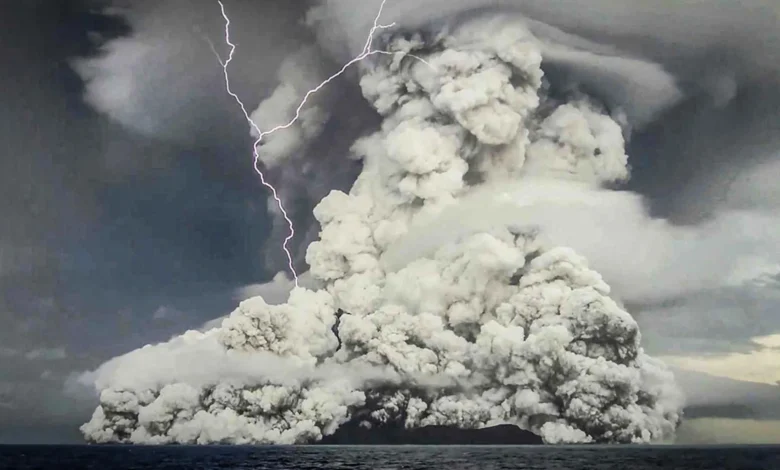
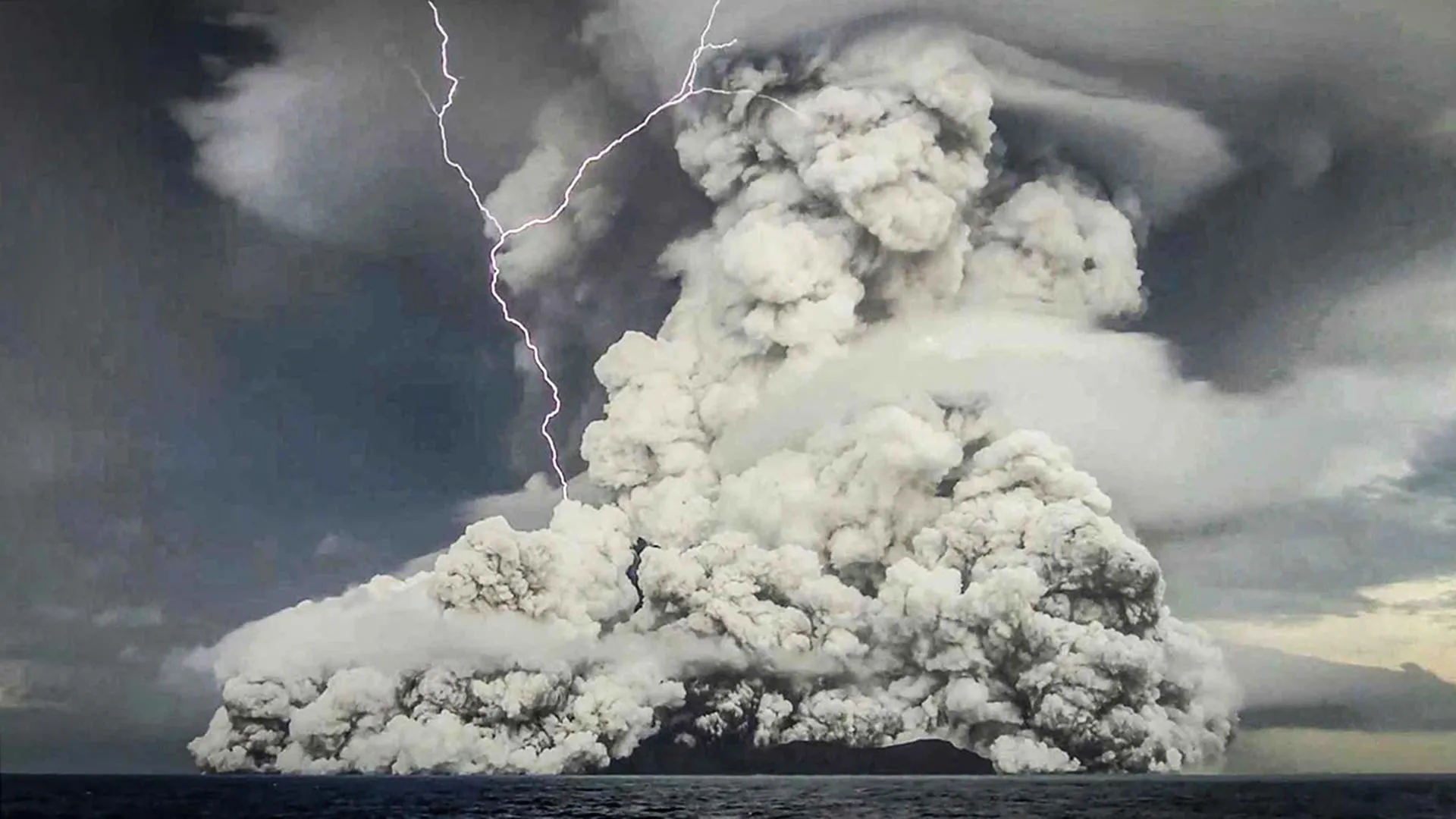
The eruption of Hunga Tonga-Hunga Ha’apai began in earnest on January 15, 2022, following weeks of increased seismic activity. The underwater volcano, located approximately 65 kilometers north of Tonga’s capital, Nukuʻalofa, produced an explosive event of historic proportions. The plume reached an altitude of 57 kilometers, penetrating deep into the mesosphere, the third layer of Earth’s atmosphere.
For meteorologists and climate scientists, the sheer volume of water vapor and volcanic particulates injected into the stratosphere was unprecedented. Unlike terrestrial volcanoes, which typically release dry ash and gases, this submarine eruption vaporized vast quantities of seawater. This created a unique, high-pressure, moisture-rich environment in the upper atmosphere. Researchers tracking the plume observed it circumnavigating the globe, but it was the satellite-based detection of formaldehyde that signaled a complex chemical reaction unfolding within the cloud—a reaction that was effectively "cleaning" the atmosphere of methane as the plume drifted toward South America.
The Chemistry of Methane Destruction
At the heart of this phenomenon is a chemical process involving iron salt aerosols. For years, scientists have understood that methane—a gas with 80 times the warming potency of carbon dioxide over a 20-year period—is eventually removed from the atmosphere via oxidation. However, the discovery at Hunga Tonga highlights a previously unobserved accelerant.
The intense heat of the eruption vaporized the ocean floor and surrounding seawater, ejecting a mixture of volcanic ash and salt particles into the stratosphere. When these mineral-rich particles were exposed to high-altitude solar radiation, they triggered the release of chlorine atoms. Chlorine is highly reactive; it acts as a catalyst, attacking methane molecules and breaking their chemical bonds.
Formaldehyde, which the researchers detected in record-high concentrations using the TROPOMI instrument on the European Space Agency’s Sentinel-5P satellite, serves as a transient byproduct of this methane breakdown. Because formaldehyde has a very short atmospheric lifespan—lasting only a few hours—its sustained presence throughout the 10-day tracking period provided irrefutable evidence that the volcanic cloud was actively destroying methane continuously. The researchers calculated that the plume was neutralizing approximately 900 megagrams of methane per day, roughly equivalent to the daily emissions of two million cattle.
Reevaluating the Global Methane Budget
The findings pose significant challenges to existing models of the global methane budget. Scientists maintain an intricate accounting system that tracks methane sources—such as wetlands, enteric fermentation in livestock, fossil fuel leaks, and geological seeps—against known "sinks," or processes that remove methane from the air.
Historically, these models have relied on hydroxyl radicals (OH) as the primary "detergent" for atmospheric methane. The new research suggests that mineral dust, particularly when combined with sea salt and high-energy radiation, represents a far more significant, and largely uncounted, sink than previously imagined.
"We now know that atmospheric dust impacts the methane budget," says Professor Matthew Johnson of the University of Copenhagen. "Because dust has not previously been fully incorporated into those calculations, it is imperative that we refine the data on which these estimates are based. If volcanic activity or even Saharan dust events are consistently accelerating methane removal, our current climate models may be underestimating the earth’s natural ability to self-regulate, or perhaps misattributing the source of observed fluctuations."
Implications for Climate Mitigation Strategies
The potential to use this discovery as a "climate intervention" tool is already attracting attention from the scientific community. Methane is considered an "emergency brake" for global warming; because its atmospheric residence time is relatively short—roughly 10 years compared to the centuries-long persistence of CO2—reducing its concentration could yield immediate, measurable benefits for global temperature stabilization within a single decade.
However, researchers caution that this is not a panacea. "Reducing methane is a critical short-term measure to avoid tipping points, but it is not a substitute for the systemic decarbonization of the global economy," explains Dr. Maarten van Herpen, lead author of the study. The concept of "atmospheric methane removal" is gaining traction among researchers who suggest that if engineers can safely replicate the aerosol-based chemistry observed in the Tonga plume, it could provide a scalable way to reduce the concentration of existing methane in the atmosphere.
The challenge lies in the safety and scalability of such interventions. Introducing chlorine-based aerosols into the stratosphere carries significant risks, including the potential for ozone layer depletion. Any human-led attempt to simulate this process would require extensive modeling and small-scale testing to ensure that the chemical interactions remain confined to methane destruction and do not trigger unintended environmental consequences.
The Role of Advanced Satellite Monitoring
The study also highlights the evolution of remote sensing technology. Detecting formaldehyde in the stratosphere was not an intended function of the TROPOMI instrument. To arrive at their conclusions, the research team, including experts from the Royal Belgian Institute for Space Aeronomy, had to develop complex correction algorithms to filter out interference from sulfur dioxide and account for the high altitude of the signal.
"Retrieving this data pushed the instrument well beyond its standard operating conditions," noted Dr. Isabelle De Smedt. The success of this methodology demonstrates that humanity now possesses the satellite infrastructure required to monitor chemical interventions in real-time. This capability is vital, as it addresses the primary hurdle in atmospheric research: proving that a specific intervention has actually resulted in the removal of a pollutant.
Future Research Directions
The research, supported by Spark Climate Solutions, has opened a new sub-discipline in atmospheric chemistry. Future investigations will likely focus on the specific conditions—temperature, particle density, and light intensity—required to maximize the efficiency of iron salt aerosols.
As the world grapples with the accelerating impacts of climate change, the Hunga Tonga event stands as a stark reminder of the planet’s complex, often violent, and frequently surprising natural chemistry. While the eruption itself was a disaster, the "natural experiment" it created has provided a roadmap for how we might one day leverage atmospheric processes to buy the time necessary for a global transition to sustainable energy.
The scientific community is now faced with a dual task: incorporating these newfound natural sinks into the global methane budget to increase the accuracy of climate predictions, and determining whether the laboratory-tested chemistry of the Tonga cloud can be safely translated into a viable, large-scale climate mitigation strategy. For now, the focus remains on rigorous analysis and the cautious, evidence-based exploration of a path that was unexpectedly revealed by the largest volcanic explosion of the 21st century.