Trump Tariffs United States Canada Mexico

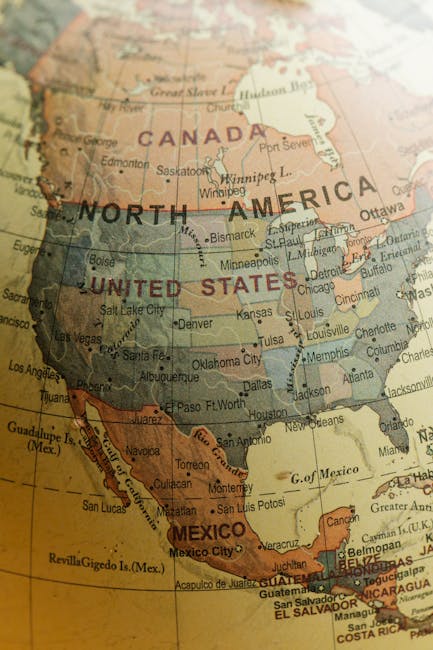
Trump Tariffs: A Transformative Impact on US-Canada-Mexico Trade Relations
The imposition of tariffs by the Trump administration on goods imported from Canada and Mexico, primarily steel and aluminum, significantly reshaped the economic and political landscape of North American trade. This unilateral action, taken under the guise of national security and to address perceived trade imbalances, fundamentally altered the existing framework of trade relations established by agreements like the North American Free Trade Agreement (NAFTA). The tariffs were not merely an economic tool; they served as a potent negotiating lever, forcing recalcitrant trading partners to the table to renegotiate the terms of their economic interdependence. The stated justification for these tariffs, particularly the invocation of Section 232 of the Trade Expansion Act of 1962 which allows the President to impose tariffs for national security reasons, was met with skepticism and criticism from trading partners and many domestic economic analysts. The argument posited that a robust domestic steel and aluminum industry was essential for national defense, thus justifying measures that would boost domestic production by making imports more expensive. This rationale, however, was widely challenged, with many arguing that the industries targeted were not under any immediate threat from foreign competition in a way that jeopardized national security. The economic impact was multifaceted, affecting various sectors differently. For instance, industries that relied heavily on imported steel and aluminum, such as the automotive sector, faced increased production costs. This, in turn, led to higher prices for consumers and reduced competitiveness for American manufacturers. Conversely, domestic steel and aluminum producers initially benefited from reduced foreign competition, experiencing increased demand and profitability. However, this benefit was often tempered by retaliatory tariffs imposed by Canada and Mexico on American exports, harming agricultural and manufacturing sectors in the United States. The retaliatory measures demonstrated a clear understanding of reciprocal economic pressure, as Canada and Mexico strategically targeted industries in the US that held significant political sway, aiming to create domestic pressure for the lifting of the tariffs. This tit-for-tat exchange created uncertainty and volatility in the market, making long-term business planning challenging. Beyond the direct economic consequences, the tariffs strained diplomatic relationships. Long-standing allies like Canada and Mexico found themselves on the receiving end of protectionist policies, leading to frustration and a questioning of the reliability of the US as a trading partner. The negotiations that followed were often acrimonious, characterized by tense exchanges and a stark demonstration of power dynamics in international trade. The ultimate outcome of these tariff impositions was the renegotiation of NAFTA, resulting in the United States-Mexico-Canada Agreement (USMCA). This new agreement, while retaining many core elements of NAFTA, introduced significant changes, particularly in areas such as automotive rules of origin, labor provisions, and dispute resolution mechanisms. The tariffs acted as the catalyst for these changes, forcing all parties to concede certain points to achieve a revised trade deal.
The underlying rationale for the Trump administration’s tariff imposition on Canadian and Mexican imports, particularly steel and aluminum, stemmed from a broader "America First" economic policy. This policy aimed to rebalance trade deficits, encourage domestic manufacturing, and reclaim jobs perceived to have been lost to globalization and foreign competition. The specific invocation of national security under Section 232 provided a legal framework, albeit a contentious one, for implementing these protectionist measures. The administration argued that a weakened domestic steel and aluminum industry posed a risk to national security by limiting the nation’s ability to produce essential materials for defense equipment and infrastructure. This argument, however, was met with significant pushback. Critics pointed to the fact that domestic demand for steel and aluminum was largely met by domestic production, and that most imports were utilized in sectors like construction and automotive manufacturing, rather than directly for military purposes. The selective targeting of Canada and Mexico, who were historically close trading partners and allies, further fueled skepticism about the genuine national security concerns. Instead, many analysts viewed the tariffs as a coercive bargaining tactic designed to extract concessions in broader trade negotiations. This strategy aimed to leverage the economic interdependence between the three North American nations, forcing Canada and Mexico to accept new terms in a revised trade agreement. The tariffs created immediate economic shockwaves across North America. Industries in the US that relied on imported steel and aluminum, such as the automotive sector, faced rising input costs. This translated into increased production expenses, potentially leading to higher prices for finished goods and a reduction in export competitiveness. Conversely, domestic steel and aluminum producers experienced a surge in demand and a favorable pricing environment, leading to increased profitability in the short term. However, the economic benefits for these domestic industries were often offset by the retaliatory measures imposed by Canada and Mexico. These retaliatory tariffs targeted key US export sectors, including agriculture, manufactured goods, and even specific political constituencies, aiming to generate domestic pressure on the US government to reconsider its tariff policies. This retaliatory cycle created a climate of uncertainty and volatility in the market, making it difficult for businesses to make long-term investment decisions and hindering overall economic growth. The diplomatic ramifications were equally significant. The imposition of tariffs on close allies like Canada and Mexico strained long-standing bilateral relationships. The perception of unilateral action and a disregard for established trade norms led to frustration and a questioning of the reliability of the US as a trading partner. Negotiations for a replacement to NAFTA, already underway, became more contentious, with the tariffs acting as a constant point of friction and a demonstration of the administration’s willingness to employ aggressive tactics.
The economic consequences of the Trump tariffs on US-Canada-Mexico trade were profound and far-reaching, impacting a diverse array of industries and stakeholders. For the United States, the immediate effect was a mixed bag. Domestic steel and aluminum producers, who had been advocating for protectionist measures, saw an increase in demand and prices. Companies like Nucor and U.S. Steel reported improved financial performance in the initial phases following the tariff implementation. This was a direct result of making imported steel and aluminum more expensive, thereby incentivizing buyers to seek domestic alternatives. However, this benefit was not universally shared. Industries that heavily relied on imported steel and aluminum as inputs, most notably the automotive sector, faced significant cost increases. Ford, General Motors, and Fiat Chrysler (now Stellantis) all publicly voiced concerns about the rising cost of raw materials, warning that it could lead to higher vehicle prices for consumers and reduced competitiveness against foreign manufacturers, particularly those based in countries not subject to these tariffs. The retaliatory tariffs imposed by Canada and Mexico further compounded these challenges. Canada, for example, imposed retaliatory tariffs on a wide range of US agricultural products, including corn, soybeans, and dairy. This directly harmed American farmers, many of whom operated on thin margins and relied on exports to these key North American markets. The U.S. Department of Agriculture reported significant declines in exports to Canada for certain commodities. Mexico followed suit, targeting various manufactured goods and agricultural products. The retaliatory measures were strategically chosen to exert maximum political pressure on the Trump administration by impacting industries and regions that had supported the president. Beyond direct cost increases, the tariffs injected a significant level of uncertainty into the North American supply chains. Businesses, particularly those with integrated operations across the three countries, found it challenging to plan for the future. The constant threat of new tariffs or retaliatory measures made long-term investment decisions precarious. For instance, companies that had established cross-border supply chains under NAFTA, designed for efficiency and cost-effectiveness, had to re-evaluate their entire operational structure. This could involve relocating production facilities, sourcing materials from different regions, or absorbing higher costs. The United States-Mexico-Canada Agreement (USMCA), the successor to NAFTA, was ultimately negotiated and implemented in the shadow of these tariffs. While the USMCA introduced changes to automotive rules of origin (requiring a higher percentage of vehicle content to be manufactured in North America), labor provisions, and intellectual property protections, the tariffs served as a powerful negotiating tool. The threat of sustained or escalated tariffs pressured Canada and Mexico to agree to concessions that might not have been otherwise forthcoming. The negotiation process itself was characterized by a strongman approach, with the US administration using tariffs as leverage to achieve its desired outcomes. The impact on consumers was also palpable. While not always immediate or directly attributable solely to tariffs, the increased cost of production for many goods, from automobiles to manufactured household items, was likely to be passed on to consumers in the form of higher prices. This eroded purchasing power and could dampen overall consumer spending. Furthermore, the trade diversion effect of the tariffs meant that some trade that was previously flowing between the US and Canada or Mexico might be redirected to other countries. This could lead to a less efficient global allocation of resources and potentially higher costs for consumers worldwide.
The diplomatic and geopolitical ramifications of the Trump tariffs on US-Canada-Mexico trade were as significant as the economic ones, fundamentally altering the relationships between these North American neighbors. For decades, the United States, Canada, and Mexico had cultivated a robust and largely cooperative trading relationship, epitomized by the North American Free Trade Agreement (NAFTA). NAFTA, implemented in 1994, aimed to eliminate most tariffs and trade barriers, fostering a more integrated and interdependent regional economy. The Trump administration’s decision to impose tariffs, particularly on allies like Canada and Mexico, represented a stark departure from this established norm of multilateral cooperation. The invocation of Section 232 of the Trade Expansion Act of 1962, citing national security concerns for imposing tariffs on steel and aluminum, was widely viewed by trading partners and international observers as a pretext for protectionist policies rather than a genuine security imperative. This perception eroded trust and created a sense of unpredictability in US foreign policy. Canada, a close ally and the largest trading partner of the United States, expressed strong condemnation and immediate retaliatory measures. Prime Minister Justin Trudeau characterized the tariffs as "unacceptable" and a clear demonstration of the US administration’s disregard for established trade rules and alliances. Mexico, also a crucial economic partner, similarly denounced the tariffs and implemented its own retaliatory measures, targeting US agricultural and manufactured goods. The diplomatic exchanges during this period were often tense and adversarial, marked by public disagreements and a palpable strain on bilateral relations. The trust that had been built over years of cooperative engagement was challenged. The tariffs also served as a powerful negotiating tactic, a deliberate strategy to force concessions in the renegotiation of NAFTA, which the Trump administration had threatened to withdraw from entirely. The threat of escalating tariffs or the imposition of new ones created a constant sense of pressure on Canada and Mexico to agree to the US administration’s demands. This dynamic shifted the balance of power in the negotiations, with the US leveraging its economic might to secure its desired outcomes. The renegotiation process culminated in the United States-Mexico-Canada Agreement (USMCA). While the USMCA modernized certain aspects of the trade relationship, including updated rules of origin for automobiles and enhanced provisions on labor and environmental standards, many observers argued that the concessions made by Canada and Mexico were a direct result of the leverage exerted by the tariffs. The tariffs essentially forced a renegotiation under duress, rather than a collaborative effort to improve an already functioning agreement. Beyond the immediate trade deal, the tariffs had longer-term implications for regional integration and global trade dynamics. The unpredictable and often unilateral nature of US trade policy under the Trump administration led many countries to question the reliability of the US as a trading partner and to re-evaluate their own trade strategies. This contributed to a broader trend of trade diversification and a potential weakening of multilateral trade institutions. The concept of the US as a predictable and stable partner, essential for fostering long-term investment and economic growth, was called into question. The experience also highlighted the vulnerability of interconnected economies to protectionist policies, underscoring the importance of robust dispute resolution mechanisms and a commitment to international trade law. The geopolitical fallout extended to US relations with other trading partners as well, as the perceived protectionist turn in US trade policy had ripple effects beyond North America, influencing global trade negotiations and alliances.
The renegotiation of NAFTA into the United States-Mexico-Canada Agreement (USMCA) was the direct and most significant outcome of the Trump administration’s tariff impositions on Canada and Mexico. The tariffs, particularly those on steel and aluminum, served as a powerful, albeit contentious, negotiating catalyst, forcing all three nations to the table to hammer out a revised trade framework. The Trump administration’s overarching objective was to significantly alter the terms of NAFTA, which it had consistently criticized as being "the worst trade deal maybe ever negotiated in any country." The tariffs were strategically employed to create leverage, signaling a willingness to disrupt established trade flows unless a more favorable agreement was reached. The USMCA introduced several key changes from its predecessor. One of the most prominent was the revision of automotive rules of origin. Under NAFTA, 62.5% of a vehicle’s components had to be manufactured in North America to qualify for duty-free treatment. The USMCA raised this threshold to 75% and also mandated that 40-45% of auto content be made by workers earning at least $16 per hour. This provision was designed to encourage higher-wage manufacturing jobs in the US and Canada and to shift production away from lower-wage Mexico, a key objective of the Trump administration. While Mexico ultimately agreed to these terms, it came at a cost, potentially increasing vehicle production costs in the short to medium term. Another significant aspect of the USMCA was the inclusion of stronger labor provisions. Chapter 23 of the agreement addressed labor rights and encouraged fair wages and safe working conditions in Mexico, a long-standing concern for US labor unions. The agreement included mechanisms for monitoring and enforcing these provisions, aiming to create a more level playing field for workers across North America. Dispute resolution mechanisms were also modified, with some changes aimed at streamlining the process while others were seen by critics as potentially weakening the protections for all parties. The US administration sought to ensure that the US retained greater control over dispute settlement outcomes. Intellectual property protections were enhanced, particularly concerning digital trade and pharmaceutical patents, reflecting the evolving landscape of global commerce. The agreement also included provisions related to currency manipulation, a move primarily aimed at addressing potential concerns regarding China’s trade practices, but relevant to North American trade dynamics as well. The elimination of the specific tariffs on steel and aluminum from Canada and Mexico was a crucial concession made as part of the broader USMCA package. These tariffs, imposed under Section 232, had created significant friction and economic disruption. Their removal was contingent on the ratification and implementation of the USMCA, underscoring the direct link between the tariff policy and the trade agreement. The negotiation process itself was often characterized by brinkmanship and strong rhetoric, reflecting the confrontational approach of the Trump administration. While the USMCA ultimately secured a revised trade framework, the process highlighted the challenges of renegotiating complex trade agreements under duress and the potential for protectionist measures to reshape regional economic integration. The impact of the USMCA on American businesses and consumers is still being evaluated, with ongoing debates about whether the agreement has truly delivered on its promised benefits of increased manufacturing jobs and rebalanced trade. However, the fact remains that the tariffs were the primary driver that led to the renegotiation and eventual implementation of this new trade pact.


