Trump Orders DOJ Investigation Into Democratic Lawmakers Following Midterm Shifts and Impeachment Threats

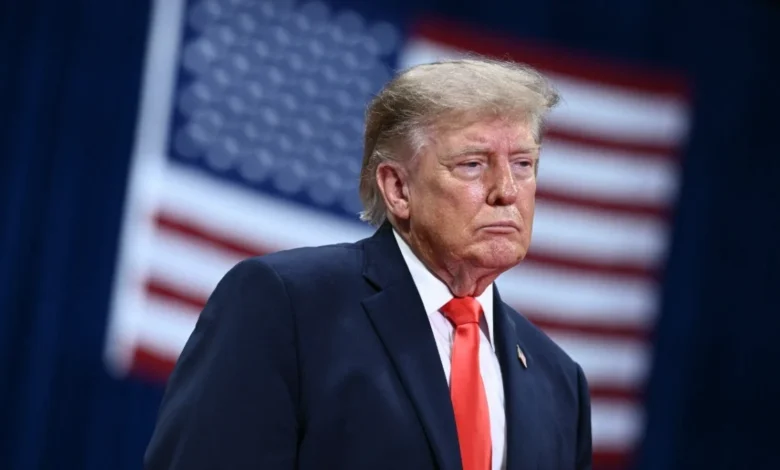
President Donald Trump announced on Saturday that he has formally instructed the Department of Justice to launch a comprehensive criminal investigation into Democratic lawmakers, accusing them of engaging in systemic extortion and intimidation tactics. The directive, published via a statement on Truth Social, follows a sweeping midterm election cycle that resulted in Democrats reclaiming majorities in both the House of Representatives and the Senate.
According to the president, the newly empowered congressional majority has initiated a campaign of political harassment, threatening high-ranking administration officials—including United States Attorney General Todd Blanche—with impeachment and other punitive measures despite acknowledging a lack of legitimate constitutional grounds. Trump’s directive also encompasses allegations regarding threats made against prominent Republican donors and conservative-leaning professionals, escalating political tensions in Washington as the balance of legislative power shifts.
The Justice Department has not yet issued a formal timeline regarding the execution of the president’s directive, and congressional leadership has similarly withheld official commentary on the scope or legal viability of a potential federal probe into legislative actions.
Background Context and Political Climate
The current clash between the executive branch and congressional Democrats underscores a deeply polarized political landscape following the midterm elections. Historically, the party holding the White House faces headwinds during midterm cycles, and the recent election results proved no exception, as voters delivered decisive majorities to the opposition party in both legislative chambers.
With control of congressional committees, investigative powers, and the purse strings restored, Democratic lawmakers have signaled an aggressive oversight agenda aimed squarely at the administration’s core policy initiatives and cabinet appointments. Among the focal points of impending legislative scrutiny are high-profile cabinet officials, federal spending measures, and the financial backers of political campaigns and infrastructure projects, such as recent expansions at the White House.
Constitutional scholars note that while members of Congress possess broad oversight and impeachment powers under Article II of the Constitution, the intersection of legislative threats and criminal investigations by the executive branch enters uncharted legal territory. The Speech or Debate Clause of the Constitution traditionally shields lawmakers from civil or criminal liability for actions performed within the sphere of legitimate legislative activity, raising immediate questions about the feasibility and jurisdictional boundaries of the Justice Department probe ordered by the president.
Chronology of Escalating Tensions
The trajectory leading to the president’s Saturday directive unfolded over several weeks, marked by intensifying rhetoric from both sides of the political aisle:

- October 13: During a public appearance at the University of Chicago, Democratic Senator Elissa Slotkin of Michigan articulated a strategy aimed at deterring prospective personnel from joining or supporting the administration. Slotkin emphasized the pursuit of high-profile oversight cases to create a deterrent message for individuals considering service or alignment with the executive branch.
- Late October: Midterm elections conclude with Democrats securing majorities in the House and Senate, immediately setting the stage for institutional gridlock and aggressive congressional oversight. Reports subsequently emerge indicating that incoming congressional majorities plan to scrutinize corporate entities and major donors associated with the administration.
- Thursday: In an interview on SiriusXM’s "The Dan Abrams Show," Democratic Representative Hank Johnson of Georgia publicly called for the impeachment, conviction, and removal of Attorney General Todd Blanche, citing unspecified official conduct.
- Shortly After Thursday’s Interview: Democratic Representative Deborah Ross of North Carolina appeared on the same program, echoing support for the impeachment of Attorney General Blanche while suggesting that legislative efforts should potentially prioritize Secretary of War Pete Hegseth. Meanwhile, conservative figures note that Republican Representative Thomas Massie of Kentucky is anticipated to reintroduce formal impeachment articles against Secretary Hegseth.
- Saturday Afternoon: President Trump issues his statement via Truth Social, denouncing the actions of Democratic lawmakers, citing comments made by Senator Slotkin regarding career deterrence, and ordering the Department of Justice to investigate the alleged intimidation of officials and donors as potential criminal acts.
Statements, Inferred Reactions, and Key Figures
The unfolding confrontation involves several central political figures whose public remarks have defined the current debate:
- President Donald Trump: In his directive, the president characterized the actions of Democratic lawmakers as extortionate behavior designed to subvert the administration’s agenda and punish political supporters. He explicitly referenced threats of impeachment directed at Attorney General Todd Blanche and pointed to Senator Slotkin’s remarks regarding young professionals entering public service as evidence of an intentional campaign to intimidate conservative citizens. Trump asserted that those engaging in such tactics should face criminal accountability.
- Representative Hank Johnson (D-Ga.): A vocal critic of the administration, Johnson defended his position on public radio by arguing that the actions and policies overseen by Attorney General Blanche meet the threshold for high crimes and misdemeanors, warranting immediate congressional intervention and removal from office.
- Representative Deborah Ross (D-N.C.): Aligning with her House colleague, Ross supported accountability measures targeting cabinet officials, indicating that congressional inquiries should systematically evaluate the conduct of multiple department heads across the executive branch.
- Senator Elissa Slotkin (D-Mich.): While Slotkin’s October remarks at the University of Chicago were intended to outline a framework for political accountability and the discouragement of policies she opposes, administration allies have repeatedly cited her commentary as proof of a concerted effort to blacklist and economically penalize conservative Americans.
While formal responses from congressional leadership remain limited, defenders of the legislative branch maintain that public statements regarding impeachment and oversight are standard exercises of constitutional checks and balances. Conversely, administration supporters argue that targeting cabinet officers without substantive evidence of statutory violations—coupled with threats directed at private citizens and donors—crosses the line from legitimate oversight into unlawful political coercion.
Supporting Data and Broader Implications
The friction between the executive branch and the legislature highlights systemic vulnerabilities in the institutional norms governing Washington. Data compiled by nonpartisan watchdogs indicates that polarization surrounding executive nominations and cabinet confirmations has steadily risen over the past three decades, with investigations and threats of impeachment increasingly utilized as routine political instruments rather than measures of last resort.
The potential inclusion of private donors and corporate entities in forthcoming congressional inquiries has introduced financial uncertainty into the political ecosystem. Major contributors to both political parties routinely face scrutiny, but the explicit linkage of donor identities to prospective federal investigations or congressional subpoenas marks a significant escalation in high-stakes political combat.

Fact-Based Analysis of Implications
The directive issued by the president carries profound implications for the separation of powers and the operational stability of the federal government:
- Legal and Constitutional Precedent: Directing the Department of Justice to investigate members of Congress for political speech or legislative threats tests the absolute limits of the Speech or Debate Clause. A federal investigation into lawmakers for expressing intent to file articles of impeachment would likely trigger immediate constitutional challenges in federal court, setting a monumental precedent regarding the criminalization of political discourse.
- Legislative-Executive Relations: With an opposition party controlling both chambers of Congress, the administration faces an uphill battle in securing legislative approvals, advancing policy priorities, and defending cabinet appointees. An aggressive posture by the executive branch against lawmakers threatens to permanently freeze bipartisan cooperation, all but guaranteeing government shutdowns, protracted budgetary standoffs, and continuous oversight battles.
- Public Trust and Institutional Norms: The normalization of mutual threats—ranging from impeachment proceedings launched without bipartisan consensus to criminal probes initiated against elected officials—further erodes public confidence in core democratic institutions. As the Department of Justice navigates the president’s directive, the agency will face intense scrutiny regarding its independence, objectivity, and adherence to established prosecutorial standards.
As the political week progresses, attention will turn to Capitol Hill to observe how newly empowered congressional committees operationalize their investigative mandates, and whether federal prosecutors take tangible steps in response to the administration’s directive.
Related posts: