The New Science of Crowdsourcing Nature: How Citizen Scientists are Mapping the World’s Complex Food Webs

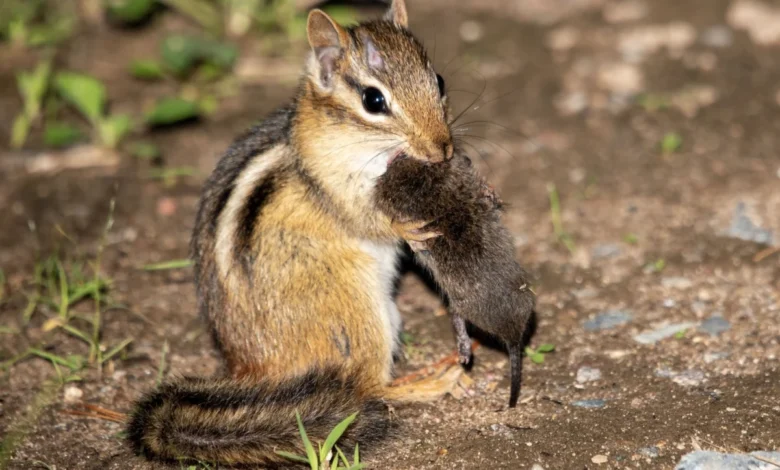
The traditional classroom model of a food chain—a linear, orderly progression where the plant feeds the herbivore, which feeds the carnivore—is a significant oversimplification of the biological reality governing our planet. In nature, the relationships between organisms are not merely hierarchical; they are multidimensional, often chaotic, and deeply interconnected. Beyond the basic predator-prey dynamic lies a vast, shifting network of energy exchange involving parasites, scavengers, and even self-predation. Capturing this "messiness" has historically been a monumental challenge for ecologists, often requiring years of laborious field observations, such as monitoring nesting birds or analyzing the remains found in predator scat.
However, a transformative shift is underway in the field of community ecology. A new citizen science initiative, Who Eats Whom, is leveraging the massive, global reach of the iNaturalist platform to build an unprecedented, high-resolution map of species interactions. By tapping into the millions of geotagged, AI-identified photographs uploaded by amateurs and hobbyists, researchers are now able to track feeding patterns across more than 100 countries, effectively crowdsourcing the data that was once restricted by the limited time and mobility of individual scientists.
From Linear Chains to Dynamic Webs
For decades, the standard textbook representation of an ecosystem served as a useful pedagogical tool, but it frequently failed to account for the nuance of survival in the wild. Consider the common garden rat. While it consumes crops, it is also subject to predation by ermines, which are in turn hunted by eagles. But this view ignores the parasitic burden of ticks and worms that weaken the predators, the ants that recycle the nutrients of a carcass, and the documented cases of rodents engaging in infanticide.
These interactions are the "dark matter" of ecology—essential for understanding the stability of an environment but notoriously difficult to record. Bradley Allf, an ecologist who developed the Who Eats Whom platform during his tenure at North Carolina State University, notes that traditional methods are simply insufficient for the scale of current environmental crises. "You can generate a ton of valuable information in a way that you can’t if you’re just an individual scientist trying to follow snakes around and hope they eat something while you’re watching them, or waiting for them to poop," Allf explains.
The Methodology of Digital Ecology
The Who Eats Whom project functions as a sophisticated data-mining operation. By utilizing the existing infrastructure of iNaturalist, the platform filters millions of observations to isolate images of consumption. These include everything from a red-tailed hawk capturing a snake to a goldenrod crab spider ensnaring a honey bee.
As of the latest data reports, the project has successfully cataloged 17,000 unique interactions involving 5,700 distinct species. This data is not just stored; it is synthesized into an interactive food web. When a user explores this web, they can see the flow of energy: an arrow pointing to a species signifies its role as a consumer, while the web reveals the secondary and tertiary dependencies of that organism. For instance, the system shows that the American robin, often viewed as a simple consumer of worms, is also a vital link in the distribution of seeds from the common buckthorn and yaupon holly.
A Timeline of Rapid Environmental Change
The project is designed to be longitudinal, serving as a baseline for future ecological studies. Aditi Mallavarapu, a computer scientist and co-author of the project’s foundational research published in PLOS Biology, emphasizes that the value of this data increases over time. "Even if we look back, say, five years ago, there have been a lot of changes in the feeding patterns of these animals," Mallavarapu notes.
This temporal dimension is critical because of the accelerating pace of climate change. As global temperatures rise, species are migrating toward the poles in search of cooler climates, resulting in a radical "reshuffling" of local ecosystems. The Who Eats Whom database acts as a real-time monitor for these shifts. When a species appears in a region where it has never been observed before—or when it begins consuming a new, local food source—citizen scientists are often the first to document the occurrence.
Expert Perspectives and Conservation Implications
The broader scientific community views this crowdsourced approach as a necessary evolution in biodiversity monitoring. Peter Roopnarine, a curator of invertebrate zoology and geology at the California Academy of Sciences, highlights the primary obstacle in modern ecology: the ephemerality of interaction. "The biggest challenge is really data acquisition, because there are so many species and so many interactions out there," says Roopnarine. "They sometimes can be ephemeral—it happens once in a lifetime—and they are dispersed all over the place."
By mobilizing an "army of allies"—smartphone-wielding citizens in forests, deserts, and beaches—researchers are overcoming these geographic and temporal limitations. This is particularly vital for monitoring invasive species. Invasive predators, such as the lionfish, can decimate native populations with startling speed. Knowing exactly which species are on an invader’s "menu" allows conservationists to prioritize interventions. If a keystone species is threatened by an encroaching invader, that information can trigger targeted protection efforts before the damage becomes irreversible.
Protecting Relationships, Not Just Spaces
The implications for conservation policy are profound. For much of the 20th century, conservation was synonymous with land management—designating a park or a refuge and protecting its boundaries. While habitat protection remains essential, the findings from Who Eats Whom suggest that a shift in strategy is required.
"Species don’t just need space—they don’t just need a habitat," Allf argues. "They need the relationships that allow them to survive." This means that conservation must focus on the maintenance of the entire food web. If a raptor loses its primary prey due to changing migration patterns, simply preserving its nesting site will not ensure the survival of the population. Understanding the "messiness" of the web allows for a more holistic approach to ecosystem management, one that accounts for the predator-prey dependencies, the pollinator-plant mutualisms, and the nutrient cycles that define a healthy, functioning biome.
Broader Impact and Future Directions
The success of the Who Eats Whom project serves as a case study for the power of modern community science. Beyond the data, it fosters a deeper connection between the public and the natural world. Rebecca Johnson, director of the Center for Biodiversity and Community Science at the California Academy of Sciences, believes the platform changes the psychological relationship people have with nature. "It gives you a new way of thinking about your nature observations," she says. "It is super engaging for the people who are participating."
As the project continues to grow, its potential to inform policy will only increase. Scientists anticipate that the data will eventually allow for predictive modeling, where authorities can anticipate the collapse of certain interactions before they occur. In a world undergoing rapid, anthropogenic environmental change, the ability to observe and analyze these shifts in real-time is no longer a luxury—it is a requirement for planetary stewardship.
By moving away from the simplistic, linear chains of the past and embracing the complex, interconnected web of the present, researchers are providing a roadmap for how we might preserve the integrity of our ecosystems. As the data piles up—from the vulture scavenging on a beach in California to the spider hunting in a suburban garden—the message becomes clear: every interaction matters, and in the effort to save the world’s biodiversity, the most powerful tool might just be a camera in the hands of an observant citizen.