The breakthrough, published in the journal Nature Physics, represents a departure from traditional microwave-based shielding techniques. By utilizing phonons—quantized packets of mechanical vibration—the team, led by the laboratory of Marko Lončar, the Tiantsai Lin Professor of Electrical Engineering, has successfully demonstrated "all-mechanical coherence protection." This innovation addresses one of the most stubborn obstacles in quantum information science: the preservation of quantum states, or coherence, in systems where qubits must interact strongly with their environment.
The Physics of Phononic Networking
In the emerging field of quantum networking, researchers have long sought to move information between stationary qubits using photons. However, phonons offer a compelling alternative. Because phonons operate at the same frequency as light but possess significantly shorter wavelengths, they allow for the miniaturization of quantum components. This reduction in scale is critical for the development of "quantum-on-a-chip" architectures, where space efficiency determines the density and scalability of a processor.
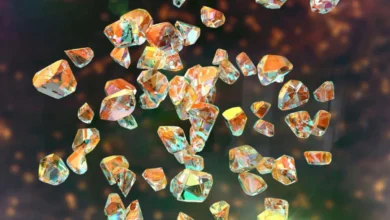
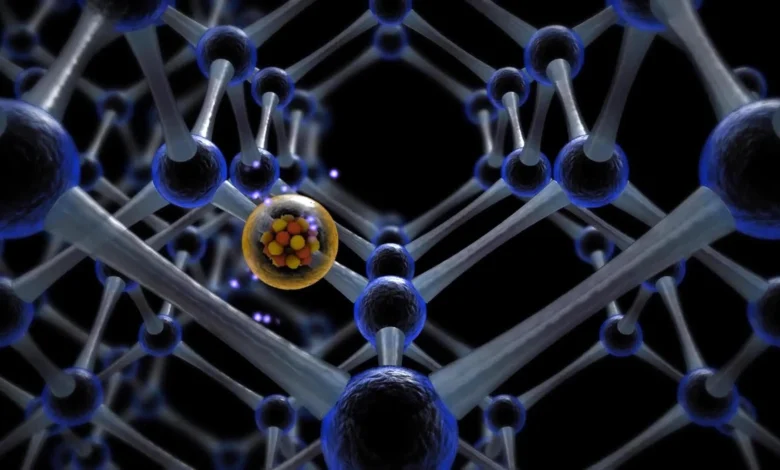
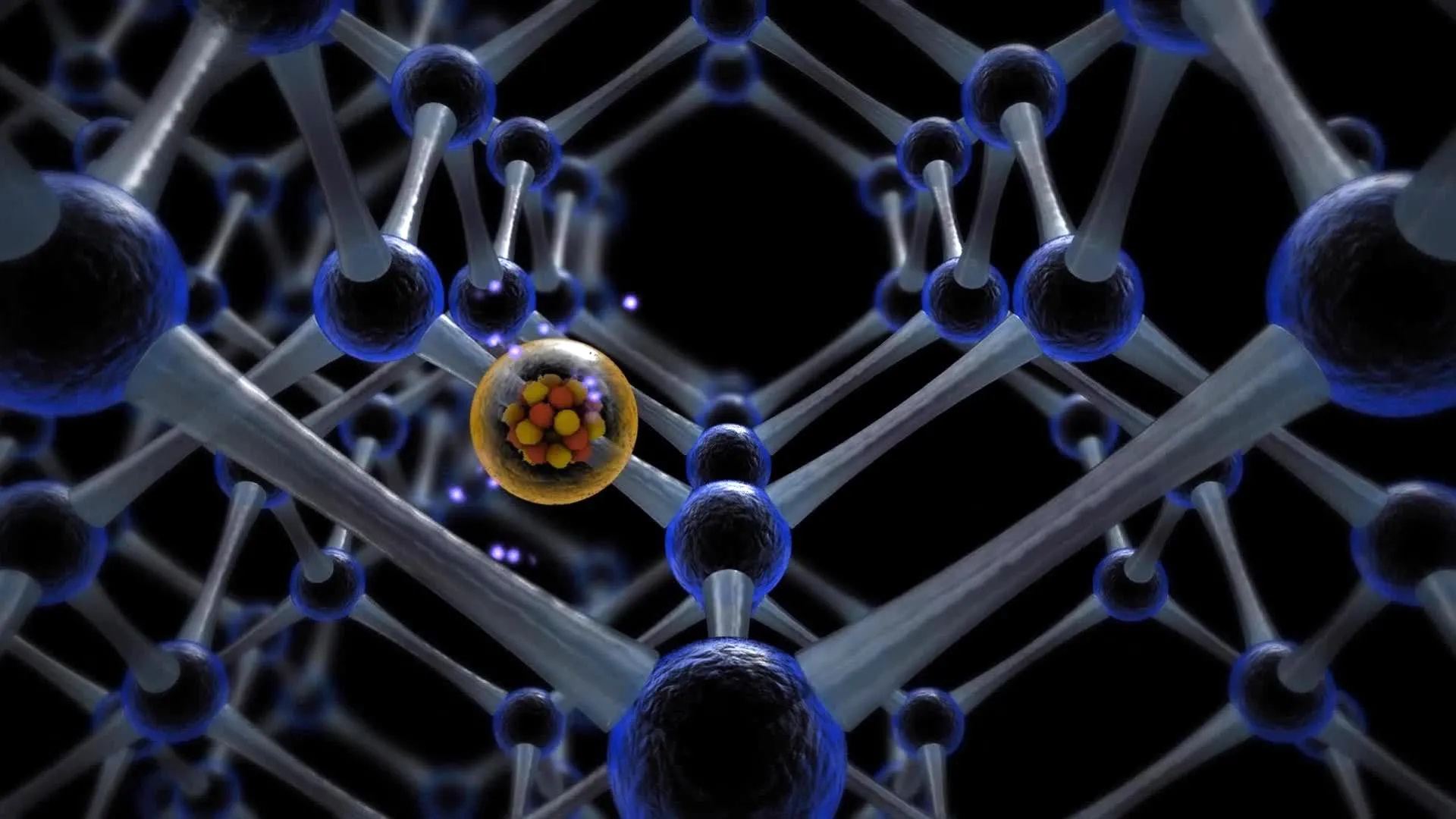
The Harvard team focused on silicon-vacancy (SiV) centers in diamond, a type of defect that acts as a stable qubit. To facilitate the movement of information, these qubits are integrated into phononic cavities—nanoscale structures engineered to trap mechanical vibrations. By confining these vibrations, the researchers can force an intense interaction between the phononic field and the electron spin of the qubit.
The Challenge of Environmental Noise
Quantum bits are notoriously delicate. Any fluctuation in their surroundings—be it electromagnetic interference, thermal noise, or structural vibrations—can cause the qubit to lose its quantum state, a process known as decoherence.
For years, the industry standard for protecting these qubits has been the application of external microwave pulses. This process, known as dynamical decoupling, periodically flips the qubit state to cancel out the effects of environmental noise. While effective in isolated systems, this method encounters significant friction when qubits are embedded within phononic cavities. The physical proximity required for strong mechanical interaction often interferes with the microwave pulses, creating a trade-off where researchers must choose between high-speed information transfer and long-lasting memory.
The "Dressed" Qubit Paradigm
The team at SEAS, led by former doctoral student Eliza Cornell and postdoctoral scholar Zhujing Xu, resolved this conflict by effectively replacing microwave pulses with a continuous acoustic driving field. By bathing the silicon-vacancy spin in a steady stream of phonons, the researchers created what is known as a "dressed" state.
In this configuration, the qubit is no longer an isolated entity vulnerable to ambient low-frequency noise; it is "dressed" by the continuous mechanical field. This field acts as a protective cloak, shielding the qubit from external decoherence sources. Because this protection is inherent to the acoustic field itself, it is fully compatible with the phononic cavities already being developed for quantum communication.
The dual role of the phonon is the core discovery of this research. Phonons are simultaneously serving as the high-speed data carrier that connects nodes in a network and as the protective barrier that maintains the integrity of the information stored at each node.
Supporting Data and Performance Gains
The experimental results were quantitative and distinct. Under the influence of the continuous mechanical driving field, the coherence time of the silicon-vacancy spin was extended by a factor of approximately three.
While a threefold increase may seem modest in a laboratory setting, it represents a transformative leap for integrated quantum circuits. Extending coherence time without sacrificing interaction strength allows for more complex logic operations to be performed on a single chip before the quantum information fades.
The research was conducted at the Harvard Center for Nanoscale Systems, utilizing state-of-the-art nanofabrication techniques. The data indicates that this all-mechanical approach is not only viable for silicon-vacancy centers but could theoretically be adapted to other solid-state spin systems, potentially standardizing a new protocol for hybrid quantum systems.
Chronology and Development
The development of this technology follows years of incremental progress in the Lončar lab regarding phononic-photonic integration.
- 2018–2020: Initial development of high-Q phononic cavities in diamond, establishing the ability to trap mechanical energy.
- 2021: Preliminary studies on the interaction between diamond spins and surface acoustic waves.
- 2022–2023: Optimization of the "dressed" qubit state, involving complex co-authorship collaboration between researchers specializing in spin physics and quantum optics.
- 2024: Publication of the finalized findings in Nature Physics, demonstrating that the coherence protection is robust enough for real-world device integration.
Implications for Quantum Architecture
The broader implications of this work extend to the modularity of quantum computers. Currently, most quantum systems are "monolithic"—built as a single, fragile unit. The ability to use phonons to both transport and protect information suggests a future where modular quantum nodes can be networked on a silicon chip, much like the transistors in a modern smartphone.
Furthermore, the versatility of phonons in interacting with both solid-state spins and electromagnetic fields makes this technology a prime candidate for "hybrid" quantum systems. Such systems aim to combine the best features of different qubit types—for example, using a superconducting qubit for high-speed calculation while using a diamond spin for long-term memory storage. The Harvard method provides the "glue" required to connect these disparate systems without the need for complex, room-sized microwave apparatus.
Official Responses and Future Outlook
"We are solving two problems," said Eliza Cornell, lead author of the study. "We want the spin to have strong interaction with phonons, and we want the spin to have a long coherence time. Our paper demonstrates a method of extending the coherence time that is compatible with the silicon-vacancy center being in a cavity."
While the research team has successfully demonstrated the proof-of-concept, the transition from a laboratory experiment to commercial hardware remains the next major hurdle. The Harvard Office of Technology Development has already begun the process of patenting the core innovations, signaling a clear intent to transition this academic success into the commercial sphere.
The potential for commercialization is bolstered by the research’s compatibility with existing CMOS (Complementary Metal-Oxide-Semiconductor) manufacturing processes, which are the backbone of the global semiconductor industry. If these phononic protection layers can be fabricated at scale, they could significantly lower the cost and complexity of building reliable quantum processors.
Funding and Collaborative Effort
The project was supported by a diverse array of federal and academic institutions, underscoring its importance to national interests in quantum information science. Funding was provided by the National Science Foundation (NSF) under grant number EEC-1941583, and the Air Force Office of Scientific Research (AFOSR) under awards FA9550-23-1-0333 and FA9550-23-1-0338.
The work also benefited from the Q-NEXT initiative, a U.S. Department of Energy Office of Science National Quantum Information Science Research Center. The collaborative nature of the paper, featuring co-authors from institutions including Yale University and the Technical University of Munich, highlights the global interdisciplinary effort currently driving the quantum revolution.
As the industry looks toward the "Noisy Intermediate-Scale Quantum" (NISQ) era, the ability to squeeze more performance out of existing hardware through clever engineering—rather than just brute-force increases in qubit count—will likely define the winners of the quantum race. By turning sound into a guardian of quantum memory, the SEAS team has provided the field with a new, robust tool that may prove essential for the reliable quantum networks of the next decade.
Related posts: