Blanche defends Trump’s criticism of supreme court justices after ruling to block mail-in voting executive order

WASHINGTON — In a high-stakes press conference at the White House, US Attorney General Todd Blanche mounted a robust defense of President Donald Trump on Tuesday, backing the administration’s aggressive posture toward the nation’s highest court. The statements followed a stinging defeat for the executive branch at the Supreme Court, which ruled to block a presidential executive order aimed at implementing strict, nationwide restrictions on mail-in voting ahead of the critical midterm elections.
Despite the judicial setback, which forced the administration to retreat from its targeted overhaul of ballot procedures, Blanche insisted that the White House’s broader prosecutorial agenda remains entirely unaffected. He confirmed that federal authorities will continue their rigorous inquiries into alleged electoral malfeasance, signaling that the administration’s crusade over voting integrity is far from over.
The unfolding legal and political drama is part of a wider, multi-front conflict involving the White House, Capitol Hill, and the federal judiciary. From fierce debates over artificial intelligence safety and cryptocurrency regulations to high-profile federal crackdowns and institutional clashes over the John F. Kennedy Center for the Performing Arts, the administration finds itself at a historical crossroads as the nation approaches the midterm elections.
The Mail-In Voting Clash and Attorney General’s Defense
The legal confrontation centers on an executive order issued by President Trump designed to place sweeping limits on mail-in voting protocols. Voting rights advocates, state election officials, and civil liberties organizations immediately challenged the directive, arguing it would create chaotic disenfranchisement and violate established statutory frameworks. In a decisive ruling, the Supreme Court blocked the implementation of the order, leaving current state-run mail-in voting procedures largely intact for the midterms.

Only conservative Justices Clarence Thomas and Samuel Alito dissented from the majority, drawing fierce praise from Trump, who lauded the pair as "legends." The remaining members of the high court—including Trump’s own nominees Neil Gorsuch, Brett Kavanaugh, and Amy Coney Barrett—voted to halt the directive. In response, Trump launched a blistering attack on Truth Social, accusing the court of letting the country down and claiming his appointed justices had become "merely a shell of their original selves."
Addressing reporters in the Rose Garden, Blanche defended the president’s fierce rhetoric against the judiciary, arguing that the commander-in-chief possesses an absolute right to voice public dissatisfaction.
"He is very frustrated," Blanche told the press corps. "He has every right, and indeed he should communicate his concerns with the Supreme Court whenever he has them. This isn’t the first time that he’s done it, and it won’t be the last. The idea that President Trump shouldn’t be allowed to communicate to the American people his frustration—I don’t share that."
Blanche added that the ruling would have no bearing on the Justice Department’s ongoing investigations. "The efforts to make sure that we have free and fair elections are not going to stop just in November or after or thereafter," he stated, asserting that the department remains fully focused on safeguarding the electoral process.
Texas Crackdown on Non-Citizen Voting Falls Short of Expectations
The administration’s messaging on election security was further highlighted earlier on Tuesday, when Blanche alerted White House reporters to standby for what he billed as a "big development" in a federal crackdown on non-citizen voting, to be announced by Ryan Raybould, the US attorney for the Northern District of Texas.

However, the subsequent announcement by Raybould—revealing that federal prosecutors had charged six lawful permanent residents and one undocumented immigrant for voting in federal elections over the past eight years—drew skepticism for its modest scope. While six of the individuals allegedly cast ballots in the 2024 general election, the numerical impact of those votes was negligible. Two individuals cast provisional ballots that were ultimately never counted, while more than 11.3 million other Texans participated in the election.
Of the four illegal votes that were cast and counted in error, three originated from green-card holders hailing from Nigeria, India, and Mexico who may have mistakenly believed they held voting eligibility. Just one vote was cast by an undocumented Mexican immigrant. For context, Donald Trump secured victory in Texas during the 2024 presidential cycle by a margin of over 1.5 million votes against his nearest rival, Kamala Harris. Under current federal and state statutes, lawful permanent residents are legally permitted to participate strictly in local municipal elections within the District of Columbia and select jurisdictions across California, Maryland, and Vermont, but remain barred from federal ballots.
Legislative Gridlock on Crypto and Impeachment Motions Shot Down
On Capitol Hill, legislative battles underscored the deep partisan divide framing the midterm cycle. Senate Democrats successfully blocked the advancement of the CLARITY Act, a major cryptocurrency regulation bill that was the product of months of intensive bipartisan negotiation. The measure failed on a 49-50 vote, with all Democrats and three Republicans uniting to oppose it.
Opponents argued that the framework failed to impose adequate guardrails preventing President Trump and other government officials from profiteering from digital assets while in office. Financial disclosures released earlier in the summer revealed that Trump had amassed approximately $1 billion from cryptocurrency ventures during his time in office. Democratic Senator Ruben Gallego sharply criticized the measure, declaring, "All President Trump wants is for the Senate to give him time to crime, and I won’t support any piece of legislation that enables him."
Meanwhile, the House of Representatives overwhelmingly shot down an eleventh-hour attempt by Democratic Representative Al Green to introduce articles of impeachment against President Trump. The chamber tabled the resolution in a 232-147 vote, with 47 lawmakers voting "present." House Democratic leadership opted for a tactical abstention, releasing a statement arguing that the foundational investigative work necessary for a credible impeachment inquiry had not been performed, while vowing to pursue oversight through traditional investigative channels.

The Kennedy Center Battle Intensifies
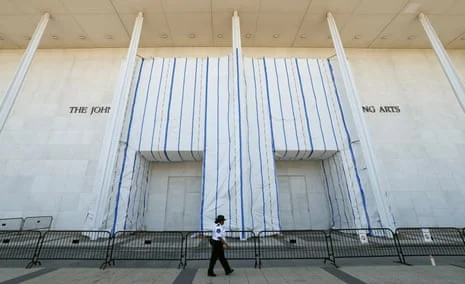
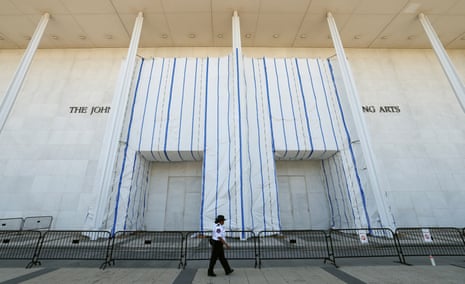
Cultural and institutional friction also reached a boiling point over the John F. Kennedy Center for the Performing Arts. Following an earlier federal court ruling by District Judge Christopher Cooper that mandated the removal of Donald Trump’s name from the building’s exterior, the Trump-appointed board of trustees attempted to circumvent the decision by voting to close the facility for extensive renovations and enact resolutions renaming the surrounding plaza and facility elements.
Judge Cooper swiftly blocked the maneuver, issuing a rigorous injunction reiterating that federal statute designates the performing arts complex solely to the memory of the assassinated 35th president, John F. Kennedy. "Simply put, defendants cannot install memorials for President Trump or anyone or anything else at the Kennedy Center without Congress’s blessing," Cooper wrote, emphasizing that the board’s actions directly violated federal law and prior court orders.
Trump reacted with fury on social media, declaring that the sprawling cultural landmark would remain closed indefinitely and that its multi-million-dollar renovation project would be permanently canceled unless the Supreme Court intervenes to overturn Judge Cooper’s injunction.
Bipartisan Alarm Over Artificial Intelligence and Soaring National Debt
Away from direct electoral and judicial skirmishes, lawmakers confronted sweeping policy challenges regarding artificial intelligence safety and the nation’s worsening fiscal outlook. At the Pro-Human Assembly in Washington, independent Senator Bernie Sanders and conservative commentator Steve Bannon delivered stark warnings regarding the exponential acceleration of AI development. Sanders lambasted both political parties for being "asleep at the wheel," arguing that voluntary corporate safety pledges are wholly inadequate against existential technological threats.
Concurrently, Treasury Secretary Scott Bessent faced intense questioning before the House Financial Services Committee regarding the administration’s fiscal proposals, including Trump’s recent promise of a $5,000 dividend payout to adult citizens contingent on a Republican sweep of the midterms. Pressed by Democratic lawmakers on whether the plan would exacerbate a national debt that crossed the unprecedented $40 trillion threshold last month, Bessent maintained that the Treasury Department has been formulating mechanisms to execute the policy without expanding the deficit—though he declined to disclose specific financial models.
As the midterm elections draw closer, the convergence of fierce judicial pushback, sweeping executive defense by officials like Todd Blanche, and pitched battles over institutional authority, technology, and national security sets the stage for one of the most volatile political periods in modern American history.
Related posts: