Robert Kraft confirms role in barring Macklemore from Gillette Stadium amid rising tensions over pro-Palestine rhetoric

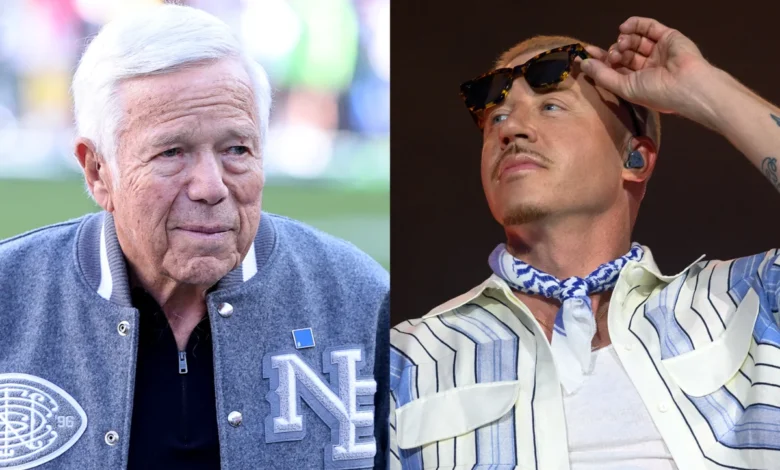
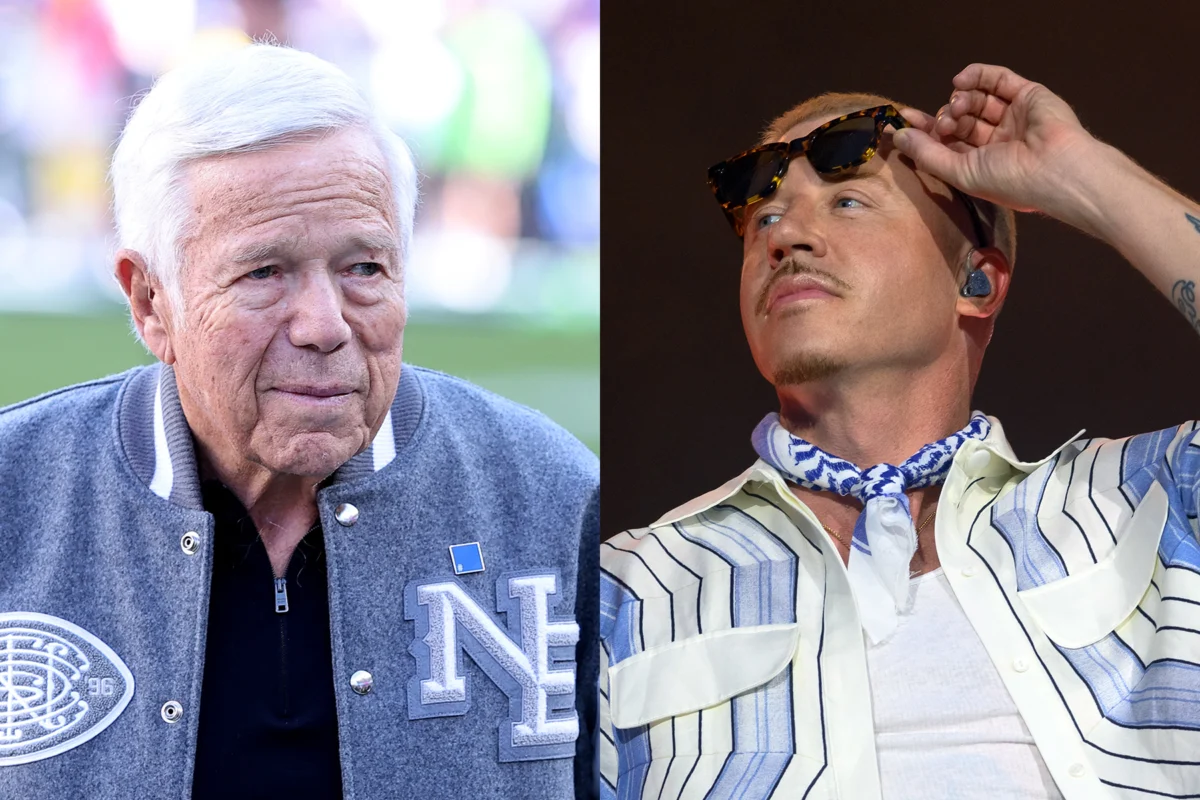
The intersection of professional sports, high-profile music tours, and international geopolitical discourse has reached a flashpoint, resulting in the removal of Seattle-based rapper Macklemore from the remainder of Ed Sheeran’s "Mathematics" tour. The controversy centers on the decision by New England Patriots owner Robert Kraft to effectively bar the rapper from performing at Gillette Stadium in Foxborough, Massachusetts, following Macklemore’s vocal and public support for the Palestinian cause during recent concert dates. The fallout has prompted a public exchange of statements, highlighting a deepening divide over the boundaries of political speech within private entertainment venues.
The Chronology of the Dispute
The escalation of the situation began in early September, when Macklemore joined the support lineup for Ed Sheeran’s stadium tour. During two consecutive shows at MetLife Stadium in East Rutherford, New Jersey, the rapper utilized his platform to address the ongoing conflict in Gaza. On stage, Macklemore explicitly declared "Free Palestine," expressed solidarity with the residents of Gaza and the West Bank, and performed his protest track, "Hind’s Hall," which serves as a commentary on the student-led pro-Palestine encampments at Columbia University.
Following these performances, the atmosphere surrounding the tour shifted. According to allegations made by Macklemore, Robert Kraft initiated direct contact with Ed Sheeran. The rapper claimed that Kraft delivered an ultimatum: if Macklemore remained on the tour, Sheeran would be barred from performing at various major stadium venues across the country. Shortly thereafter, it was confirmed that Macklemore would no longer be participating in the tour, including the scheduled performances at Gillette Stadium.
The Stance of the Kraft Group
Robert Kraft, a prominent figure in American business and a noted philanthropist with deep ties to Jewish causes and the State of Israel, issued a formal statement to clarify his position. Kraft emphasized that the decision was rooted in a commitment to ensuring that Gillette Stadium remains a venue free from what he characterized as hate speech.
"We are committed to providing a welcoming environment for all guests and ensuring that all events held at our venue do not provide a platform for hate speech," the statement read. Kraft further justified the exclusion by citing not only the rapper’s recent onstage comments but also a "broader history of antisemitic rhetoric and imagery." This specific reference points to a 2014 controversy in which Macklemore was widely criticized for wearing a costume that was perceived by many as an antisemitic caricature. While the rapper issued an apology at the time, insisting the costume was intended for a disguise, the incident has remained a point of contention in his professional career.
Kraft’s statement underscored that the move was not intended to dismiss the humanitarian crisis facing Palestinians. "This is not about diminishing the suffering of innocent Palestinians or denying anyone the right to advocate on their behalf," Kraft wrote. "However, such advocacy should not come at the expense of the Jewish community or obscure the responsibility of Hamas. Only sharing selective information and ignoring the actions of Hamas is not honest and only advances more divisiveness and hate."
Macklemore’s Defense and the Conflation Argument
In response to his removal from the tour, Macklemore released a public statement that challenged the premise of the accusations against him. The rapper argued that the current climate has created a dangerous conflation between legitimate political criticism of the Israeli state and anti-Jewish sentiment.
"Antisemitism is real," Macklemore stated. "And that is exactly why the word matters too much to be used as a shield against criticism of the Israeli state. When criticizing Israel, opposing Zionism or saying ‘Free Palestine’ gets conflated with hatred of Jewish people, it doesn’t protect Jewish people. It protects Israel from accountability."
The rapper’s perspective reflects a growing movement within the entertainment industry that insists upon the right to engage in political dissent regarding the Israeli government’s military actions in Gaza. By framing his rhetoric as human rights advocacy rather than religious animus, Macklemore has positioned himself at the center of a national debate regarding the limits of free speech in private, corporate-owned spaces.
Contextualizing the Broader Industry Impact
The removal of a supporting act from a major international tour is a rare occurrence, suggesting that the pressure exerted by venue owners and stakeholders is becoming a significant factor in tour management. Stadium owners like Kraft, who maintain substantial financial and political influence, hold the power to dictate the terms of usage for massive entertainment hubs.
Industry analysts note that this event sets a precedent for how touring artists navigate political volatility. When venues serve as the primary infrastructure for global touring, owners wield significant leverage over the content presented on their stages. This dynamic creates a "chilling effect" where artists may feel compelled to self-censor their political views to ensure they remain viable for the world’s most lucrative performance spaces.
Furthermore, the financial stakes are immense. Sheeran’s "Mathematics" tour is a multi-million dollar enterprise, and the cancellation of a supporting act can cause logistical ripples, including potential contract disputes and scheduling conflicts. While a spokesperson for Kraft did not address the specific allegation that he "rallied" other stadium owners to join the ultimatum, the perceived power of such a coalition of venue operators suggests that artists may face increasingly restricted avenues for political expression in the future.
Philanthropy and Geopolitical Alignment
Robert Kraft’s involvement in this matter is consistent with his long-standing history of public advocacy for Israel. Through the Kraft Group and his personal philanthropy, he has donated millions of dollars to Jewish and Israeli causes, including extensive support for initiatives aimed at combating antisemitism. His involvement in this dispute is viewed by supporters as a fulfillment of his responsibility to protect the Jewish community from what he perceives as dangerous rhetoric.
However, critics of the decision argue that by barring an artist for his political stance, Kraft is overstepping his role as a venue operator. The debate pits the rights of a property owner to curate the content of their venue against the artistic freedom of performers. It also raises questions about whether private entities, when they function as the sole providers of essential performance infrastructure, should be subject to standards similar to public forums regarding free speech.
The Path Forward: Dialogue vs. Exclusion
In the concluding portion of his statement, Kraft expressed a desire for a resolution that moves beyond the current conflict. He stated that he would "welcome the opportunity to sit down with Macklemore and discuss the facts." He reiterated his goal as "peace for all people, an end to suffering, and an end to all hate."
As of this writing, there has been no indication that such a meeting will occur. A representative for Macklemore has declined further comment, and the rapper has continued to use his social media platforms to voice support for his previous statements.
The impasse between Kraft and Macklemore serves as a microcosm of the wider societal fracture regarding the war in Gaza. It highlights the difficulty of reconciling deeply held convictions about historical trauma, national security, and human rights. As the tour continues without the rapper, the industry is left to grapple with the reality that music, once a universal language, is increasingly caught in the crosshairs of global political polarization.
The incident remains a significant case study for artist management, venue liability, and the evolving expectations placed upon public figures who choose to speak out on international conflicts. Whether this event leads to a broader policy shift within the concert industry remains to be seen, but it has certainly forced a conversation about where the lines of discourse are drawn in the modern era of entertainment.
Related posts: