FCC Clears Path for Paramount and Warner Bros Discovery Merger with Sovereign Wealth Fund Approval


The Federal Communications Commission has officially given the green light to equity investments from three major Middle Eastern sovereign wealth funds, clearing a vital regulatory hurdle for Paramount in its monumental $111 billion acquisition of Warner Bros. Discovery. This regulatory milestone marks a significant step forward in one of the largest media consolidation efforts in modern history, combining two legendary Hollywood studios and broadcasting giants under a single corporate umbrella.
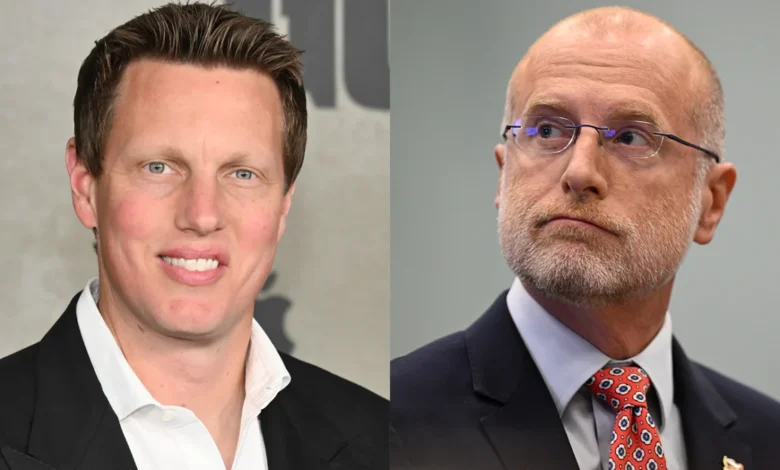
The decision, spearheaded by the commission under the leadership of Brendan Carr, came on Thursday after a thorough review of foreign ownership petitions. The commission approved Paramount’s request to permit foreign entities to hold more than 25 percent of the studio’s overall equity. The foreign investors in question include Saudi Arabia’s Public Investment Fund, the Qatar Investment Authority, and the Abu Dhabi Investment Authority.
While the merger has promised to reshape the global entertainment landscape, it has also sparked intense debate regarding international capital involvement in domestic media infrastructure. By securing this regulatory clearance, Paramount overcomes one of the most unpredictable obstacles standing between its ambitious bid and the ultimate closing of the transaction.
Financial Structure and the Role of Sovereign Wealth Funds
The three Middle Eastern sovereign wealth funds are collectively channeling roughly $24 billion in vital financing to help bankroll Paramount’s acquisition of Warner Bros. Discovery. According to filings with the Securities and Exchange Commission, these sovereign entities have established a pattern of backing prominent global buyout firms over the years. Among the key players facilitating the financial engineering of the offer is Apollo Global Management, which has partnered with the wealth funds to structure the massive capital infusion.
To navigate complex regulatory frameworks and ease national security concerns, the deal was deliberately structured to supply capital strictly through non-voting equity investments. Under this arrangement, the sovereign funds hold no governance rights, meaning they are legally excluded from participating in corporate decision-making, board governance, or operational management.
A spokesperson for Paramount emphasized this precise ownership structure while addressing the regulatory approval. When the proposed transaction with Warner Bros. Discovery officially closes, the Ellison family and RedBird Capital will collectively hold the largest equity stake in the newly combined enterprise. Crucially, they will control 100 percent of the voting shares, ensuring that ultimate operational authority remains firmly anchored in domestic hands while leaving no other equity participant with governance rights.
A Chronology of Regulatory Scrutiny and Political Pushback
The path to Thursday’s FCC approval was neither straightforward nor swift. The journey began months prior, as financial analysts and industry insiders speculated on the immense capital requirements needed to execute a transaction of this magnitude.
In March, the financial engineering behind the merger drew sharp criticism and alarm from Capitol Hill. A collective of Democratic lawmakers formally expressed their concerns in an official letter addressed to the FCC. These senators called for a comprehensive, full-scale probe into the transaction, specifically highlighting the involvement of Middle Eastern sovereign wealth funds. The lawmakers raised alarms that substantial foreign financial backing could inadvertently translate into foreign leverage or influence over major domestic newsrooms, specifically pointing to potential editorial pressures at CBS News and CNN, both of which would fall under the expansive umbrella of the combined media giant.
Despite these political headwinds, the FCC proceeded with its statutory review process, evaluating the economic realities of the broadcasting industry alongside national security and public interest mandates. On Thursday, the commission formally rejected the senators’ assertions, concluding that the foreign investors would not be capable of wielding any influence—let alone outright control—over editorial, strategic, or managerial decisions involving Paramount and Warner Bros. Discovery.
Regulatory Justifications and Conditions of Approval
In its Thursday ruling, the FCC formally determined that the public interest overwhelmingly supports permitting Paramount’s foreign equity ownership to exceed standard regulatory benchmarks. The commission’s decision noted that the consolidated studio requires unprecedented access to global capital to remain competitive in a rapidly evolving, highly fragmented media ecosystem characterized by intense streaming competition and shifting advertising models. Granting this waiver allows the studio to secure the financing necessary to compete effectively in television broadcasting and digital distribution.
The commission emphasized that its greenlight aligns seamlessly with its longstanding policy objective of promoting foreign investment, including within the critical broadcast industry, provided that such investments do not compromise domestic oversight or national security.
However, the regulatory approval is far from a blank check. The FCC’s ruling includes a stringent set of enforceable conditions designed to guarantee that foreign investors can maintain a substantial financial stake in Paramount without acquiring control over the company or its broadcasting assets. Specifically, the investors are strictly barred from possessing any governance rights, occupying board seats, or accessing non-public United States data. The commission noted that any violation of these binding conditions carries severe consequences, including substantial monetary sanctions and the potential mandate to entirely divest their financial investments.
Implications for the Broader Media and Entertainment Landscape
The merger between Paramount and Warner Bros. Discovery represents a seismic shift in the entertainment industry, mirroring a broader trend of consolidation as traditional media companies strive to achieve the scale necessary to rival tech conglomerates and dominant streaming platforms. With a price tag of $111 billion, the transaction unites massive film libraries, television production studios, theatrical distribution networks, and premier news and sports broadcasting assets.
The involvement of sovereign wealth funds underscores the changing nature of corporate finance in Hollywood, where domestic capital alone is frequently insufficient to fund mega-mergers of this scale. As capital markets tighten and interest rates fluctuate, Hollywood studios increasingly look to international sovereign wealth funds and private equity giants to bridge funding gaps.
Yet, this reliance on foreign capital invites continuous scrutiny from regulators, lawmakers, and public advocacy groups. While the FCC has established stringent guardrails to insulate domestic broadcasting and newsrooms from foreign interference, the debate over the boundaries of global investment in American media institutions is far from over.
As Paramount moves closer to finalizing the transaction, the company will continue to navigate remaining regulatory reviews from other domestic and international oversight bodies. Nevertheless, securing the FCC’s endorsement removes a critical barrier, bringing the historic merger one step closer to reality and setting a significant precedent for how foreign capital will intersect with American media giants in the years to come.