President Trump Appoints Stephen Miller as White House Chief of Staff Amid Congressional Power Shift

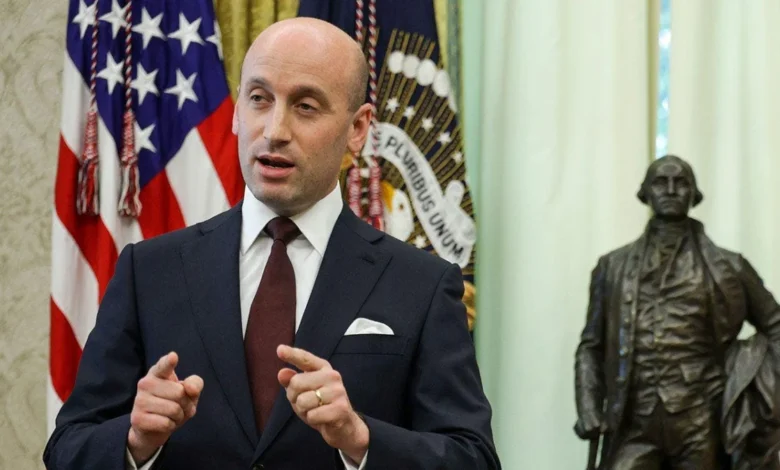
The landscape of Washington politics is undergoing a seismic transformation following the recent midterm elections, which have paved the way for Democrats to assume control of both chambers of Congress when the new legislative session convenes in January. In response to this impending political gridlock, President Donald Trump has announced a major leadership shakeup within the West Wing, tapping veteran policy adviser and homeland security official Stephen Miller to succeed Susie Wiles as White House Chief of Staff. Wiles, who guided the administration through its early legislative triumphs and the turbulent midterm campaign season, is transitioning to lead the president’s external political operations.
The appointment of Miller signals a distinct strategic pivot for the administration. As the White House prepares to face an opposition-led Congress equipped with subpoena power and oversight capabilities, the elevation of one of Trump’s most loyal and aggressive policy architects underscores the executive branch’s intent to lean heavily on executive authority, unilateral rule-making, and legislative vetoes to advance its core agenda.
Chronology of the Transition and Strategic Planning
The groundwork for this executive-centric governance model has been quietly developing for months. Since April, a dedicated team comprising Miller, Office of Management and Budget (OMB) Director Russell Vought, and a cadre of senior White House attorneys has been methodically cataloging and designing executive actions that can be executed entirely independent of Capitol Hill approval.

According to individuals familiar with the internal deliberations, this strategic task force has formulated actionable executive measures covering critical domestic policy pillars, including sweeping immigration enforcement protocols, strategic tariff adjustments, federal housing affordability initiatives, and executive-level federal spending realignments.
The urgency of these preparations intensified as polling and midterm results made clear that the legislative branch would soon slip from Republican control. With Democrats poised to take the gavel in the House and Senate, the traditional avenues for passing statutory laws will narrow significantly. In anticipation of this divided government, President Trump has increasingly framed his executive branch as a resilient, self-sustaining center of power.
Expanding Presidential Authority: The Impact of Trump v. Slaughter
A cornerstone of the administration’s legal and political strategy moving forward rests on a major judicial victory handed down by the Supreme Court in June. In the landmark case of Trump v. Slaughter, the high court ruled in favor of presidential authority, affirming that the president possesses the constitutional power to remove former Federal Trade Commission (FTC) Commissioner Rebecca Slaughter.
This ruling effectively dismantled long-standing statutory restrictions that previously limited a president’s ability to fire independent agency commissioners. For the Trump administration, the decision is viewed much more broadly than federal regulatory oversight; it is interpreted as a sweeping validation of unilateral executive control over the vast apparatus of the federal bureaucracy.

In recent media appearances, including a comprehensive interview with CBS, President Trump highlighted the Slaughter ruling as a foundational instrument for his second-term strategy. When questioned about how he intends to govern in the face of a hostile Democratic legislature, Trump emphasized that the decision endows the executive office with unprecedented leverage and discretionary power that no previous administration has wielded to this extent.
Furthermore, the president has repeatedly characterized himself as "Mr. Veto," signaling his readiness to systematically reject any legislative packages emanating from Capitol Hill that do not align with his administration’s vision, effectively using the veto pen as a defensive shield while utilizing executive actions to press forward on offense.
Capitol Hill Reactions and Republican Apprehensions
While the administration’s hardline approach has galvanized its core base, it has simultaneously triggered profound anxiety among some traditional conservatives and congressional Republicans. The dual prospect of a more aggressive populist agenda under Miller’s chief-of-staff tenure and an administration largely bypassing the legislative branch has exposed underlying ideological fault lines within the GOP.
Speaking anonymously to media outlets, several congressional Republicans expressed deep reservations about the long-term implications of governance by executive fiat. One House lawmaker noted that the trend toward circumventing Congress has been a growing concern over the past two years, warning that such a posture threatens the constitutional balance of powers. Another lawmaker voiced apprehension that Miller’s elevation could lead the president to embrace populist economic and social policies that diverge from traditional conservative orthodoxy in order to court bipartisan deals or force populist wins through unconventional means.

Conversely, hardline factions within the administration and loyalists on Capitol Hill have strongly defended the appointment. Supporters point to Miller’s extensive policy portfolio—particularly his uncompromising stance on border security and interior enforcement—as precisely what is required to maintain momentum on the administration’s flagship issues. A senior administration official lauded the selection, noting that Miller commands the unwavering trust of millions of Americans who view immigration reform and national security as paramount crises.
The Administration’s Counter-Offensive and Oversight Preparedness
Anticipating an onslaught of congressional investigations, subpoenas, and oversight hearings once Democrats assume control of committees in January, the White House has adopted an aggressive posture. Administration officials have made it clear that any perceived overreach or politically motivated investigations by the incoming Democratic majority will be met with staunch institutional pushback.
"If crazed Democrats want to abuse their power and politicize their process of investigations, subpoenas, and destroying lives, they should be reminded that we still control the federal government and all of its powers," a senior White House official stated.
White House spokeswoman Lauren Bis reinforced this message, emphasizing that while the administration remains open to working with lawmakers on genuine bipartisan priorities that benefit American workers, it will not hesitate to push back against what it characterizes as partisan obstructionism and radical policy agendas.

Broader Implications for Governance and Policy
Stephen Miller’s transition to Chief of Staff marks a definitive juncture for the Trump presidency. As the executive branch prepares to navigate a divided Washington, the administration’s reliance on executive orders, aggressive regulatory rollbacks, and strategic budgetary maneuvers—such as the recent revival of rare budget rescissions to claw back congressionally approved funds—will serve as the primary mechanisms of governance.
The coming months will test the resilience of the constitutional separation of powers. With a newly empowered Democratic Congress eager to exercise its oversight authority and a fiercely loyal, executive-focused White House determined to implement its agenda without legislative compromise, Washington is hurtling toward a high-stakes institutional showdown. For Stephen Miller, the challenge will lie in managing the complex internal operations of the West Wing while executing a high-velocity, executive-driven policy playbook that will define the legacy of the administration’s final two years.
Related posts: