NASA Explores Commercial Partnerships to Extend the Lifespan of the Iconic Hubble Space Telescope

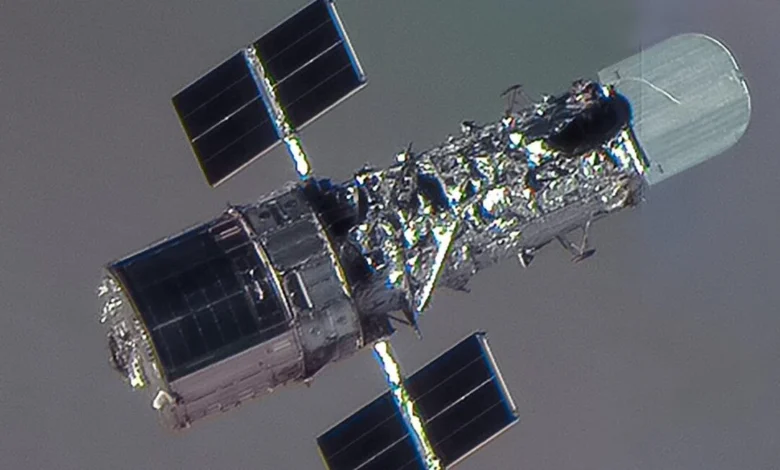
The Hubble Space Telescope, a pillar of modern astrophysics that has fundamentally altered our understanding of the cosmos, stands at a precarious crossroads after more than three decades in orbit. Despite its continued scientific productivity, the legendary observatory is slowly succumbing to the inexorable pull of Earth’s gravity. With its orbit decaying and no internal propulsion system to counteract atmospheric drag, Hubble is projected to enter the Earth’s atmosphere and face eventual destruction between 2033 and 2034. In a move to potentially alter this trajectory, NASA has officially issued a Request For Information (RFI) to the private sector, seeking innovative proposals to reboost, service, or safely deorbit the telescope. This solicitation marks a significant shift in how the space agency approaches the lifecycle management of its most cherished orbital assets, moving from the retired Space Shuttle era toward a new paradigm of commercial space partnership.
A Legacy of Discovery and Decline
Launched in April 1990 aboard the Space Shuttle Discovery, the Hubble Space Telescope was designed to be a permanent orbital observatory, serviced by astronauts throughout its operational life. Over five distinct servicing missions, crews replaced degraded instruments, repaired critical components, and extended the telescope’s reach into the deepest corners of the universe. These missions were not merely repairs; they were technological upgrades that turned an initial mission of observation into a multi-generational legacy.
However, the conclusion of the Space Shuttle program in 2011 severed the umbilical cord that allowed for these routine human-led interventions. The last servicing mission, STS-125 in 2009, was a triumph of engineering that left Hubble in its most capable state ever. Yet, it also signaled the beginning of the end for the observatory’s longevity. Without a shuttle to perform periodic reboosts—a maneuver that lifts the telescope into a higher, more stable orbit—Hubble has been left to the mercy of solar cycle-driven atmospheric expansion. As the sun’s activity fluctuates, the density of the upper atmosphere increases, creating drag that slows the telescope down, causing it to lose altitude steadily.
Chronology of Orbital Decay
To understand the urgency of the current situation, one must examine the timeline of Hubble’s orbital degradation:
- 1990: Hubble is deployed into an initial circular orbit at an altitude of approximately 332 miles (535 km).
- 2002: The STS-109 mission, conducted by the crew of Space Shuttle Columbia, performs the final major reboost, pushing Hubble to an altitude of 362 miles (583 km).
- 2009: The final servicing mission (STS-125) upgrades the telescope’s hardware but does not include a reboost maneuver.
- 2011: The retirement of the Space Shuttle fleet eliminates the only reliable means of reaching the telescope for physical maintenance.
- 2024: Hubble now orbits at roughly 292 miles (470 km), a loss of 70 miles since its 2002 peak.
- 2033-2034 (Projected): Without intervention, atmospheric drag will lead to an uncontrolled reentry, resulting in the telescope’s incineration upon entering the dense layers of the Earth’s atmosphere.
Technical Requirements for a Rescue Mission
NASA’s RFI, issued this past Thursday, serves as a formal inquiry into the capabilities of the burgeoning commercial space industry. The agency is not currently issuing a contract, nor is it committing to a specific mission profile. Rather, it is gathering data to determine whether a private-sector partner can perform a complex robotic or crewed mission to stabilize the telescope.
The criteria outlined by NASA are rigorous. Any proposed mission must ensure that the structural integrity of the Hubble Space Telescope remains uncompromised. The agency has specified that the chosen partner would be responsible for the entire mission architecture, including the launch vehicle, the servicing spacecraft, the logistics of mission operations, and, should the contractor deem it necessary, the provision of a crew.
The primary objective is to boost the observatory to an altitude of at least 373 miles (600 km). Achieving this would effectively reset the clock on Hubble’s orbital decay, granting the telescope at least another 25 years of operational life. This additional time would provide researchers with an unprecedented overlap period with the James Webb Space Telescope (JWST) and the upcoming Nancy Grace Roman Space Telescope, allowing for multi-wavelength observations that would be impossible with any single instrument.
Economic and Strategic Implications
The cost of such a mission is the primary variable currently under investigation. While NASA has not provided a budget for a potential Hubble rescue, the project would likely represent a significant capital expenditure. However, when measured against the cost of launching a new flagship observatory—which can run into the billions of dollars—extending the life of a proven, highly functional instrument like Hubble presents a compelling case for efficiency.
Furthermore, this RFI is as much about technology demonstration as it is about preservation. NASA is looking to see if commercial companies possess the capability to perform "proximity operations"—the art of safely approaching, capturing, and manipulating an object in space that was not originally designed for docking. Mastering these techniques would have far-reaching implications for the future of space infrastructure, including the servicing of commercial space stations, satellite maintenance, and debris removal.
Reaction from the Scientific Community
The astronomical community has responded to the news with cautious optimism. For many, Hubble is not just a scientific instrument; it is an icon of human achievement. Astronomers have long expressed concern over the loss of Hubble, noting that while newer telescopes are more powerful in infrared, Hubble remains peerless in its ultraviolet and optical capabilities.
"The loss of Hubble would be a profound blow to the scientific community, not just because of its data, but because of its role in bridging the gap between historical data and future discoveries," noted one astrophysicist familiar with the project. "An extension would ensure that our records of the cosmos remain continuous, providing a baseline that is vital for long-term climate studies of other planets and the evolution of distant galaxies."
However, there is also the pragmatic reality of safety. NASA officials have emphasized that any mission must not jeopardize the telescope or the safety of the surrounding orbital environment. If a reboost mission is deemed too risky—due to the age of the telescope’s hardware or the complexity of the docking maneuver—the focus will shift toward a "controlled reentry." This would involve guiding the telescope into a specific, uninhabited area of the ocean to ensure that no debris poses a threat to populated regions.
The Future of Orbital Maintenance
The path forward for Hubble remains uncertain, but the issuance of the RFI indicates that NASA is serious about exploring all options. Responses to the RFI are due by November 30. Following the review of these submissions, NASA will decide whether to proceed with a formal procurement process.
The initiative reflects a broader shift in NASA’s strategy. By leveraging the private sector to solve complex engineering challenges, the agency is attempting to lower the barriers to entry for advanced orbital maintenance. If successful, a Hubble rescue mission would not only save a national treasure but would also prove that the era of "throwaway" satellites is coming to an end. In the coming decade, as commercial entities gain the ability to service, refuel, and upgrade orbital assets, the life cycle of space-based instruments could be extended indefinitely.
For now, Hubble continues its silent, high-speed circuit around the Earth, capturing images of the universe that continue to inspire and inform. Whether it meets its end in a fire-streaked descent or is granted a new lease on life by a private spacecraft, its legacy is already secured. Yet, the prospect of a few more decades of discovery provides a tangible hope that the most famous eye in the sky has not yet finished its work. As the November 30 deadline approaches, the global space industry turns its attention to the question: can we save the telescope that changed everything?