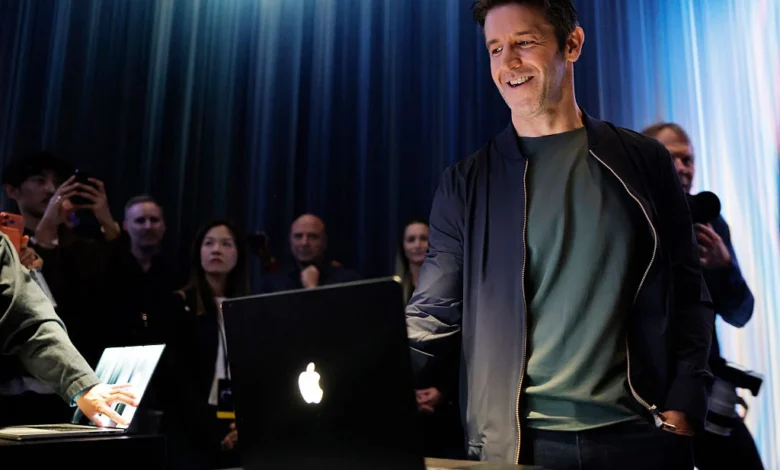
Apple Inc. finds itself at a fascinating crossroads in its storied corporate history. As the artificial intelligence landscape undergoes a relentless, hyper-accelerated evolution, Cupertino’s leadership has faced continuous questions regarding its pace of innovation, market positioning, and deployment of next-generation machine learning features. In a wide-ranging, highly anticipated interview with Steven Levy for Wired, newly minted Apple Chief Executive Officer John Ternus offered a robust defense of the tech giant’s deliberate, calculated approach to artificial intelligence.
The conversation sheds critical light on how Apple conceptualizes its technological future, contrasting its user-centric product philosophy with the breakneck, often chaotic feature-rushing seen across the broader tech sector. Ternus’s remarks arrive at a pivotal juncture for the corporation—just weeks after his official ascension to the CEO role, and months after the summer rollout of Apple’s long-awaited, overhauled version of Siri.
The Backdrop: Navigating the AI Landscape and Perception
For the past several years, critics, Wall Street analysts, and tech commentators have frequently categorized Apple as a latecomer or a laggard in the generative artificial intelligence boom. While competitors such as Microsoft, Google, OpenAI, and Meta aggressively flooded the market with standalone chatbots, sprawling foundational models, and disruptive automation tools, Apple appeared methodical and restrained.
The delay of its more powerful, deeply integrated iteration of Siri became a focal point for these criticisms. Originally anticipated to showcase a massive leap in contextual awareness and cross-app capabilities, the modernized assistant faced development hurdles before finally seeing a commercial release this summer. Reception to the rollout was complex; while consumers welcomed the enhanced functionality, some market observers questioned whether the delayed arrival felt anticlimactic given the staggering pace of external AI advancements.
Despite these external pressures, Ternus made it clear during his discussion with Levy that the company is entirely comfortable with its strategic timeline. Acknowledging that “everyone has an opinion” regarding Apple’s market position, Ternus firmly stated, “I really like where we’re at.”
The Philosophy of Seamless Integration: AI for Utility, Not Hype
At the core of Ternus’s defense is a philosophical distinction between technology implemented for marketing momentum versus technology integrated for genuine utility. While Apple is “absolutely going to leverage AI” in its hardware and software ecosystems, Ternus emphasized that the corporation harbors zero interest in shipping features purely for the sake of following market trends.
“We don’t want to ship AI for AI’s sake,” Ternus explained to Levy. “When we’re doing it right, people won’t have to think about whether it was AI that made this happen or more traditional software. What matters is, did we build something that they really love?”
This perspective echoes Apple’s historical playbook. Throughout its decades of dominance in personal computing, mobile telephony, and wearable technology, the company has rarely been the absolute first to introduce a novel hardware or software concept to the global market. Instead, Apple has traditionally positioned itself as a master refiner—taking nascent, complicated, or fragmented technologies, wrapping them in intuitive user interfaces, and ensuring tight hardware-software integration before presenting them to a mainstream audience.
By treating artificial intelligence not as a standalone gimmick or a flashy sidebar, but as an invisible, underlying layer of utility, Apple aims to differentiate itself from competitors whose AI implementations often feel detached from core hardware experiences.

The Threat of Autonomous Agents and the Future of the App Economy
One of the most profound lines of questioning during the Wired interview touched upon the existential future of software ecosystems. As advanced artificial intelligence agents grow increasingly capable of executing complex multi-step tasks—such as booking travel, managing finances, and navigating digital workflows autonomously—industry analysts have begun to question the long-term viability of the traditional application model. If an AI agent can handle tasks natively and dynamically, the traditional paradigm of opening discrete applications on a smartphone screen could theoretically become obsolete.
When Levy pressed Ternus on whether autonomous AI agents might fundamentally disrupt Apple and its multi-billion-dollar app ecosystem, the CEO offered a grounded, philosophical response.
“That could make life really easy, I suppose, but the creation of products is a deeply human and personal thing, something that we love to do,” Ternus remarked.
This response underscores Apple’s dual identity as both a software platform provider and a premier hardware manufacturer. The company’s financial bedrock relies heavily on services revenue and the vibrant economic engine of the App Store. While autonomous agents will inevitably alter how users interact with digital services, Apple’s leadership appears confident that human affinity for curated, beautifully crafted digital and physical products will sustain consumer demand for structured application environments.
Leadership Transition and the Road Ahead
Ternus’s public defense of Apple’s AI strategy also serves as a crucial early defining moment for his tenure as chief executive. Having stepped into the top role at the beginning of September following a long and successful career leading hardware engineering at the company, Ternus has inherited the monumental task of steering Apple through its next generational evolution.
His predecessor laid the groundwork for Apple’s custom silicon chips—such as the M-series processors and the A-series chips that power on-device machine learning tasks via Apple Intelligence—which provide the foundational hardware infrastructure necessary to run complex AI models locally and securely.
However, translating that hardware capability into compelling software experiences that capture the public imagination remains an ongoing challenge. Ternus’s leadership style, as evidenced by his recent comments, leans heavily into Apple’s traditional corporate values: patience, tight product control, a relentless focus on user experience, and a skepticism toward transient industry hype cycles.
Market Implications and Industry Analysis
The broader implications of Apple’s measured AI strategy are significant for the technology sector at large. While aggressive deployment models favored by enterprise AI firms drive rapid data accumulation and headline-grabbing breakthroughs, they also expose companies to risks involving hallucinations, privacy vulnerabilities, and user fatigue.
By contrast, Apple’s emphasis on privacy-first, on-device processing combined with selective cloud computing creates a distinct value proposition for consumers who are increasingly wary of data harvesting. By prioritizing seamless software integration over rapid, feature-stuffing races, Apple is betting that mainstream consumers will ultimately reward reliability and subtlety over technological novelty.
As the tech industry moves further into the late 2020s, the debate over whether Apple is leading or following in the artificial intelligence revolution will undoubtedly persist. Yet, if John Ternus’s inaugural media appearances as CEO are any indication, Cupertino is entirely unbothered by the noise. For Apple, the ultimate metric of success remains unchanged: not how loudly a technology is marketed, but how deeply users fall in love with the final product.