Discovery of the Worlds Deepest Animal Colony in the Mariana Trench Reveals Resilient Life Six Miles Below Sea Level

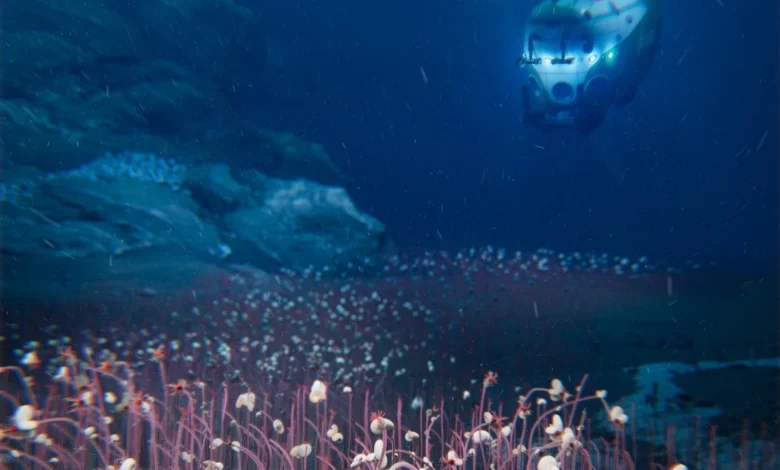
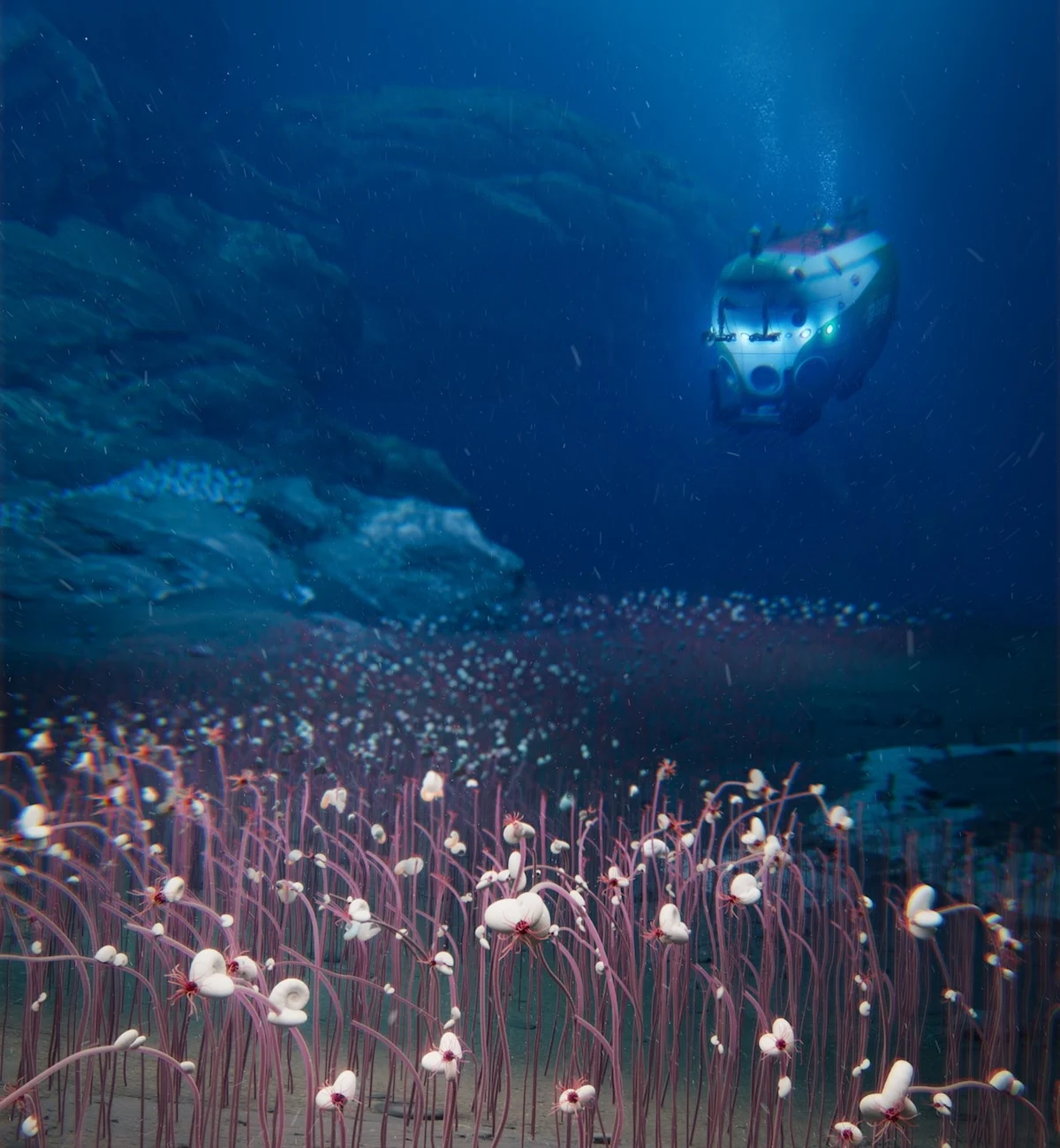
In a landmark expedition that has redefined the boundaries of known biology, a team of researchers from the Chinese Academy of Sciences has documented the deepest and most extensive animal communities ever observed on Earth. Utilizing the advanced manned submersible Fendouzhe, also known as the "Striver," scientists successfully located thousands of mollusks and worms thriving in the hadal zone of the Mariana Trench, nearly six miles below the ocean’s surface. This discovery, recently published in the journal Nature, challenges long-standing assumptions about the capacity for complex life to exist under extreme hydrostatic pressure and in the total absence of sunlight.
The expedition focused on the western Pacific’s Mariana Trench, as well as the Kuril–Kamchatka and western Aleutian Trenches, revealing a vibrant ecosystem that operates independently of the solar-driven food chains found in shallower waters. These "hadal" environments—named after Hades, the Greek god of the underworld—represent some of the least explored regions on the planet. The discovery of such a high density of life at these depths suggests that the deep-ocean floor may be far more biodiverse and ecologically active than previously hypothesized.
The Mechanics of Life in the Hadal Zone
The newly discovered communities are primarily composed of siboglinid polychaetes (tubeworms) and bivalve mollusks, which were found at depths ranging from 5.8 kilometers to 9.5 kilometers (3.6 to 5.92 miles). Unlike the vast majority of life on Earth, which relies on photosynthesis to convert sunlight into energy, these deep-sea organisms utilize chemosynthesis. This process involves the oxidation of inorganic molecules, such as methane and hydrogen sulfide, to produce organic matter.
According to the study, these communities are sustained by fluids rich in methane and hydrogen sulfide that are transported along geological faults. These faults traverse deep sediment layers where methane is produced microbially from deposited organic matter. Isotopic analysis conducted by the research team confirmed that the methane fueling this ecosystem is biogenic, meaning it is the byproduct of microbial life living within the seafloor.
The Fendouzhe submersible, which conducted 23 dives into the Mariana Trench over the course of a year, captured high-definition footage of these colonies. The visual data revealed fields of tubeworms growing up to a foot in length, alongside dense mounds of clams and other mollusks. Scientists also observed a variety of other invertebrates, including free-floating marine worms, spiky crustaceans, sea lilies, and sea cucumbers, all coexisting in a region once thought to be a biological desert.
A Breakthrough in Deep-Sea Exploration
The success of the mission is attributed to the technological capabilities of the Fendouzhe, a state-of-the-art manned submersible capable of withstanding the immense pressures of the deep ocean, which can exceed 1,000 times the atmospheric pressure at sea level. The vessel’s ability to conduct repeated, targeted dives allowed the researchers to map an extensive area covering approximately 1,553.4 miles (2,500 kilometers) across various trench systems.
Lead author Xiatong Peng, a researcher at the Institute of Deep-sea Science and Engineering, noted that the discovery was significant not just for its depth, but for its scale. "Given geological similarities with other hadal trenches, such chemosynthesis-based communities might be more widespread than previously anticipated," Peng stated. This suggests that the "vibrant oases" found by the team may be part of a global network of deep-sea ecosystems that have remained hidden from human observation for centuries.
The findings stand in stark contrast to earlier descriptions of the Mariana Trench. In 2012, when filmmaker and explorer James Cameron reached the bottom of the trench in the Deepsea Challenger, he described the landscape as "desolate" and "lunar." While Cameron’s mission was a feat of engineering, it was a brief visit to a specific location. The current study’s multi-dive approach has allowed for a more comprehensive biological survey, proving that the "desolation" was merely a lack of visibility into the trench’s hidden complexities.
Chronology of Hadal Exploration
To understand the significance of this discovery, it is essential to view it within the timeline of deep-sea exploration:
- 1960: Jacques Piccard and Don Walsh become the first humans to reach the bottom of the Mariana Trench in the bathyscaphe Trieste. They observed a few fish and shrimp, proving life could survive at great depths, but lacked the technology for detailed ecological mapping.
- 2012: James Cameron completes the first solo dive to the Challenger Deep. His observations emphasized the alien and seemingly barren nature of the environment.
- 2020–2024: The Fendouzhe submersible begins a series of record-breaking dives. In 2020, it reached a depth of 10,909 meters with three occupants.
- 2025: The publication of the current study in Nature, detailing the discovery of extensive chemosynthetic communities across multiple trenches, fundamentally shifting the scientific understanding of deep-sea carbon cycles.
This progression shows a shift from "reaching" the bottom to "studying" the bottom. The focus has moved from the engineering feat of survival to the scientific endeavor of ecological analysis.

Scientific and Environmental Implications
The discovery of these communities has profound implications for our understanding of the global carbon cycle. Current models of ocean carbon sequestration primarily focus on the "biological pump," where organic matter sinks from the surface to the deep sea. However, the presence of large-scale chemosynthetic communities suggests a "bottom-up" carbon cycle where energy is generated within the Earth’s crust and moved into the biological realm at the seafloor.
Furthermore, the study provides "compelling evidence" of microbial methane production in the deepest parts of the ocean. This suggests that the hadal trenches act as massive bioreactors, processing organic matter and gases in ways that have not been fully accounted for in climate models.
"What makes our discovery groundbreaking is not just its greater depth—it’s the astonishing abundance and diversity of chemosynthetic life we observed," said study co-author Mengran Du, a marine geochemist. "Unlike isolated pockets of organisms, this community thrives like a vibrant oasis in the vast desert of the deep sea."
The Shadow of Deep-Sea Mining
The timing of this discovery is particularly relevant as the international community debates the future of deep-sea mining. The International Seabed Authority (ISA) is currently in the process of drafting regulations that would allow companies to mine the ocean floor for valuable minerals, such as cobalt, nickel, and copper, which are essential for green energy technologies like electric vehicle batteries.
Environmentalists and ocean scientists have expressed grave concerns that mining activities could cause irreparable damage to fragile and largely unknown ecosystems. The discovery of thousands of mollusks and worms in the Mariana Trench serves as a reminder of how little is known about the hadal zone. If mining were to proceed without a full understanding of these chemosynthetic communities, entire species could be driven to extinction before they are even documented.
The researchers’ findings suggest that the deep sea is not a wasteland that can be exploited without consequence, but a complex biological frontier. The "snow-like microbial mats" and the delicate balance of methane-rich fluids that sustain these tubeworms are highly sensitive to sediment disruption, which is a primary byproduct of deep-sea mining operations.
Broader Impact and Future Research
The discovery also has implications for astrobiology—the study of life in the universe. Scientists looking for life on other planetary bodies, such as Jupiter’s moon Europa or Saturn’s moon Enceladus, often point to Earth’s deep-sea hydrothermal vents and chemosynthetic communities as analogs. These moons are believed to have subsurface oceans kept liquid by tidal heating, with chemical energy potentially available at the seafloor.
By proving that complex animal life can flourish in the extreme conditions of the Mariana Trench—where there is no light, near-freezing temperatures, and crushing pressure—the Fendouzhe mission provides a blueprint for how life might exist in the dark oceans of other worlds.
As the Chinese Academy of Sciences continues to analyze the data and samples collected by the Fendouzhe, the scientific community is calling for increased international cooperation in hadal research. The complexity of these ecosystems requires a multidisciplinary approach, combining geology, geochemistry, and marine biology to fully unravel the mysteries of the deep.
In conclusion, the documentation of the world’s deepest animal colony is more than a record-breaking event; it is a paradigm shift. It reveals an Earth that is more resilient and biologically diverse than previously imagined, and it underscores the urgent need for conservation in the face of industrial interest in the deep sea. The "hidden world" described by the researchers is no longer a mystery, but a vital part of the planet’s ecological tapestry that demands both respect and protection.