High Stakes on Capitol Hill Internal Leadership Battles and Legislative Clashes Define Post Midterm Realities

The dust has barely settled on a dramatic cycle of midterm elections, but the real power struggles on Capitol Hill are only just intensifying. Beyond the primary ballot boxes, both major political parties are locked in high-stakes internal leadership elections that could reshape the trajectory of the legislative branch. While the macro-level political landscape shifted dramatically following Tuesday night’s stunning electoral outcomes, the micro-level dynamics inside the House and Senate party caucuses reveal deep ideological fault lines, generational friction, and questions about the future path of American governance.
Internal Leadership Battles and Caucus Friction
The aftermath of the midterms has triggered intense jockeying for positions of power, bringing underlying tensions within both the Republican and Democratic parties sharply into focus. In the House, Speaker Mike Johnson (R-La.) has made it clear he will not pursue the post of minority leader, casting uncertainty over the future direction of the House Republican conference. Johnson previously joked about returning to his hometown of Shreveport to start a lawn business if called upon, highlighting the immense pressure weighing on top congressional leaders.
Meanwhile, a fierce contest is underway for the top Republican spots. House Majority Leader Steve Scalise (R-La.) and prominent conservative firebrand Rep. Jim Jordan (R-Ohio) are both maneuvering to capture the leadership mantle for the GOP. Additionally, House Majority Whip Tom Emmer (R-Minn.) faces a vigorous challenge from Rep. August Pfluger (R-Texas) as he attempts to secure his footing as minority whip. These leadership contests highlight a persistent strategic dilemma for House Republicans: how to secure unified leadership positions while preserving fragile coalitions. The enduring alignment of several top Republicans with President Trump remains a point of friction, with a faction of the party actively hoping to chart a post-Trump course.
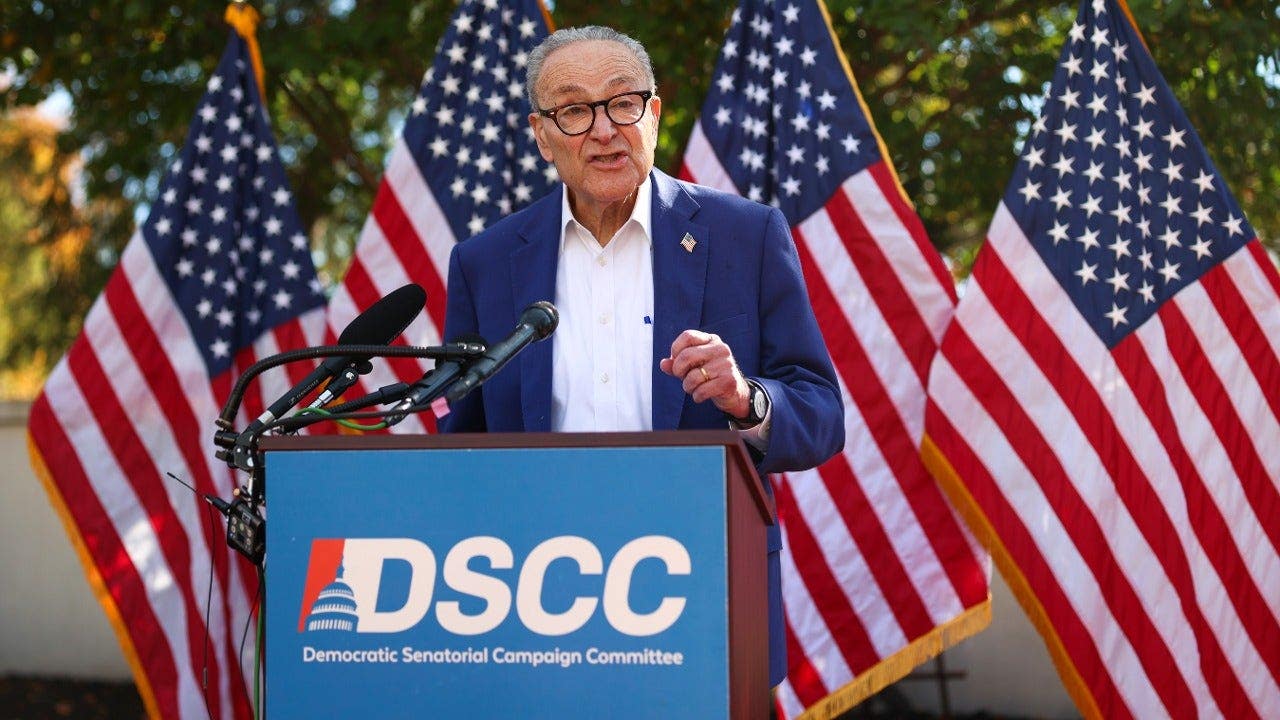
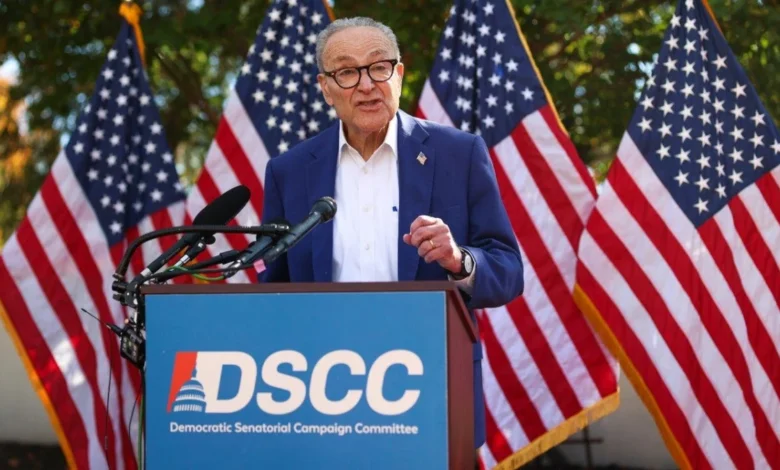
On the Senate side, President Trump and Senate Majority Leader John Thune (R-S.D.) maintain an occasionally strained relationship, yet the president has not demanded a change in leadership there. However, Senate Minority Leader Chuck Schumer (D-N.Y.) faces unexpected internal resistance from incoming progressive members, despite presiding over sweeping Democratic midterm victories. Senators-elect such as Abdul El-Sayed (D-Mich.), Adam Hamilton (D-Kan.), Annie Andrews (D-S.C.), and Troy Jackson (D-Maine) have openly voiced reservations or outright refusals to support Schumer, citing a widespread desire within the caucus for a generational shift in leadership and a stronger push for progressive economic reforms.
Despite these high-profile defections, Schumer remains confident. Requiring only a simple majority of approximately 29 votes in a secret caucus ballot to retain his leadership post, Schumer shrugged off the dissent, emphasizing that the focus must remain squarely on delivering for the American people. In the House, at least five members belonging to the Democratic Socialists of America are threatening to withhold their votes for House Minority Leader Hakeem Jeffries—projected to be the first Black House speaker in U.S. history—unless they secure explicit policy concessions. However, with Democrats potentially securing more than 260 seats once all races are finalized, Jeffries can comfortably absorb dozens of internal defections to reach the magic threshold of 218 votes required when the new Congress convenes on January 3.
The Legislative Landscape: Diverging Agendas and Historical Parallels
Unlike the watershed 1994 midterm elections—when former House Speaker Newt Gingrich famously rolled out the 10-point “Contract with America” to galvanize voters around a unified legislative blueprint—the modern Democratic majority arrives in Washington with a diverse, decentralized menu of priorities rather than a single unifying manifesto.
Instead, the incoming Democratic majority has centered its legislative vision on addressing the cost of living, reigning in corporate expenses, and holding the executive branch accountable. A primary pillar of this agenda involves rolling out measures to reverse recent tax cuts and structural fiscal changes enacted under the previous legislative framework. Furthermore, Democrats are preparing aggressive legislative pushes to permanently renew expired Obamacare subsidies. The fierce standoff over healthcare premium assistance was the central catalyst behind last year’s record-breaking, 43-day government shutdown—an event that both parties acknowledge deeply influenced public perceptions of healthcare policy ahead of the midterms.

Beyond domestic healthcare and taxation, emerging technologies and foreign policy are slated to dominate congressional debates. House and Senate Democrats are increasingly turning their attention toward the rapid expansion of artificial intelligence and the proliferation of high-energy data centers. Progressive Caucus leaders have sounded alarms over the potential displacement of American jobs and the strain placed on energy infrastructure by the AI boom, signaling that technology regulation will occupy a prominent place on the legislative calendar.
Foreign policy and international trade will also serve as major battlegrounds. Congressional Democrats are widely expected to advance new War Powers resolutions aimed at curtailing military operations in Iran, banking on the belief that de-escalation will help stabilize global oil markets, reduce domestic gas prices, and ultimately provide relief at the grocery store checkout. Additionally, lawmakers are mounting renewed resistance against President Trump’s sweeping tariff policies. While many congressional Republicans previously rallied behind the administration’s economic nationalism, a growing faction of lawmakers is facing intense pressure to reevaluate trade restrictions that critics argue are self-defeating from a fiscal perspective. Conversely, stalwart defenders of the administration’s economic policies, such as Rep. Chris Smith (R-N.J.), maintain that broad tax cuts and domestic manufacturing protections remain profoundly underappreciated by the electorate.
The Numbers Game: The Arithmetic of Governance and Veto Overrides
The ultimate success or failure of the upcoming congressional session will be dictated strictly by numerical realities. When final tallies are completed, Democrats are projected to control a historic majority of more than 260 seats in the House, alongside a guaranteed 54 seats in the Senate, with races in Alaska and Mississippi remaining too close to call.
This commanding congressional math introduces a profound challenge for President Trump, who has indicated a willingness to both collaborate with the legislative branch and heavily utilize his executive veto pen. Under the United States Constitution, overriding a presidential veto requires a two-thirds supermajority in both chambers of Congress—specifically 290 votes in the House and 67 votes in the Senate.

Reaching the threshold of 290 votes in the House is traditionally an uphill battle, but with Democrats hovering near 260 seats, a relatively small defection of Republicans willing to break ranks with the administration could bring veto-proof majorities within striking distance. In the Senate, securing 67 votes presents a much steeper climb. Even if Democrats solidify 56 seats, cobbling together the necessary 11 Republican votes to override a veto could prove exceedingly difficult, particularly with the departure of prominent anti-Trump Republican senators such as former Majority Leader Mitch McConnell (R-Ky.), John Cornyn (R-Texas), Bill Cassidy (R-La.), and Thom Tillis (R-N.C.).
Conclusion and Broader Implications
As Washington prepares for the swearing-in of the new Congress, the legislative branch finds itself at a fascinating crossroads. Internal leadership skirmishes in both parties reflect broader ideological reexaminations, as traditional party establishments navigate the demands of energetic progressive factions on the left and populist nationalist movements on the right.
Ultimately, the trajectory of American politics over the next two years will be determined by the intersection of legislative ambition and hard arithmetic. Whether congressional leaders can successfully bridge internal divides to pass coherent economic and technological policies—and whether those measures can survive executive scrutiny—remains the defining question of the post-midterm era.
Related posts: