The political landscape of the United States underwent a profound and historic transformation following the 2026 midterm elections, as Democratic candidates secured sweeping victories across multiple legislative chambers, local mayoral races, and high-profile state contests. In the lower chamber of Congress, Democrats successfully flipped another four House seats, extending their commanding lead over Republicans to 251 seats against 155, with 29 competitive races remaining uncalled. This staggering momentum reflects a broader electoral rebuke of the sitting administration, driven largely by voter anxiety over the cost of living, inflation, and federal spending priorities.
The latest round of House pickups underscores the depth of the electoral shift. In Arizona’s sixth congressional district, US Marine veteran and Democrat JoAnna Mendoza unseated two-term Republican incumbent Juan Ciscomani. Meanwhile, in Colorado’s fifth congressional district, former Army captain Jessica Killin defeated first-term Republican incumbent Jeff Crank, who faced intense public criticism during the final weeks of the campaign. North Carolina’s ninth congressional district saw Democrat Richard Ojeda achieve a milestone by unseating two-term Republican incumbent Richard Hudson in a district that had remained solidly conservative for over a decade. Additionally, in Ohio’s 10th congressional district, Democrat Kristina Knickerbocker overcame veteran Republican lawmaker Mike Turner, further eroding the GOP’s legislative footprint.
These congressional gains are part of a larger nationwide wave that has upended traditional political strongholds. Political analysts have pointed to a combination of economic dissatisfaction and voter fatigue regarding ongoing foreign entanglements as central catalysts for the shift. High costs for fuel, groceries, and insurance galvanized an electorate that ultimately translated its frustrations into votes for the opposition.

Chronology of the 2026 Midterm Aftermath
The days following the November 2026 midterm elections have been characterized by rapid developments, tight vote counts, and immediate political fallout across the country:
- Election Night (November 3, 2026): Early returns indicate a massive surge for Democratic candidates across the United States, breaking Republican majorities in both the House of Representatives and challenging the balance of power in the Senate.
- Wednesday, November 4, 2026: Global and domestic media outlets highlight the historic nature of the results. International leaders, including Ukrainian President Volodymyr Zelenskyy, voice optimism regarding future foreign policy support. Meanwhile, high-ranking Republican officials, including Senator Ted Cruz and former House Speaker Newt Gingrich, openly criticize their party’s campaign strategy, labeling the results a "Watergate-level repudiation."
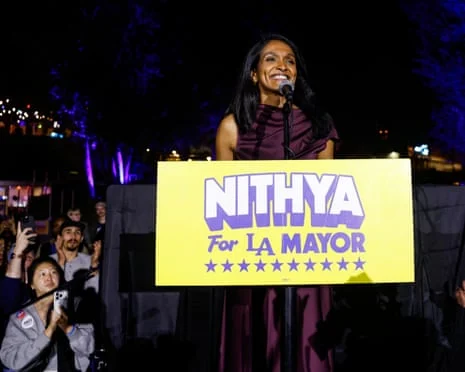
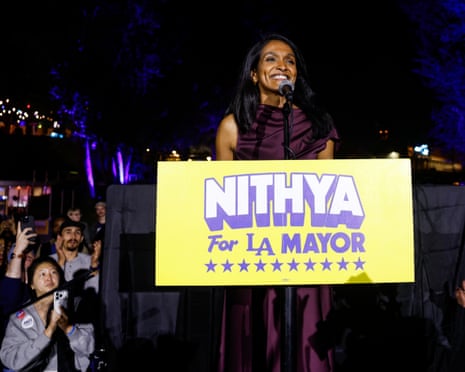
- Thursday, November 5, 2026: Donald Trump signs an executive order designating the newly renovated, gilded Oval Office and Cabinet Room as a "national monument" in an effort to permanently preserve his interior design choices. Concurrently, Nithya Raman declares victory in the Los Angeles mayoral race following Karen Bass’s concession, and tight Senate races—most notably in Mississippi—continue nail-biting vote counts.
Tight Senate Contests and Historic Local Upsets
While the House results have given Democrats a robust advantage, attention has also focused intensely on uncalled Senate races and high-stakes local elections. In Mississippi, the Senate contest between Republican incumbent Cindy Hyde-Smith and Democratic challenger Scott Colom has evolved into one of the most closely watched races of the cycle. With approximately 96% of the vote tallied, Colom maintained a razor-thin lead of roughly 1,700 votes. If confirmed victorious, Colom would achieve a historic milestone in a state that Donald Trump carried by 22 points in the 2024 presidential election, marking the first time a Democrat has won a US Senate seat in Mississippi since 1982, and the first time the state has elected a Black senator since 1875.
Local municipal politics also experienced a seismic shift in California. Nithya Raman, a progressive urban planner and Los Angeles City Council member since 2020, secured a narrow victory in the Los Angeles mayoral race. Raman triumphed over incumbent Mayor Karen Bass, who formally conceded and released a statement reflecting on her tenure. Raman’s victory—achieved with the backing of the local chapter of the Democratic Socialists of America—underscores an increasing appetite for change in municipal governance amidst urban policy challenges.
Economic Pressures and Republican Retrospection
The underlying narrative of the 2026 midterms centers on economic anxiety. Prominent figures within the Republican Party have engaged in a public reckoning over the party’s poor electoral performance. Texas Senator Ted Cruz did not mince words on his podcast, describing the election outcome as a "Watergate-level repudiation" and noting that voters rejected conservative candidates due to persistent economic pressures.
"Food is too high, gas is too high, diesel is too high, insurance is too high, life is too high," Cruz stated, adding that too many politicians failed to comprehend or address these daily realities. Former House Speaker Newt Gingrich echoed these sentiments on social media, characterizing the vote as a "failed performance election" where pocketbook issues entirely overwhelmed ideological messaging.
Exit polls compiled by the Associated Press corroborated these assessments, indicating that the cost of living and government corruption remained the primary concerns for the American electorate. The financial investments made by prominent technology executives, notably Elon Musk’s substantial funding of Republican-aligned political action committees, similarly yielded poor returns as voters gravitated toward Democratic platforms.
Executive Actions and Institutional Resilience
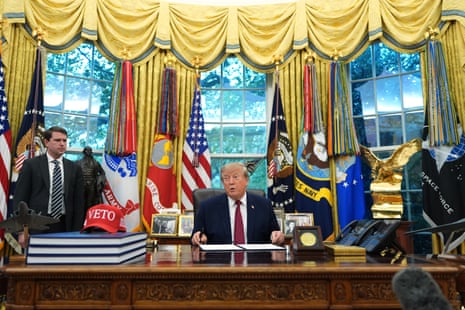
In the wake of the electoral defeat, the administration sought to cement certain legacy projects. President Donald Trump signed an executive order designating the newly redecorated Oval Office and Cabinet Room as a national monument. Administration officials stated the measure was designed to protect the gilded interior design from future alterations, a move that followed sharp public criticism from former President Barack Obama regarding the administration’s focus on aesthetic renovations amid national economic challenges.
Despite pre-election concerns regarding potential administrative interference in the electoral process, institutional checks largely held firm. Reports indicated that plans involving aggressive federal deployment or legal challenges to certification failed to materialize. Trump ultimately stated a willingness to accept the certified outcomes, paving the way for a smooth transition of congressional authority when newly elected lawmakers are sworn in.
Implications for the Balance of Power
The shift in congressional control carries significant implications for domestic governance and foreign policy alike. With Democrats holding a commanding advantage in the House and a strengthened position in the Senate, federal oversight of executive agencies is projected to increase substantially. Investigations into federal departments, including the Department of Justice—following the high-profile resignation of Civil Rights division head Harmeet Dhillon—are anticipated to be a primary focus of the new legislative majority.
Internationally, the results have been received with cautious optimism by traditional allies. Ukrainian President Volodymyr Zelenskyy noted in interviews with European media that a Democratic-led Congress could foster a more stable balance of power and ensure continued bipartisan or majority-backed financial and military assistance for Ukraine in its ongoing conflict.
As the remaining legislative and senatorial races conclude over the coming days, the 2026 midterm results will be studied as a watershed moment in contemporary American politics—one where economic realities decisively reshaped the halls of power in Washington and beyond.