Climate Reserve: A Grassroots Scientific Response to Federal Institutional Contraction

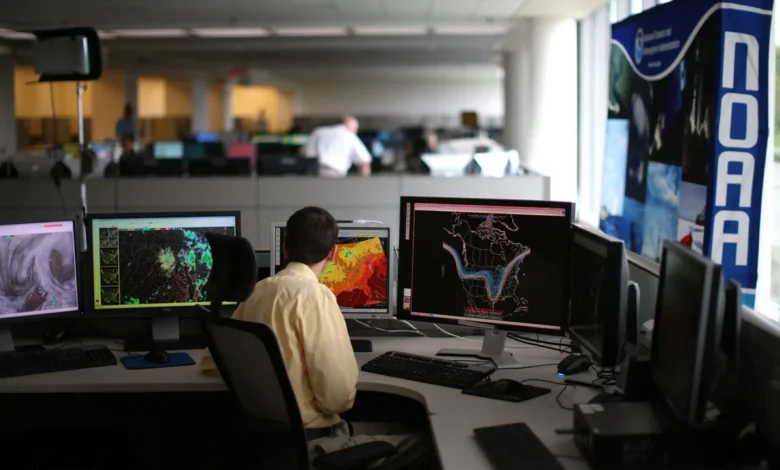
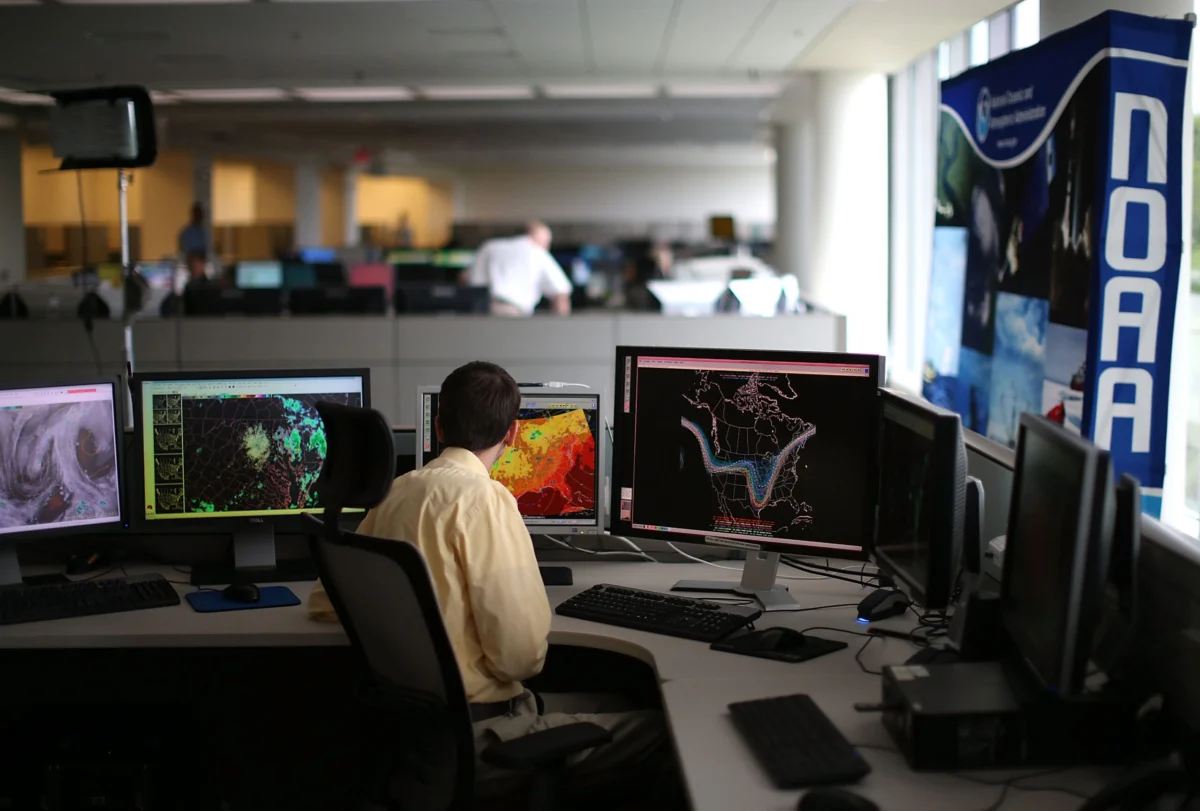
The landscape of American scientific research underwent a seismic shift over the past year as the federal government enacted sweeping budgetary retrenchment, resulting in the termination of thousands of civil servant positions and the cancellation of billions of dollars in critical climate research grants. This pivot, initiated shortly after President Donald Trump commenced his second term, left the scientific community reeling and a vast repository of institutional knowledge suddenly unmoored from the federal agencies that once hosted it, including the Environmental Protection Agency (EPA) and the National Oceanic and Atmospheric Administration (NOAA).
The Genesis of a Scientific Safety Net
The catalyst for what is now known as the Climate Reserve originated in the immediate aftermath of these policy shifts. Former senior climate officials, including Aparna Shrivastava of the Biden administration, observed an alarming trend: a highly specialized workforce, essential to the nation’s understanding of planetary warming, was being systematically dismantled. In private discourse, these experts—many of whom had dedicated decades to public service—expressed a desire to continue their critical work despite the sudden absence of federal infrastructure.
The formalization of the Climate Reserve began in July of last year at an Aspen Global Change Institute workshop in Colorado. More than 30 climate experts convened to discuss the existential threat posed to their field. The consensus was clear: the fragmentation of the scientific community could not be allowed to result in a permanent loss of climate data and expertise. By pooling resources and leveraging non-governmental partnerships, the group sought to create a "parachute" for displaced professionals. Today, this initiative has secured tens of millions of dollars in private and philanthropic funding to sustain these experts in roles outside the federal orbit.
Chronology of Institutional Contraction and Response
The timeline of this transition highlights the rapidity with which federal climate policy can shift.
- Early Last Year: The transition to the second Trump administration brings a swift executive focus on fiscal austerity regarding environmental agencies.
- Mid-Year: Federal budget cuts hit the EPA and NOAA, leading to widespread job losses and the abrupt cessation of long-term monitoring projects.
- July: The Aspen Global Change Institute workshop serves as the founding event for the Climate Reserve, establishing a collaborative framework for displaced scientists.
- Late Year: The pilot phase of the initiative begins, focusing on high-priority data projects and the maintenance of essential mapping tools like EJScreen.
- Current Date: Climate Reserve transitions to a public-facing organization, having secured placements for 50 fellows, with plans to triple its footprint by the end of the next calendar year.
The Mechanics of "Movement Generosity"
A defining characteristic of the Climate Reserve is its departure from the competitive grant-funding models that dominate academia and the private sector. Instead, the organization promotes a philosophy termed "movement generosity." This model prioritizes the cross-pollination of expertise, where a single researcher might split their time between multiple non-profits or academic institutions to eliminate redundancy and maximize the impact of limited resources.
Ben Poulter, who leads emissions-monitoring programs at the climate solutions nonprofit Spark, serves as a prime example of this philosophy in practice. Poulter, a former federal coordinator for greenhouse gas monitoring, is currently overseeing the integration of two Climate Reserve fellows into his organization. Their mandate is to bridge the gap between technical emissions data and actionable policy recommendations, specifically focusing on ecosystems like wetlands—a critical feedback loop in climate modeling that has historically received insufficient federal attention.
Protecting Critical Infrastructure: The Case of EJScreen
Among the most significant achievements of the Climate Reserve is the rescue and maintenance of the EJScreen tool. Previously a federal project, EJScreen provides a granular, map-based interface that identifies American communities most disproportionately affected by industrial pollution. When federal funding evaporated, the tool faced the risk of obsolescence.

Through a partnership between the Climate Reserve and the Open Environmental Data Project, the tool was transitioned into an independent, non-federal status. Brittany Janis, executive director of the Open Environmental Data Project, emphasized that the goal is not merely to keep the lights on, but to ensure that the "institutional knowledge" held by former federal advisors remains accessible to the public and to policymakers. By maintaining this, the group ensures that data-driven environmental justice advocacy can continue regardless of the political priorities of the current administration.
Data Integrity and the "Unsexy" Work of Science
While climate change research often focuses on headline-grabbing discoveries, the Climate Reserve places high value on the rigorous, often invisible labor required to validate scientific findings. Sonia Wang, who leads the Center for Climate and Environmental Data at the Data Foundation, notes that discrepancies in satellite-based methane detection can lead to wildly different policy conclusions if models are not harmonized.
"Sorting out these discrepancies is not the flashiest thing, but when you look under the hood, this is really what’s necessary," Wang stated. By funding experts to standardize wind speed models and calibrate satellite data, the Climate Reserve is essentially acting as a guarantor of scientific trust. This work ensures that when decision-makers look at climate data, they are looking at a unified, defensible baseline, rather than conflicting projections that could be easily dismissed by skeptics.
Implications for the Future of Climate Science
The implications of the Climate Reserve extend beyond the immediate placement of 50 fellows. The existence of such a network signals a permanent shift in how climate science may be conducted in the United States. While the organizers are clear that they are not a replacement for the federal government—which possesses unique resources and regulatory power—they are establishing a model of "resilience" that can survive political volatility.
John Balbus, a fellow who spent 15 years within the federal government, including a senior role at the Department of Health and Human Services, argues that the demand for this work is decoupled from political cycles. As climate-driven events such as extreme heat and wildfire smoke become more prevalent, the public demand for health-related climate forecasts will only intensify. "The need is only going to get stronger every year," Balbus noted, reflecting a sentiment shared by many in the network.
Strategic Secrecy and Political Realities
Despite moving toward a more public-facing model, the Climate Reserve remains acutely aware of the political environment in which it operates. The group has been notably guarded regarding the full scope of its activities, a decision driven by the fear that certain projects could be targeted for further political or financial interference. Because many of these fellows and partner organizations still engage with federal funding in other capacities, the risk of punitive measures from the current administration remains a tangible concern.
This balancing act—being public enough to attract necessary philanthropic funding while remaining discreet enough to protect their fellows—is a hallmark of the current era of climate advocacy. The leadership of the Climate Reserve has determined that the risk of remaining in the shadows is no longer worth the cost, as the urgency of their mission requires a broader coalition of support.
As the organization looks toward the next year, its primary goal is to scale. By tripling its funding and expanding its fellowship program, the Climate Reserve is attempting to build a sustainable, decentralized infrastructure for climate science. Whether this model can serve as a template for other scientific disciplines facing similar pressures remains to be seen, but for now, it stands as a testament to the persistence of a community that has refused to let its expertise vanish in the face of political change.
Related posts: