Brisk Bay Area Temperatures Light Rain Forecast This Weekend
Bay Area Temperatures Dip, Light Rain Expected This Weekend: A Detailed Forecast and Impact Analysis
The San Francisco Bay Area is bracing for a shift in weather this weekend, with forecasters predicting a noticeable dip in temperatures accompanied by a forecast of light rain. This change marks a departure from the recent mild conditions and presents a unique set of considerations for residents and businesses across the region. Understanding the nuances of this weather event, from its precise timing and expected intensity to its potential impacts, is crucial for effective preparation and response. This comprehensive analysis delves into the meteorological drivers behind this forecast, the specific predictions for various Bay Area locales, and the implications for daily life, outdoor activities, and local ecosystems.
Meteorological Drivers of the Weekend Weather Shift
The impending cooler temperatures and precipitation are primarily attributed to the approach of a weak but persistent low-pressure system from the Pacific Ocean. This system is drawing cooler, moister air masses over the West Coast. Unlike the dramatic atmospheric rivers that have previously impacted California, this weather event is characterized by its more subdued nature. However, its proximity and trajectory are sufficient to influence the Bay Area’s atmospheric conditions. Upper-level troughs associated with this low-pressure system are expected to increase atmospheric instability, creating the conditions necessary for cloud formation and the subsequent development of light precipitation.
The prevailing wind patterns will also play a significant role in distributing this cooler air. Northerly and northwesterly winds, common in this region during cooler seasons, are anticipated to shift to a more westerly or southwesterly flow as the low-pressure system moves in. This shift will bring cooler air directly from the Pacific, effectively moderating temperatures that may have seen a slight warming trend earlier in the week. The marine layer, a hallmark of Bay Area coastal weather, is expected to deepen and extend further inland than it has recently, contributing to both the cooler temperatures and the potential for drizzle or light rain, particularly in coastal and western-facing areas.
Temperature Projections Across the Bay Area
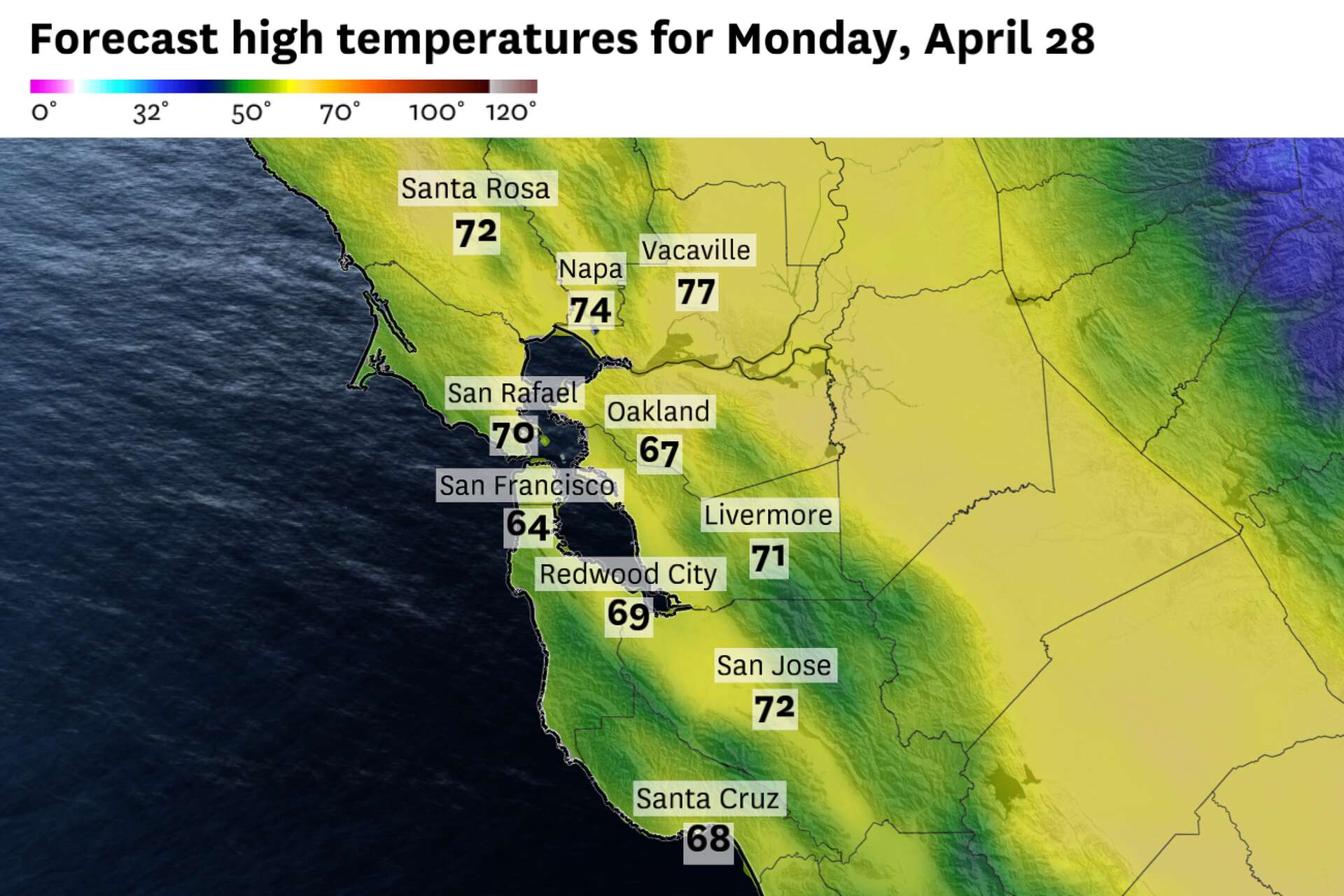
Across the nine-county Bay Area, a consistent cooling trend is expected to begin on Friday, intensifying through Saturday and lingering into Sunday. Average high temperatures, which may have been hovering in the mid-60s to low-70s Fahrenheit in many inland areas earlier in the week, are forecast to drop into the low to mid-60s, and in some instances, the upper 50s Fahrenheit by Saturday. Coastal areas, typically cooler due to marine influence, will likely experience highs in the 50s Fahrenheit, with some exposed coastal communities potentially seeing temperatures dip into the high 40s during overnight hours.
Nighttime and early morning lows will also reflect this cooling. Overnight temperatures are expected to range from the mid-40s to low-50s Fahrenheit across most of the region. Areas further inland, away from the moderating influence of the ocean, could see lows dip into the low 40s Fahrenheit, particularly in valleys and higher elevations. This significant temperature drop, even if seemingly moderate by national standards, represents a tangible shift for Bay Area residents accustomed to milder conditions. The presence of cloud cover throughout much of the weekend will further suppress daytime highs and contribute to the cooler feel, even when precipitation is not actively falling.
Light Rain Forecast: Intensity, Timing, and Spatial Distribution
The precipitation associated with this system is expected to be light and intermittent. Forecasters are not anticipating heavy downpours or prolonged periods of steady rain. Instead, the most likely scenario involves scattered showers, drizzle, and patchy light rain, particularly during Saturday and into Sunday morning. The intensity will generally be low, meaning accumulations will be minimal, likely measured in hundredths or perhaps a tenth of an inch in localized areas.
The timing of the rain is also a key factor. While cloud cover may increase on Friday, the most probable window for light precipitation is from late Friday night through Sunday afternoon. Coastal and western-facing slopes, such as those along the Pacific coast and the Santa Cruz Mountains, are expected to receive the bulk of any measurable moisture. Inland valleys and more easterly portions of the Bay Area may experience less frequent and less intense precipitation, with some areas potentially remaining dry or only seeing isolated sprinkles.
The nature of this light rain can also be misleading. While not heavy, persistent drizzle can still lead to slick surfaces on roads, especially during commute hours or when mixed with existing oil and grime. The elevated humidity levels accompanying the cooler air and cloud cover will also contribute to a damp and cooler feeling, even without direct rainfall.
Impact on Outdoor Activities and Daily Life
The cooler temperatures and light rain will undoubtedly influence weekend plans. For outdoor enthusiasts, this means adjusting expectations. Hiking, cycling, and other recreational activities will require warmer clothing and potentially rain gear. Trails in higher elevations or those exposed to prevailing winds will feel particularly chilly. Organizers of outdoor events, such as farmers’ markets, festivals, or sporting competitions, will need to monitor the forecast closely and have contingency plans in place for potential light showers.
Commuters should be aware of potentially slick road conditions, particularly during early morning and evening travel times. Reduced visibility due to clouds and intermittent light rain can also impact driving. It is advisable to increase following distances, reduce speed, and ensure windshield wipers are functioning effectively. Public transportation usage might see a slight uptick as individuals opt for indoor travel.
For those who have been enjoying warmer weather outdoor dining or social gatherings, the cooler temperatures will necessitate indoor alternatives or the use of heaters and protective coverings if outdoor spaces are utilized. Gardeners might welcome the light rain, as it can provide a gentle watering for plants without the risk of waterlogging, especially for those who have recently planted or are dealing with dry conditions. However, the cooler temperatures themselves might slow down the growth of heat-loving plants.
Implications for Agriculture and Water Resources
While the rain is expected to be light, it will contribute to the region’s overall water reserves, however incrementally. For agricultural areas within the Bay Area, this gentle precipitation can be beneficial, particularly for crops that are sensitive to drought stress. It can help to replenish soil moisture without causing significant erosion or damage. Vineyards, for example, often benefit from consistent, moderate moisture during certain stages of their growth cycle.
The cumulative effect of even light rainfall over time can be significant. While this single event will not dramatically alter drought conditions, it adds to the overall precipitation totals for the season. Water managers will continue to monitor reservoir levels and the effectiveness of any conservation measures implemented earlier in the year. The cooler temperatures can also reduce evapotranspiration rates, meaning less water is lost from the soil and plants to the atmosphere, effectively conserving soil moisture.
Ecological Considerations
The shift to cooler, wetter conditions can also have subtle ecological impacts. For the region’s diverse wildlife, a change in temperature and moisture can influence foraging patterns and activity levels. Amphibians and reptiles, for instance, may become more active during periods of increased humidity and light rain. Bird migration patterns can also be influenced by weather systems.
The marine layer, which is expected to deepen, plays a crucial role in the coastal ecosystems of the Bay Area. It provides a vital source of moisture for specialized plant communities, such as coastal sage scrub and Monterey cypress. The increased humidity and fog associated with this weather pattern can benefit these delicate environments.
Preparing for the Weekend Weather
Effective preparation for this weekend’s weather hinges on being informed and adaptable. Residents should:
- Check the latest forecast: Weather can be dynamic. Regularly consulting reliable weather sources for the most up-to-date predictions is essential.
- Adjust wardrobe: Pack layers and include warmer clothing, including a waterproof or water-resistant jacket.
- Secure outdoor items: While heavy winds are not expected, it’s prudent to secure any lightweight outdoor furniture or decorations that could be displaced by even moderate gusts or unusual atmospheric disturbances.
- Vehicle preparedness: Ensure tires have adequate tread for potentially slick conditions and that windshield wipers are in good working order.
- Re-evaluate outdoor plans: Be prepared to shift indoor activities if weather conditions become less favorable.
- Pet safety: Ensure pets have adequate shelter and are not left outside for extended periods in cooler, damp conditions.
Conclusion
The anticipated temperature drop and light rain forecast for the Bay Area this weekend signal a typical late-season weather pattern for the region. While not a severe weather event, it necessitates a conscious adjustment in daily routines and expectations. Understanding the meteorological underpinnings, the spatial and temporal distribution of the predicted precipitation, and its multifaceted impacts allows for proactive preparation. From ensuring safe commutes and comfortable outdoor experiences to appreciating the subtle ecological benefits, a well-informed approach will enable Bay Area residents to navigate this shift in weather effectively and enjoy the changes it brings to the landscape. The precise nature of the forecast, with its emphasis on light rain and moderate temperature shifts, underscores the importance of localized forecasting and adaptability in a region known for its microclimates and dynamic atmospheric conditions. This weekend serves as a reminder of the ever-present influence of weather on our lives and the importance of staying attuned to its forecasts.