Brightline Seeks Financial Restructuring Amidst High-Speed Rail Ambitions and Heavy Debt Loads

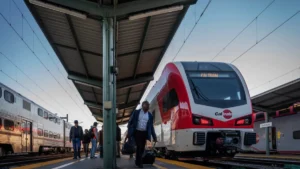
The first thing Brightline wants you to know about its bankruptcy is that the trains will keep running. Despite filing for Chapter 11 bankruptcy protection to address a staggering $4.4 billion debt burden, the company has emphasized that its daily operations, including the popular Miami-to-Orlando corridor, remain unaffected. For passengers, the message is one of continuity: "Business as usual."
This strategic financial maneuver is designed to provide the privately operated rail firm with the breathing room necessary to secure an additional $490 million in funding. By restructuring, Brightline aims to align its debt service requirements with its current ridership levels, ensuring the long-term viability of its infrastructure expansion plans.
A Chronology of Growth and Financial Strain
Brightline’s journey from a conceptual project to a operational transit system has been marked by rapid expansion and immense capital expenditure. The timeline of its development reflects both the promise of private-sector innovation and the inherent volatility of massive infrastructure projects:
- 2018: The company initiates passenger service between Miami and West Palm Beach, marking the first new privately funded intercity passenger rail system in the United States in over a century.
- 2020: Construction and operations are temporarily impacted by the global pandemic, creating early hurdles for revenue projections.
- 2023: Service expands significantly, with the high-speed line finally reaching Orlando, connecting the state’s primary travel hubs.
- 2024: Ridership and revenue figures show consistent growth—up 14% and 17% respectively—yet the company struggles to hit the aggressive revenue targets set during the early stages of development.
- 2025: Facing mounting pressure from bondholders and a debt load that has outpaced income, the company moves to initiate a formal financial restructuring process.
While the Chapter 11 filing covers the holding entity, it explicitly excludes the operating division, Brightline Trains Florida, and the ongoing development project, Brightline West. This legal firewall is essential to maintaining public confidence and preserving the company’s ongoing service contracts.
The Economics of Modern Passenger Rail
Brightline has often been positioned as a litmus test for the viability of private-sector high-speed rail. However, the financial reality remains complex. According to industry analysts, the company currently generates approximately $240 million in annual revenue. While this represents a significant achievement for a young rail line, it remains less than half of the ridership and only one-third of the income initially projected for 2024.
The disconnect between projections and reality highlights the difficulty of predicting demand in a market long dominated by automobile travel. Tim Hynes, head of Global Credit Research at Debtwire, has noted that the reliance on private financing necessitates a level of performance that is exceptionally difficult to achieve in the early years of heavy infrastructure utilization. The $4.4 billion debt was accumulated through the massive capital costs required to build and operate the railroad, costs that far exceed the margins typically associated with public transit.
Despite these figures, demand remains high among specific demographics. Frequent travelers like Ivan Reich, who uses the line for his commute between West Palm Beach and Fort Lauderdale, cite the "luxury experience" and reliability as primary drivers for their loyalty. For business professionals and tourists alike, the service offers a seamless alternative to the congestion of Florida’s highways. However, the price point—often exceeding $100 for a round-trip ticket between major hubs—places the service firmly in the premium category, potentially limiting its reach as a primary commuter solution for the average worker.
Official Responses and Internal Outlook
The corporate response to the filing has been focused on stability and future scalability. Patrick Goddard, CEO of Brightline Florida, stated that the transaction serves as a catalyst for further growth. "Brightline is a critical part of Florida’s transportation network that has changed the way people move around the state," Goddard noted. The company intends to leverage this restructuring to finalize expansion efforts, including a planned station in Cocoa and future service routes to Tampa.
Industry experts offer a more nuanced perspective on the necessity of this move. Jim Mathews, president of the Rail Passengers Association, described the restructuring as a "beneficial move" that provides the company with the liquidity to move beyond a "crushing" debt cycle. From his perspective, the survival of Brightline is essential for the broader goal of modernizing American rail travel.

Safety and Public Perception
While the financial news dominates current headlines, Brightline has long navigated challenges regarding its safety record. Since 2018, the rail line has been associated with 182 fatalities, a statistic that has drawn consistent scrutiny from local municipalities and the media. Most of these incidents occurred at grade crossings or involved individuals trespassing on the tracks.
Brightline has consistently maintained that none of these incidents were the result of operational failures. In response to public concern, the company has invested hundreds of millions of dollars in safety infrastructure, including improved crossing gates, fencing, and public awareness campaigns. Critics, however, argue that the nature of high-speed rail operating through densely populated urban corridors inherently complicates safety, necessitating even greater investment and perhaps more rigorous separation of tracks from pedestrian areas.
The Broader Implications for U.S. Infrastructure
The case of Brightline raises a fundamental question for American transportation policy: Can private capital alone sustain the infrastructure required to shift national travel habits toward rail?
The contrast between Brightline’s private-equity model and the public-funding model used in California’s high-speed rail project illustrates a significant divide. California has spent nearly two decades and billions of taxpayer dollars, yet is only now looking to private investors to complete its vision. Conversely, Brightline has built a functioning, efficient, and popular system, but is now forced to restructure due to the sheer cost of its own success.
Experts argue that this dichotomy suggests a failure in the current public-private partnership framework. Alon Levy, a research scholar at the NYU Marron Institute, points to the integration challenges that private operators face. When a private line, such as Brightline West, attempts to connect to existing public transit hubs like those in the Los Angeles metro area, it encounters a labyrinth of bureaucratic and logistical obstacles. According to Levy, "top-down federal action" is the only way to reconcile these fragmented systems.
Rick Harnish, executive director of the High-Speed Rail Alliance, offers a more direct critique. He draws a comparison to the aviation and trucking industries, noting that private companies do not build airports or interstate highways—the government does. "Private capital will not invest in the kind of infrastructure you need to fund public transit," Harnish stated. His argument is that rail should be treated as a public good, with the government providing the foundational infrastructure—the tracks and the right-of-way—while private companies manage the service and customer experience.
Conclusion: The Road Ahead
As Amtrak reports record-breaking ridership and Brightline continues to see double-digit growth in its passenger numbers, the data suggests that the American appetite for rail travel is higher than it has been in generations. The challenge is no longer about demand, but about financing.
The bankruptcy filing by Brightline is a signal that the current financial architecture for high-speed rail in the United States may be insufficient. While the company will likely emerge from its restructuring process leaner and more sustainable, the broader question remains: will the federal government step in to provide the capital investment required to build the high-quality, high-speed rail tracks that the nation increasingly demands?
For now, the trains continue to run, the passengers continue to board, and the company continues to navigate the complex intersection of finance and infrastructure. Whether Brightline becomes a model for future success or a cautionary tale about the limits of private-sector rail will depend on its ability to navigate its current debt, maintain its safety commitments, and advocate for the systemic changes necessary to ensure rail remains a viable, long-term cornerstone of American transportation.