Alphabet, the parent company of Google, has successfully assuaged widespread investor apprehension regarding its monumental investments in artificial intelligence (AI), as evidenced by its latest stellar earnings report. For months, market watchers and shareholders alike have voiced concerns, publicly questioning the efficacy and eventual return on investment (ROI) of the tech giant’s multi-billion-dollar commitment to AI infrastructure and research. However, the reported financial figures, particularly the explosive growth within its Google Cloud division, suggest that these ambitious AI strategies are beginning to translate into tangible, robust profitability. The report provides a compelling narrative of strategic foresight meeting market demand, offering a reassuring outlook for the company’s direction.
Unpacking the Earnings Triumph: Google Cloud Leads the Charge
The standout performance in Alphabet’s latest financial disclosure is undeniably Google Cloud. The division, which provides on-demand computing services including servers, storage, databases, networking, software, analytics, and intelligence over the internet, witnessed an extraordinary surge in revenue. The company reported a staggering 82% year-over-year increase in Google Cloud revenue, reaching an impressive $24.8 billion. This figure not only represents a significant acceleration from the previous quarter’s already robust 63% year-over-year growth to $20 billion but also comfortably surpassed Wall Street analysts’ consensus expectation of $22.46 billion. This overperformance underscores a powerful market shift towards cloud-based solutions, particularly those integrated with advanced AI capabilities.
The primary catalyst for this exceptional growth, as confirmed by Alphabet, is the escalating enterprise adoption of AI solutions and the underlying AI infrastructure provided by Google Cloud. Businesses across various sectors are increasingly leveraging artificial intelligence to streamline operations, enhance decision-making, and innovate their product offerings. Google Cloud’s comprehensive suite of AI services, ranging from machine learning platforms to advanced analytics tools, has positioned it as a preferred partner for companies navigating this digital transformation. The company further highlighted its burgeoning pipeline, reporting that its backlog of cloud contracting work – representing future revenue not yet recognized – has surged to an unprecedented $514 billion. This substantial backlog offers a clear indicator of sustained demand and future revenue streams, painting a picture of enduring growth for the cloud segment.
Beyond cloud services, Alphabet demonstrated overall financial strength. The company’s consolidated profit soared to $112.1 billion, a remarkable leap from the $28.1 billion reported in the same period last year. This quadruple increase in profitability within a single year speaks volumes about the company’s operational efficiency and the successful monetization of its diverse business segments. Alphabet’s total revenue for the quarter climbed 24% year-over-year, reaching $119.8 billion. Concurrently, Google Services revenue, which encompasses search, ads, YouTube, and Android, also experienced a healthy 15% jump to $94.5 billion. These figures collectively paint a picture of a company firing on all cylinders, with growth distributed across its core offerings.
The Strategic Imperative: AI at the Core of Google’s Vision
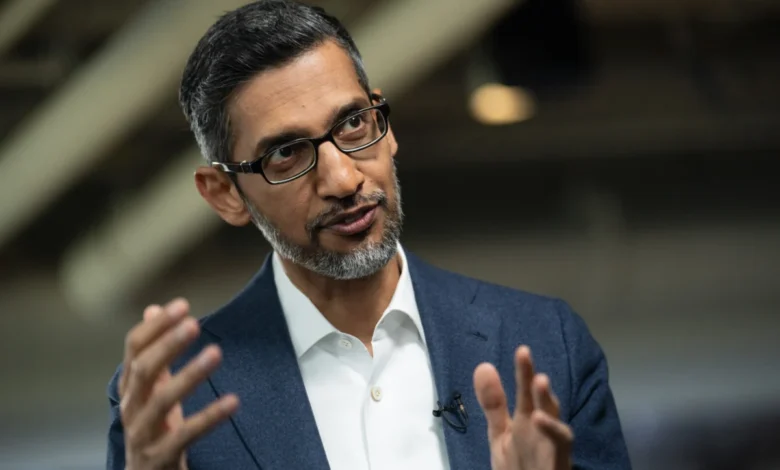
Google CEO Sundar Pichai articulated the company’s strategic vision during the earnings call, stating, "Our AI investments are redefining what’s possible across every part of our business. We have exciting momentum across the board." This statement reinforces the long-held belief within Google that AI is not merely a product feature but a foundational technology underpinning its entire ecosystem. The company’s relentless pursuit of AI advancements, often met with skepticism due to the enormous capital outlays required, is now evidently bearing fruit.
The journey to this point has been characterized by significant strategic shifts and substantial financial commitments. Following the widespread public attention generated by OpenAI’s ChatGPT in late 2022, Google intensified its focus on generative AI, initiating a comprehensive overhaul of its AI strategy. This period saw increased research and development expenditures, aggressive talent acquisition in the AI domain, and a rapid acceleration in the development of its proprietary AI models and platforms. The initial market reaction was mixed; while some lauded Google’s commitment, others questioned its ability to compete effectively in a rapidly evolving landscape, especially given its historical reliance on search advertising as its primary revenue driver. Investor concerns often revolved around the potential for these massive investments to dilute short-term profitability without guaranteed long-term returns, particularly if the "AI bubble" were to burst.
However, Google’s deep-rooted expertise in AI, cultivated over decades through projects like AlphaGo, TensorFlow, and its search algorithms, provided a strong foundation. The company’s ability to integrate AI seamlessly into its existing product lines, from search to cloud services and consumer applications, has been a critical differentiator. The current earnings report suggests that this long-term vision, coupled with decisive execution, is now paying dividends, validating Pichai’s strategic direction.
The Rise of Gemini: Consumer AI Adoption Accelerates
Beyond enterprise solutions, Google’s efforts in consumer-facing AI are also gaining significant traction. Gemini, Google’s advanced AI chatbot, is rapidly expanding its user base. The company reported that Gemini now boasts 950 million monthly active users, a substantial increase from the 750 million users reported in Q4 of 2025. This 26.7% growth in just two quarters highlights the accelerating adoption of conversational AI among general consumers.
The success of Gemini is crucial for Google’s broader AI strategy. It demonstrates the company’s capability to deliver intuitive and powerful AI experiences directly to users, potentially opening new avenues for engagement and monetization in the future. As AI becomes more embedded in daily life, a strong presence in the consumer AI space is vital for maintaining Google’s competitive edge and relevance. The continuous enhancement of Gemini’s capabilities, from complex reasoning to multimodal understanding, is designed to keep it at the forefront of the AI chatbot race, fostering user loyalty and expanding its utility across Google’s vast ecosystem of devices and services.
A History of Growth: Sustained Performance Amidst Innovation
While the current quarter’s performance is particularly impressive, it is important to contextualize it within Google’s long-standing trajectory of growth. The company has now achieved its 12th consecutive quarter of double-digit revenue growth, a testament to its consistent ability to innovate and expand its market presence. This sustained performance underscores the resilience of Google’s business model and its capacity to adapt to evolving technological landscapes. Even by its own high standards, this period represents a particularly robust phase of expansion, driven by the strategic pivot towards AI. The combination of consistent underlying growth and the acceleration brought about by AI investments creates a powerful narrative of a company firmly in control of its destiny.
Navigating the Future: Capital Expenditures and Long-Term Vision
Despite the celebratory earnings report, Alphabet’s capital expenditures (CapEx) remain substantial, reflecting its ongoing commitment to building out its global AI infrastructure. The company’s estimated CapEx for the year is projected to fall between $180 billion and $190 billion. These investments primarily fund the construction of new data centers, the procurement of advanced AI chips (including both third-party GPUs and Google’s custom-designed Tensor Processing Units, or TPUs), and the expansion of its global network infrastructure – all critical components for powering sophisticated AI models and services.
During the earnings call, analysts pressed CEO Sundar Pichai on the timeline and magnitude of returns from these massive investments. Pichai’s response offered a glimpse into the company’s long-term strategic planning. He indicated that significant returns from these compute capacity investments are anticipated around "’27," signaling a two-to-three-year horizon for these capital-intensive projects to fully mature and generate substantial revenue. He expressed confidence in this outlook, stating, "We are seeing strong demand indicators, including long-term deals. I think, if anything, the dynamics look healthier than where we were about a year ago, so that’s what gives us the confidence to undertake those investments." This statement suggests that the demand for AI-driven cloud services and infrastructure is not only robust but also exhibiting signs of accelerating, providing a strong rationale for the continued heavy investment. The increasing number of long-term contracts further de-risks these investments, ensuring a stable revenue pipeline for the years to come.
Broader Market Implications and Competitive Landscape
Alphabet’s strong performance, particularly in AI-driven cloud services, has significant implications for the broader technology industry. It signals a clear validation of substantial AI investments, potentially encouraging other tech giants and smaller players to double down on their own AI strategies. In the highly competitive cloud market, Google Cloud’s accelerated growth positions it more strongly against dominant players like Amazon Web Services (AWS) and Microsoft Azure. While still trailing in overall market share, its rapid expansion driven by AI adoption demonstrates its capability to capture significant segments of the growing enterprise AI market.
The success also underscores the intensifying "AI arms race" among tech behemoths. Companies are not only competing on the sophistication of their AI models but also on the underlying infrastructure to support them. Google’s commitment to custom hardware (TPUs) provides it with a unique advantage in optimizing performance and cost for its specific AI workloads, differentiating it from competitors largely reliant on off-the-shelf GPU solutions.
Furthermore, the rapid consumer adoption of Gemini reflects a broader societal trend towards integrating AI into daily digital interactions. This trend will likely spur innovation across various sectors, from personalized education to healthcare and entertainment, as companies seek to leverage AI to create more intuitive and efficient user experiences.
Conclusion: A New Chapter of Growth Driven by AI
Alphabet’s latest earnings report marks a pivotal moment, transforming investor skepticism into renewed confidence. The exceptional growth of Google Cloud, fueled by enterprise AI adoption, coupled with the expanding user base of Gemini and robust overall financial performance, paints a picture of a company successfully navigating a transformative technological era. While significant capital expenditures will continue to be a feature of its growth strategy, the strong demand indicators and long-term contracts provide a compelling justification for these investments. Alphabet is not merely participating in the AI revolution; it is actively shaping it, demonstrating that its strategic bets on artificial intelligence are not just visionary but also increasingly profitable. The future trajectory for Alphabet appears firmly linked to its ability to continue innovating and delivering market-leading AI solutions across both enterprise and consumer segments, cementing its position at the forefront of the global tech landscape.