Indigenous Governance and Land Stewardship Are the Global Frontline for Climate Resilience



From the high-altitude peaks of the Himalayas to the dense rainforests of the Amazon and the sweeping grasslands of East Africa, Indigenous communities are disproportionately bearing the brunt of a rapidly warming planet. Catastrophic weather events—once considered rare, generational anomalies—are now striking these regions with relentless frequency. Even more alarming is the emergence of "compounded crises," where floods, wildfires, and droughts occur in rapid succession, leaving ecosystems and human settlements no time to recover between shocks. A new, comprehensive report from the global organization Land Is Life highlights a critical disconnect in current climate policy: while the scientific community increasingly acknowledges the effectiveness of Indigenous ecological knowledge, the vital role of Indigenous governance systems remains ignored, underfunded, and sidelined by global powers.
The report, released during New York Climate Week, synthesizes data from 46 countries and over 200 case studies across six distinct biomes. It argues that the key to global climate adaptation is not the invention of new, top-down bureaucratic structures, but the empowerment of existing, time-tested Indigenous governance frameworks.
The Anatomy of Compounded Crises
The contemporary climate crisis is characterized by its volatility and the layering of disasters. Over 80 percent of survey respondents in the Land Is Life study reported experiencing two or more climate-related disasters simultaneously. For these communities, the traditional model of "emergency response"—which assumes a linear path from disaster to recovery—is no longer applicable.
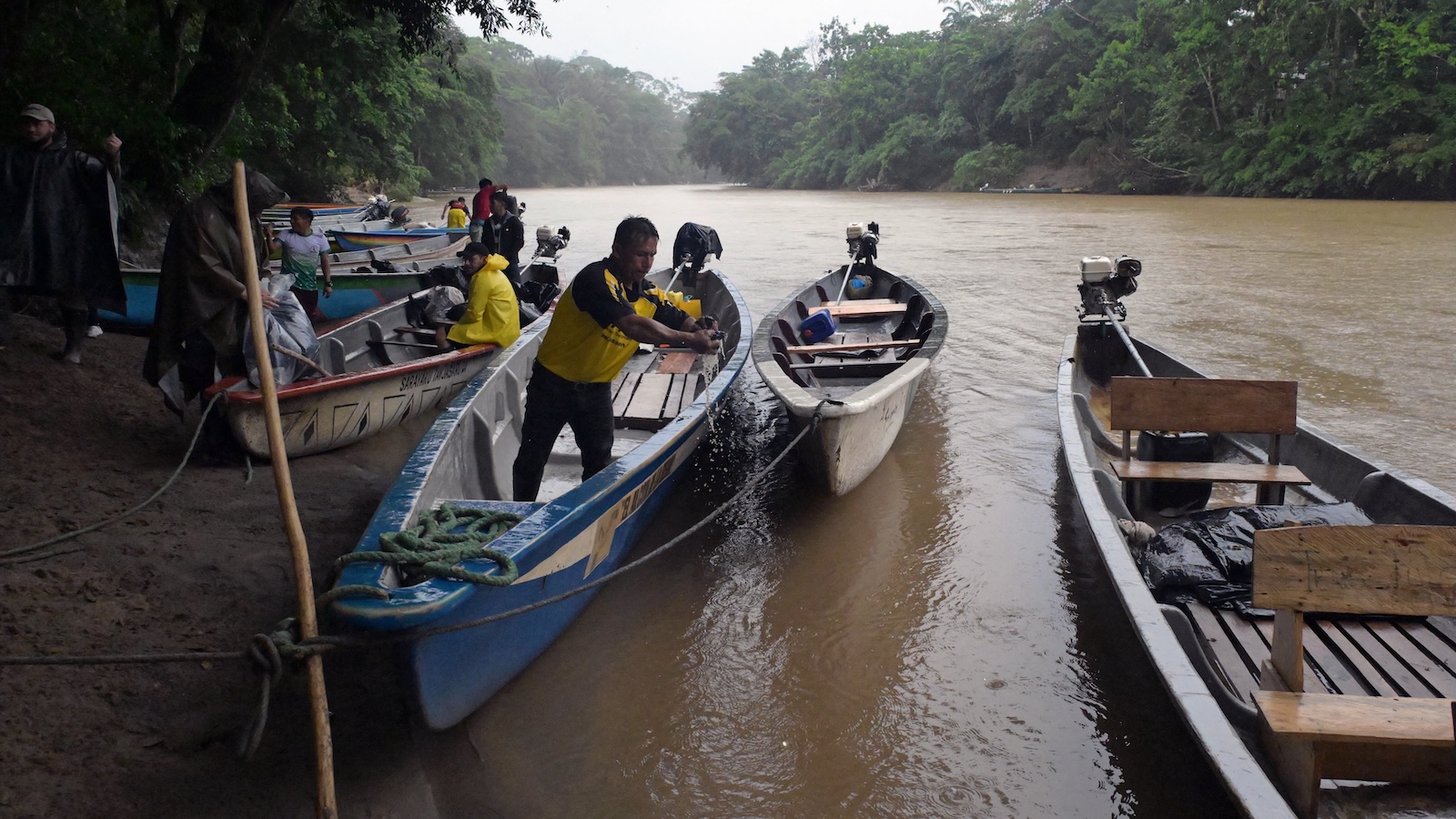
The chronology of these events often follows a pattern of environmental degradation that triggers cascading failures. For instance, in 2019, the Kichwa People of Sarayaku in the Ecuadorian Amazon faced unprecedented flooding along the Bobonaza River. The surge did not merely destroy crops; it threatened the structural integrity of the entire community, which spans over 500 square miles. The resilience of the Sarayaku was not a result of external intervention, but of internal cohesion. By leveraging traditional governance, the community had already established early-warning systems based on the observation of rain and lightning patterns at the river’s headwaters. These observations, shared through a chain of command rooted in the concept of minga—a Kichwa term for collective responsibility—allowed for the evacuation of families and the protection of essential resources before the water reached critical levels.
Indigenous Governance as a Proven Climate Solution
The scientific consensus on the efficacy of Indigenous land management is robust. Research has repeatedly shown that lands managed by Indigenous peoples harbor 80 percent of the world’s remaining biodiversity. However, the Land Is Life report shifts the focus from "knowledge" to "governance," arguing that knowledge alone is insufficient without the legal and political authority to apply it.
In Kenya, the Endorois and Tugen women have demonstrated that local adaptation is the most effective defense against aridification. By cultivating drought-resistant varieties of sorghum and millet, these communities maintained food security during years where industrial agricultural models failed entirely. Similarly, in Brazil, the Coordination of Indigenous Organizations of the Brazilian Amazon (COIAB) has transformed fire management from a reactive act into a proactive, organized response. By mobilizing trained fire-fighting teams and establishing localized monitoring networks, COIAB has demonstrated that regional Indigenous networks can act as more effective first responders than state-led agencies, which often lack the granular knowledge of the terrain.
The Funding Gap and the Paradox of External Aid
Despite the clear evidence that Indigenous stewardship is the most cost-effective form of climate mitigation, the financial infrastructure to support it is essentially non-existent. Recent global climate summits have seen billions of dollars in pledges, yet only a negligible fraction reaches Indigenous communities directly.
The funding landscape is marred by a systemic preference for large, non-Indigenous NGOs and international agencies. Anisha Buda, a program officer at the National Indigenous Women Forum in Nepal, notes that while projects are often branded as "Indigenous-led," the actual implementation is frequently outsourced to external organizations. This creates a "consultation trap" where Indigenous people provide the knowledge, but have no control over the financial resources or the project’s long-term objectives.
This financial exclusion is exacerbated by the broader geopolitical climate. With major donor nations in the U.S. and Europe recalibrating their budgets toward defense and internal economic stabilization, funding for international climate adaptation is shrinking. For communities like the Kaike Magar in Nepal, this creates a precarious reality: they are on the front lines of a crisis they did not cause, yet they are systematically denied the resources required to protect their land and their people.
Legal Recognition and the Path Forward
The report identifies three fundamental barriers to effective climate resilience: the lack of legal recognition for Indigenous land rights, the refusal of states to integrate Indigenous languages into emergency alert systems, and the ongoing criminalization of traditional cultural practices.
In Peru, the Ausangate Regional Conservation Area offers a blueprint for how to bridge these gaps. By creating a formal partnership between Quechua communities and conservationists, the project successfully blended Indigenous environmental indicators with Western research metrics. This integration resulted in a more robust monitoring system that proved more accurate than either approach used in isolation.
However, such partnerships are the exception, not the rule. Many national governments continue to view Indigenous governance as a challenge to state sovereignty rather than an asset to national security. The report warns that climate initiatives focusing on short-term, superficial benefits—while ignoring the need for permanent legal and land tenure—are fundamentally unsustainable.
Analysis: Implications for Global Climate Strategy
The data presented by Land Is Life serves as a sobering critique of the current international climate regime. The prevailing assumption that "global solutions" require "global institutions" has led to a centralization of power that is ill-equipped to handle the hyper-local realities of a changing climate.
The implications are twofold:
- Efficiency of Resource Allocation: In a world of scarce financial resources, investment must shift toward high-yield, low-overhead structures. Supporting Indigenous governance, which is already in place and culturally embedded, provides a significantly higher return on investment than attempting to build new, top-down infrastructures in vulnerable regions.
- The Security Mandate: As climate-induced migration and resource scarcity escalate, the breakdown of local governance is a significant driver of regional instability. Strengthening Indigenous self-determination is, therefore, not just an environmental imperative but a crucial component of global security.
Gisela Hurtado, the author of the report, argues that the world must stop viewing Indigenous peoples as "beneficiaries" of climate aid and start viewing them as the primary strategists of climate adaptation. "What they are seeing in the territories, we are going to see it also in the future," Hurtado stated. "They are the ones that are much more connected with the Earth to know what is going to happen in the future."
A Call for Structural Reform
The path toward a more resilient future requires a fundamental shift in how international bodies and donor nations interact with Indigenous governments. The recommendations from the report are clear:
- Direct Financing: Removing the intermediary layers of non-Indigenous NGOs to ensure funds reach the local level directly.
- Legal Empowerment: Prioritizing the legal recognition of land titles, which provides the security necessary for long-term ecological planning.
- Language and Communication: Incorporating Indigenous languages and traditional knowledge systems into official national disaster response protocols.
As the global community prepares for future climate negotiations, the evidence suggests that the most sophisticated technology in the fight against climate change is not a new carbon-capture machine or a renewable energy grid, but the traditional, decentralized, and community-led governance systems that have sustained Indigenous peoples for millennia. If global powers continue to ignore these systems, they risk wasting precious time and resources on solutions that are destined to fail, while the frontline communities—the best equipped to lead—are left to navigate the crisis alone. The time to transition from "consultation" to "partnership" is not a goal for the next decade; it is a necessity for the present moment.