Georgia Pivot: How the State’s Manufacturing Boom is Navigating a New Federal Policy Landscape


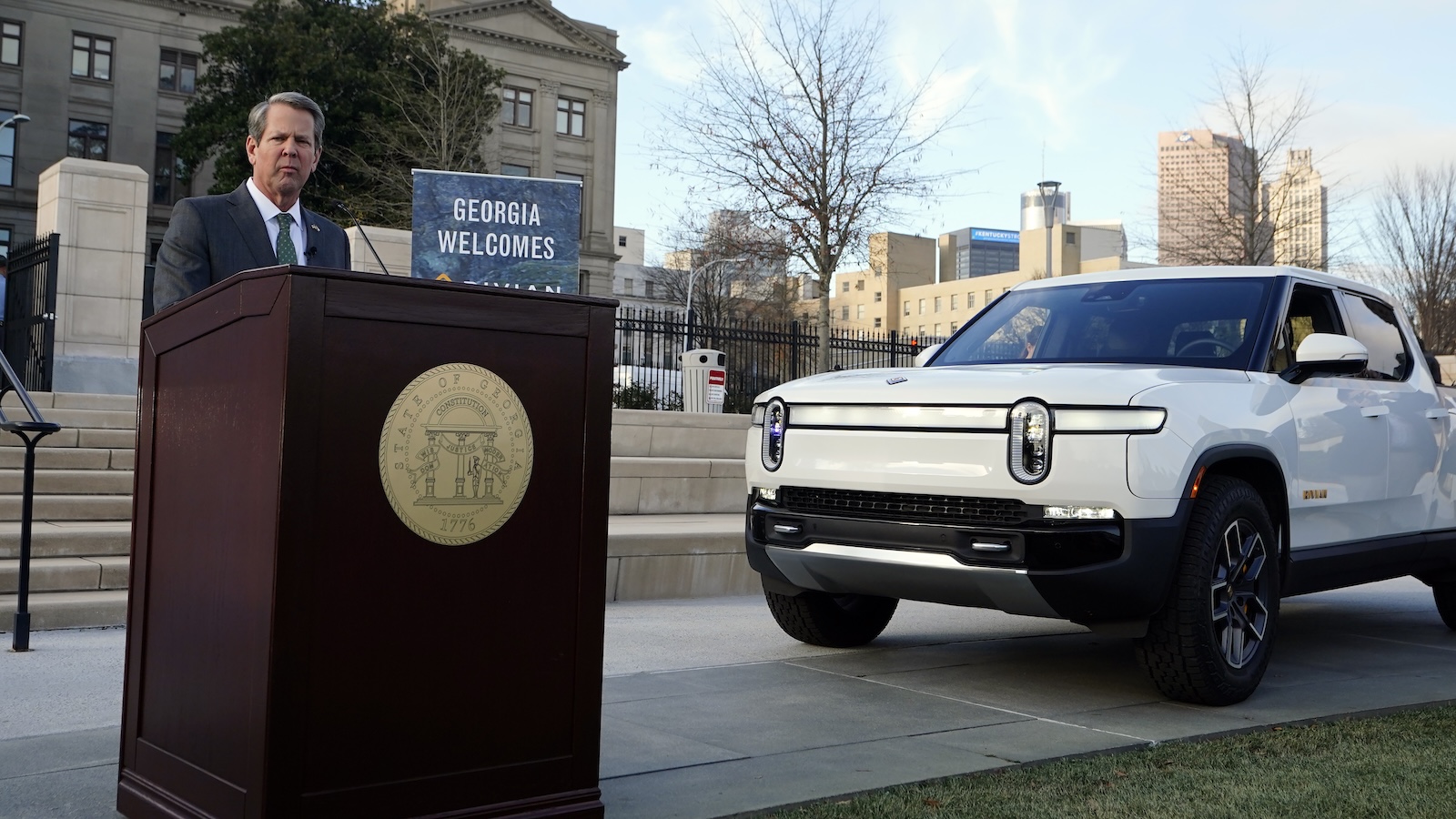
For years, Georgia Governor Brian Kemp aggressively positioned the state as the premier destination for the clean energy revolution. By deploying a sophisticated suite of tax incentives, land grants, and specialized workforce training programs, the administration successfully courted a wave of electric vehicle (EV) and battery manufacturing giants. This strategy transformed the state’s industrial identity, turning rural corridors and suburban outskirts into hubs for 21st-century mobility. However, the optimism that defined the early 2020s has given way to a period of strategic recalibration as shifting federal policies and market realities force manufacturers to rethink their trajectories.
The transition from a high-growth, federally subsidized environment to a more restrictive regulatory landscape has left industry leaders, policymakers, and labor forces searching for a new equilibrium. As the automotive sector adjusts to the withdrawal of federal tax credits and new trade barriers, Georgia stands at the center of a national experiment: can a state built on the promise of an electric future survive when the national policy tide turns?
A Chronology of Industrial Ambition
The rapid rise of Georgia’s EV sector was not accidental; it was the result of a deliberate, multi-year economic development strategy. The timeline of this industrial pivot reflects a period of aggressive expansion:
- 2018: Blue Bird, a Georgia-based manufacturer, signaled the shift by commercially launching its electric bus line, setting the stage for domestic electrification.
- 2022: Hyundai Motor Group announced a massive $7.5 billion investment near Savannah, a project hailed as one of the largest economic development initiatives in state history, specifically designed to anchor the state’s EV supply chain.
- 2023: Blue Bird expanded its factory capacity to meet growing demand for electric school buses.
- 2024: Kia officially commenced production of electric vehicles at its facility in West Point, Georgia, integrating EV manufacturing into its existing footprint.
- 2025: Rivian, the high-profile electric truck manufacturer, broke ground on its long-awaited manufacturing plant near Atlanta, marking a significant milestone in the state’s industrial portfolio.
This period of growth was supported by a bipartisan consensus—at least at the state level—that attracting these firms would insulate Georgia from future automotive volatility. Yet, the past 18 months have introduced significant friction into this once-smooth narrative.
The Impact of Federal Policy Whiplash
The transition to a new federal administration has introduced substantial headwinds. The removal of federal EV consumer tax credits has fundamentally altered the price-to-value proposition for prospective buyers, directly impacting sales velocity. Beyond consumer incentives, the current administration has implemented a series of protective tariffs on battery packs, charging infrastructure components, and raw materials. These trade barriers have increased the cost of goods sold, forcing manufacturers to rethink their procurement and supply chain strategies.
Further complicating the environment is the broader rollback of emission standards for internal combustion engines and the suspension of the previous administration’s mandate to transition federal vehicle fleets to electric. These policy shifts have created a "wait-and-see" approach among major OEMs. Perhaps most notably, the industrial climate was chilled by federal immigration enforcement actions last year, which saw over 400 individuals—many of whom were South Korean specialists critical to the ramp-up of new battery facilities—detained or deported, causing significant operational delays.
Adapting to the "Middle-of-the-Road" Market
In response to the cooling demand for pure EVs and the loss of federal subsidies, manufacturers are moving toward a flexible production model. At Kia’s West Point plant, the assembly line has been reconfigured to act as a "short-order kitchen." Rather than focusing on high-volume, uniform production runs, the factory now utilizes modular assembly technology that allows for the rapid switching between gas-powered, hybrid, and battery-electric drivetrains.
Stuart Countess, CEO of the West Point facility, notes that the strategy is no longer about forcing an electric-only transition, but rather meeting immediate consumer demand. "What we’ve seen is a transition back away from maybe full EV vehicle building to this kind of a middle-of-the-road opportunity," Countess explained. Hybrids, which provide a bridge between traditional fuel economy and electric efficiency, have become the primary focus for both Kia and its sister company, Hyundai.
This strategy is not unique to the Georgia facilities; it reflects a broader industry trend where automakers are betting that while the long-term future remains electric, the medium-term market belongs to the hybrid. Stephanie Valdez-Streaty, director of industry insights at Cox Automotive, describes this as a necessary, albeit "messy," evolution. Manufacturers are effectively hedging their bets to maintain factory utilization rates while waiting for consumer charging infrastructure and price points to align more favorably.
Economic Data and Market Realities
While the headlines have focused on the challenges, the underlying economic data presents a nuanced picture. According to the Southern Alliance for Clean Energy (SACE), while approximately $4 billion in planned investment across the Southeast has been canceled or scaled back in the last year, this figure is eclipsed by more than $74 billion in active manufacturing investment that continues to move forward.
The challenge, however, remains local adoption. Despite Georgia being a leading manufacturer of clean energy technology, it ranks relatively low in terms of consumer adoption. The state provides no direct purchase incentives for residents; conversely, it imposes an additional registration fee on electric vehicles to offset the loss of fuel tax revenue. Critics argue that this creates a "confused" political environment where the state creates world-class manufacturing jobs while simultaneously disincentivizing the products those jobs produce.
The Role of Infrastructure and Utilities
As legislative support fluctuates, the burden of momentum has increasingly shifted toward private-sector investment and utility-led infrastructure. The IONNA charging consortium—a joint venture between major automakers, including Hyundai and Kia—is currently building out a high-speed charging network across the state to address "range anxiety."
Simultaneously, electric utilities are stepping into the void. Data from SACE indicates a 14 percent increase in utility-led investment in EV charging infrastructure over the last year. Stan Cross, a senior policy analyst at SACE, suggests that regulatory bodies could play a pivotal role in maintaining the state’s competitive edge. "Though we’re not seeing a lot of activity on the legislative side, we do see potential on the regulatory side and are encouraging Georgia Power to step up and help fill the void that policymakers in the state are creating," Cross said.
Future Outlook and Implications
The long-term viability of Georgia’s clean energy sector remains a subject of intense analysis. While the last 18 months have been marked by layoffs at major facilities like SK Battery and a general slowing of the sector’s growth, experts remain cautiously optimistic. The transition to electric mobility is widely viewed as inevitable by the global automotive industry; the current period is being categorized as a market correction rather than a permanent exit.
The "familiarity factor" identified by industry analysts like Valdez-Streaty suggests that as more Georgians gain employment in these factories, the cultural resistance to EV technology may diminish. Employment, after all, is a powerful driver of local market acceptance. For now, the state’s industrial strategy is one of endurance. By diversifying production lines and focusing on the broader storage battery market—beyond just automotive applications—Georgia manufacturers are building the flexibility needed to weather a volatile policy cycle. The state’s success will ultimately depend on whether the global transition to electrification regains its momentum before the current cycle of investment burns out.