OpenAI Ventures into Physical Hardware with "Micro" Keypad Amidst Legal Challenges and Broader Ecosystem Ambitions.

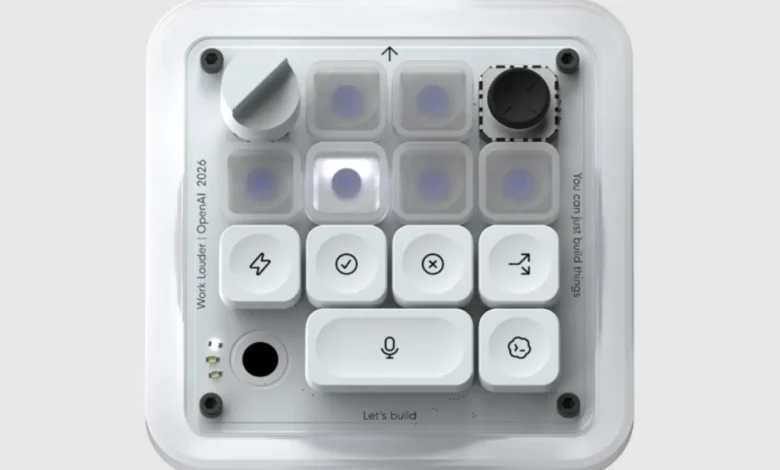
OpenAI, the preeminent artificial intelligence research and deployment company, recently signaled a significant strategic expansion by launching its inaugural piece of physical hardware: "Micro," a specialized keypad designed to augment interaction with its flagship generative AI model, ChatGPT, and its agentic coding tool, Codex. This move represents a tangible step for the software-centric firm into the burgeoning AI hardware market, a venture undertaken in collaboration with specialty keyboard designer Work Louder. Described by some as an "artisanal workplace novelty," Micro aims to captivate a niche audience of tech enthusiasts and power users while potentially leaving others pondering its necessity in an already saturated digital landscape.
The introduction of Micro, however, arrives at a tumultuous period for OpenAI, as the company simultaneously grapples with high-profile legal battles and an evolving competitive landscape. Just weeks prior to the keypad’s unveiling, technology titan Apple initiated a lawsuit against the AI lab, alleging significant trade secret theft. This legal skirmish has cast a shadow over OpenAI’s diversification efforts, hinting at a protracted and complex legal contest that could have far-reaching implications for both entities. Concurrently, reports have surfaced regarding another hardware product in development at OpenAI—a screenless smart home speaker—reportedly engineered by former Apple employees, further fueling speculation about OpenAI’s ambitions to construct a comprehensive AI-powered ecosystem that extends beyond its core software offerings.
The Micro Keypad: Design, Functionality, and Collaboration
The Micro keypad, the initial tangible manifestation of OpenAI’s hardware aspirations, is a compact device engineered for specific interaction with AI models. Developed alongside Work Louder, a company renowned for its bespoke keyboard designs, Micro reflects a blend of functional utility and aesthetic appeal. Upon initial inspection, the device conveys a sense of robustness and quality; its sturdy construction suggests durability, prompting observations that it could easily serve as a high-end paperweight should its primary AI accessory function not resonate with users. This tactile impression is complemented by its packaging—an impeccably white box boasting a sleek, minimalist aesthetic—which reviewers have widely noted bears a striking resemblance to Apple’s distinctive product presentation. This "Apple-coded" design choice is particularly noteworthy given the ongoing legal disputes between the two companies and the reported involvement of ex-Apple engineers in OpenAI’s other hardware projects.
Functionally, Micro is structured around a twelve-key layout. The upper section features six "agent" keys, characterized by a frosted finish, which are fully customizable. These keys can be programmed to execute specific, predefined tasks or trigger particular conversational threads within ChatGPT or the more specialized Codex environment. Below these agent keys are an additional six command keys, designed to provide control over the activated AI programs. Connectivity options for the Micro keypad are versatile, allowing users to pair the device with their computer either wirelessly via Bluetooth or through a more traditional USB cable connection, offering flexibility based on user preference and setup.
One of Micro’s standout features, and perhaps its most intuitive, is the integrated voice dictation button. This functionality allows users to bypass traditional typing, enabling them to simply articulate their requests or commands directly to the AI. By holding down the dictation button, users can speak naturally, and once finished, a tap of the adjacent "send" button transmits their input to ChatGPT or Codex, streamlining the interaction process. Further customization of the Micro keypad is seamlessly integrated within the ChatGPT interface itself. A dedicated "Micro" tab within the AI application provides users with comprehensive control over various settings, including adjusting the brightness of the key backlights and assigning specific commands or projects to individual keys, thereby tailoring the device to their unique workflow requirements.
OpenAI’s Strategic Pivot to Hardware: A Broader Industry Context
OpenAI’s foray into hardware with Micro signifies a deliberate strategic pivot for a company that has, until now, primarily operated within the software domain. This expansion is indicative of a broader industry trend where leading AI developers are increasingly looking to establish comprehensive ecosystems that integrate their powerful AI models into tangible, user-facing devices. The rationale behind such a move is multifaceted: it aims to deepen user engagement, foster greater platform stickiness, and potentially unlock new revenue streams beyond subscription services and API access.
Since its inception in 2015, OpenAI has rapidly ascended to the forefront of the artificial intelligence landscape. Its groundbreaking work on large language models, epitomized by the successive iterations of the GPT series, and its innovations in generative AI with tools like DALL-E and Sora, have fundamentally reshaped public perception and commercial application of AI. The unprecedented success of ChatGPT, which quickly became the fastest-growing consumer application in history following its late 2022 launch, underscored the immense public appetite for accessible AI. With significant backing from Microsoft, OpenAI finds itself in an intense global race for AI dominance, competing with tech giants such as Google, Meta, and Anthropic. In this high-stakes environment, venturing into hardware could serve as a crucial differentiator, allowing OpenAI to control the end-to-end user experience and push the boundaries of human-AI interaction.
The broader market context also supports this strategic direction. There is a growing trend towards the ubiquitous integration of AI into everyday devices, moving towards an era of ambient computing where AI assistants and intelligent tools are seamlessly embedded in our physical environments. From smart home devices to specialized AI companions and advanced wearables, the demand for hardware specifically designed to leverage AI capabilities is on the rise. Micro, therefore, can be viewed not merely as an isolated product but as an exploratory venture into a potentially vast new market segment, positioning OpenAI to capitalize on the evolving landscape of AI-powered physical interfaces.
Navigating a Minefield: Legal Battles and Unannounced Devices
OpenAI’s entry into the hardware market has not been without significant turbulence. The announcement of Micro was preceded by, and now coexists with, a high-profile legal challenge from Apple, filed in mid-2026. Apple’s lawsuit alleges that OpenAI engaged in trade secret theft, a serious accusation that could lead to a prolonged and costly legal battle. The timing of this lawsuit is particularly sensitive, as it coincides directly with OpenAI’s attempts to diversify its offerings and establish a foothold in hardware, a domain traditionally dominated by Apple’s meticulous design and engineering prowess. The implications of such a legal dispute are considerable, potentially affecting OpenAI’s ability to attract and retain top talent, secure partnerships, and navigate the complex intellectual property landscape inherent in hardware development.

Further complicating the narrative are persistent rumors regarding another hardware project reportedly underway at OpenAI: a screenless smart home speaker. This device, also intended to pair with ChatGPT, has drawn particular attention due to reports that it is being developed by a team comprising former Apple engineers. This detail adds another layer of intrigue to the Apple lawsuit, suggesting that the dispute might extend beyond alleged trade secret theft to encompass talent acquisition strategies and the competitive poaching of highly specialized hardware design expertise. The strategic importance of leveraging ex-Apple engineers for a smart home product cannot be overstated, as it hints at OpenAI’s ambition to emulate, or at least compete with, the integrated ecosystem approach perfected by companies like Apple and Amazon in the consumer electronics space. Until these legal challenges are resolved and OpenAI’s broader hardware ambitions fully materialize, Micro stands as the startup’s primary offering in the physical product arena, a device that must prove its worth amidst a backdrop of controversy and heightened scrutiny.
Market Reception and User Experience: A Divided Audience
The Micro keypad, priced at $230, has garnered a mixed reception, underscoring the challenges of introducing novel AI-centric hardware to a discerning tech community. OpenAI’s explicit target audience for Micro appears to be "hard-core coders" or "code monkeys"—professionals deeply entrenched in development workflows who stand to benefit most from specialized tools that can enhance efficiency and streamline complex tasks. However, initial feedback from this very demographic has been largely critical.
Discussions on platforms like Reddit reveal a prevailing sentiment of skepticism, with some users dismissing Micro as "a prank and not a real product" and others asserting that "serious coders won’t touch it." These reactions highlight a fundamental disconnect between OpenAI’s vision for a dedicated AI input device and the practical needs or perceived value among its intended users. The independent outlet Aftermath published an even more scathing review, encapsulated by its headline: "OpenAI’s expensive macropad feels engineered to piss me off specifically." The review specifically lambasted the $230 price tag, arguing that it is difficult to justify when compared to numerous cheaper DIY or off-the-shelf macro pad alternatives already available in the market. This criticism points to a crucial aspect of consumer electronics: value proposition, especially when competing with established, more affordable solutions.
The user experience with Micro also presents a notable learning curve. New users are likely to require a significant investment of time to fully understand and effectively program the device to their liking. The keypad incorporates a color-coded feedback system for its buttons: white indicates an idle agent, blue signifies processing or "thinking," green denotes task completion, and red alerts the user to an error. Memorizing this color scheme, along with the specific projects and commands assigned to each key, forms a considerable cognitive load for initial adoption.
Despite these hurdles, once the reviewer customized and integrated the keypad into their workflow, they reported a surprisingly positive experience. The ability to assign various ChatGPT sessions to specific keys and toggle between projects efficiently, combined with the seamless voice dictation feature, transformed the interaction into a "considerably more efficient and enjoyable" process. This suggests that while the initial barrier to entry is high, dedicated users who invest the time to master Micro could genuinely benefit from its specialized functionalities.
Ultimately, the utility and perceived value of Micro are heavily contingent on an individual’s engagement with ChatGPT. For casual AI users or those who infrequently interact with large language models, the investment of $230 and the time required to learn the device may not be justified. The central question remains: Is the functional gain provided by Micro significantly greater than simply continuing to interact with AI through a standard computer keyboard and mouse? For the average user, the answer might be no. However, for a "ChatGPT power user"—someone who integrates AI deeply into their daily professional or creative workflows, who has the disposable income, and who appreciates the tactile feedback of vintage-looking hardware with "clicky buttons"—Micro could indeed be a worthwhile purchase, potentially brightening their day with its specialized efficiency.
Analysis of Implications and Future Outlook
OpenAI’s launch of Micro transcends the immediate utility of the product itself; it serves as a powerful statement of intent, signaling the company’s ambition to move beyond purely software-driven innovation into the realm of integrated hardware and software ecosystems.
Implications for OpenAI:
- Diversification and Ecosystem Building: Micro is a crucial first step in diversifying OpenAI’s offerings and building a proprietary hardware ecosystem around its AI models, mirroring strategies employed by tech giants like Apple, Google, and Amazon. This could enhance user lock-in and create new avenues for revenue.
- Market Testing: Micro acts as an important market test for dedicated AI hardware. Its reception will provide invaluable data on consumer appetite for specialized AI input devices and the willingness to pay a premium for them.
- Brand Evolution: This venture marks an evolution in OpenAI’s brand identity, transitioning from a pure AI research lab to a potential consumer technology company. This shift brings new challenges related to manufacturing, supply chain management, retail distribution, and ongoing hardware support.
- Competitive Edge: In a fiercely competitive AI landscape, controlling both the AI model and the physical interface could offer a distinct advantage, allowing for highly optimized user experiences that competitors might struggle to replicate.
Implications for the AI Hardware Market:
- Validation of Niche Hardware: Micro’s existence, regardless of its commercial success, validates the concept of niche, specialized hardware designed specifically for AI interaction. This could pave the way for a broader array of AI input devices, beyond general-purpose keyboards and mice.
- Rise of Dedicated AI Devices: The product contributes to the emerging trend of dedicated AI devices, distinct from general-purpose computing devices, aimed at streamlining specific AI-centric tasks.
- Competition with Integrated Solutions: Micro will compete not only with other macro pads but also with increasingly sophisticated AI integrations within existing operating systems, productivity suites, and smart devices, which offer AI functionalities without requiring additional hardware.
Implications for Users:
- Enhanced Workflow Optimization: For specific power users, Micro offers the potential for significantly enhanced workflow efficiency and a more intuitive, direct interaction with AI tools.
- Learning Curve and Cost-Benefit Analysis: Users will face a trade-off between the initial investment of time and money versus the long-term gains in efficiency. This will necessitate a careful personal cost-benefit analysis.
- Device Fragmentation: As more specialized AI hardware enters the market, users might face increased device fragmentation, needing multiple gadgets for different AI interactions.
In conclusion, Micro is more than just a quirky keypad; it is a declaration of intent from OpenAI, signaling its strategic ambition to bridge the gap between abstract AI models and tangible user experiences. While its initial reception highlights challenges in pricing, user adoption, and perceived value, its very existence pushes the boundaries of how humans interact with artificial intelligence. The success or failure of Micro, and OpenAI’s subsequent hardware ventures, will offer critical insights into the future trajectory of AI-human interfaces and the viability of dedicated AI hardware in an increasingly intelligent and interconnected world. The journey, fraught with legal battles and market skepticism, underscores the complex and high-stakes nature of leading innovation in the rapidly evolving field of artificial intelligence.