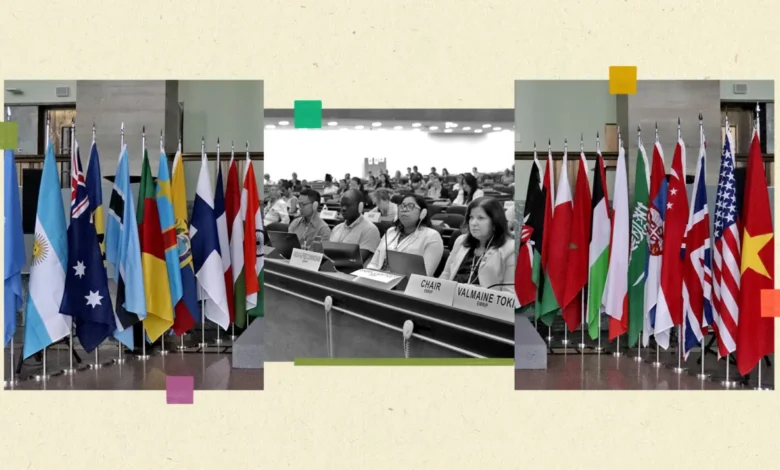
Indigenous leaders and representatives from across the globe have finalized a comprehensive 12-point proposal submitted to the United Nations, demanding immediate and sweeping reforms to protect the lands, rights, and lives of Indigenous populations. The proposal, developed by the United Nations Expert Mechanism on the Rights of Indigenous Peoples (EMRIP), comes at a critical juncture as these communities face a convergence of existential threats, including the escalating impacts of climate change, systemic violence, and the emerging risks posed by unregulated artificial intelligence. While the mandate seeks to provide a roadmap for international cooperation, its unveiling is shadowed by a deepening financial crisis within the United Nations that threatens the very existence of the platforms designed to amplify Indigenous voices.
The 12-point plan is intended for formal presentation to the United Nations Human Rights Council. It serves as a direct call for member states to move beyond rhetoric and implement tangible protections. Leaders emphasized that the lack of global action has left women, children, and families in Indigenous territories vulnerable to exploitation and environmental displacement. The urgency of the proposal is underscored by the current geopolitical climate, where human rights for marginalized groups are reportedly stagnating or, in some regions, actively regressing.
A Strategic Framework for Indigenous Rights and Sovereignty
The recommendations finalized by the seven Indigenous members of EMRIP cover a broad spectrum of human rights and governance issues. Central to the proposal is the demand for stronger legal protections for Indigenous cultures and a significant increase in the participation of Indigenous peoples within global decision-making bodies.
One of the most pressing recommendations concerns the protection of remote Indigenous peoples living in voluntary isolation or initial contact. These groups are among the most vulnerable on the planet, facing threats from illegal logging, mining, and the spread of infectious diseases. The EMRIP proposal calls for international protocols to ensure these communities can remain isolated if they choose, protecting their right to self-determination and physical survival.
Additionally, the proposal addresses the modern frontier of data sovereignty and artificial intelligence. As AI technologies are trained on massive datasets, Indigenous leaders are concerned about the misappropriation of traditional knowledge and the use of Indigenous languages without consent or compensation. The mandate stresses the need for "data sovereignty," ensuring that Indigenous communities have the right to own, control, and access data relating to their peoples and lands. This is coupled with a call for the preservation of Indigenous languages, many of which are at risk of extinction due to historical colonial policies and the current digital divide.
The 12-point plan also emphasizes the necessity of fully implementing the United Nations Declaration on the Rights of Indigenous Peoples (UNDRIP). Although adopted in 2007, the declaration remains a non-binding instrument in many jurisdictions. The new proposal argues that the legal standing of Indigenous peoples must be recognized as distinct from broader human rights frameworks to account for the unique collective rights associated with ancestral lands and traditional governance.
Chronology of the Proposal and the EMRIP Mandate
The development of this 12-point plan follows a series of high-level meetings and regional consultations intended to bridge the gap between local Indigenous struggles and international policy. EMRIP was established by the Human Rights Council in 2007 as a subsidiary body to provide expertise and advice on the rights of Indigenous peoples. Unlike other UN bodies, EMRIP focuses on providing specific thematic advice and assisting member states in achieving the goals of UNDRIP.
The timeline leading to the current proposal highlights a period of intense advocacy:
- July 2023: Initial consultations began during the EMRIP annual session, where delegates identified climate change and digital technology as two of the most significant emerging threats to Indigenous sovereignty.
- Late 2023: Regional experts, including Sheryl Lightfoot of the North America region, conducted field visits and gathered testimony regarding the regression of rights in various member states.
- Early 2024: The "UN80" reform effort was announced, signaling a broader reorganization of the United Nations. This created an atmosphere of uncertainty, prompting Indigenous leaders to accelerate the finalization of their 12-point mandate.
- Last Week: The seven members of EMRIP met to finalize the recommendations, incorporating feedback from groups like the Ontario Native Women’s Association and various Pacific Island nations.
- Upcoming: The proposal is scheduled to be debated by the Human Rights Council in Geneva, where member states will be asked to adopt the recommendations into their national policies.
Financial Fragility and the "Liquidity Crisis" at the United Nations
The momentum behind the 12-point plan is currently being hindered by a severe financial shortfall within the UN’s Indigenous-specific mechanisms. There are three primary bodies within the UN system dedicated to Indigenous issues: EMRIP, the Permanent Forum on Indigenous Issues, and the Special Rapporteur on the Rights of Indigenous Peoples. All three are currently operating under significant budgetary constraints.
The U.N. Voluntary Fund for Indigenous Peoples, which provides financial assistance to allow Indigenous representatives to travel to Geneva and New York for meetings, is in a precarious state. According to Marjolaine Étienne, an Innu representative from Quebec, the number of delegates supported by the fund has reached a "perilously low" level. Without this funding, the international stage becomes inaccessible to those living in poverty or remote areas, effectively silencing the voices the UN is tasked with protecting.
Data regarding the fund reveals a stark lack of international support:
- Only eight countries currently contribute to the U.N. Voluntary Fund for Indigenous Peoples.
- The total budget for this fund is less than $2 million annually, a sum considered negligible in the context of global diplomacy.
- Only three countries contribute to the U.N. Trust Fund for Indigenous Peoples.
- Notably, the United States, despite having one of the largest Indigenous populations in the developed world, does not contribute to either fund.
This financial "liquidity crisis" has led to fears that the UN may use budgetary reforms as a pretext to scale back the mandate of EMRIP. Cora McGuire-Cyrette of the Ontario Native Women’s Association warned that financial constraints must not be used as an excuse to reduce the frequency of country engagements or the depth of human rights monitoring.
Global Regression and the Stagnation of Rights
The 12-point plan is not merely a proactive strategy but also a defensive one, designed to counter what experts call a "widespread trend of stagnation and regression" in human rights. Albert Barume, the U.N. Special Rapporteur on the Rights of Indigenous Peoples and former chairperson of EMRIP, provided a sobering assessment of the current landscape. He noted that in recent years, almost no member states have introduced new measures to protect Indigenous rights.
More alarmingly, Barume pointed out that states which previously had robust legal and policy frameworks are now actively dismantling them. This sentiment was echoed by Macy Duxfield, a Māori representative, who described the current political climate in Aotearoa New Zealand as regressive. The dismantling of Indigenous-specific health authorities and the re-evaluation of long-standing treaties are cited as examples of how hard-won rights can be eroded by shifts in national government priorities.
In North America and South America, the situation is similarly fraught. While Canada has passed legislation to align its laws with UNDRIP, Indigenous leaders in Quebec and other provinces argue that implementation is slow and often circumvented by provincial interests in resource extraction. In the Amazon, Indigenous leaders continue to face physical violence and assassination for defending their lands against illegal industrial incursions.
Implications and Analysis: The Future of Indigenous Diplomacy
The presentation of the 12-point plan marks a pivotal moment for the United Nations. If the Human Rights Council adopts these recommendations, it could signal a renewed commitment to the 476 million Indigenous people worldwide. However, the success of the mandate depends on two factors: the political will of member states to implement the points domestically and the financial stabilization of the UN’s Indigenous mechanisms.
The inclusion of Indigenous women in all levels of decision-making is a cornerstone of the proposal. Leaders argue that women are often the primary keepers of traditional knowledge and the first to feel the impacts of environmental degradation. By mandating their inclusion, the 12-point plan seeks to create a more resilient and inclusive form of governance that can withstand the "colliding crises" of the 21st century.
The broader "UN80" reform effort, led by Secretary-General António Guterres, aims to make the United Nations more efficient and fit for the future. Yet, for Indigenous peoples, "efficiency" often feels like a code word for further marginalization. Sheryl Lightfoot noted that while the impacts of these reforms remain uncertain, EMRIP is preparing to defend its mandate. The goal is to ensure that as the UN evolves, it does not discard the specialized bodies that provide a bridge between the world’s most vulnerable communities and the centers of global power.
Ultimately, the 12-point plan is an inheritance of past struggles and a safeguard for future generations. As Macy Duxfield observed, the work of Indigenous diplomacy is a continuous cycle of inheriting the challenges of ancestors and passing on a more secure foundation to descendants. Whether the United Nations will meet this challenge remains to be seen, but the 12-point mandate ensures that the demands of Indigenous peoples are clearly defined, legally grounded, and impossible to ignore on the global stage.